

Ham radio, also called amateur radio, is a licensed hobby that lets you talk to other people directly over the airwaves, with no cell tower, no internet, and no monthly bill in between. It is older than commercial broadcasting and somehow still going strong in 2026, with more than 750,000 licensed operators in the United States alone.
So why do people still do this when a phone fits in your pocket? Because ham radio does things a phone cannot. It keeps working when the grid and the cell network go down. It reaches across a city on a handheld or around the planet on the right equipment. And it comes with a global community that is famously happy to help newcomers.
This is the long version of the answer. By the end you will know what ham radio actually is, what the license involves, what you can do once you have one, what it costs, and whether it is worth your time. I got into it with a cheap Baofeng during the pandemic and have been hooked since, so I will be honest about the learning curve as well as the payoff.
A Brief History of Ham Radio
Amateur radio is almost as old as radio itself. In the early 1900s, not long after Marconi and others demonstrated wireless telegraphy, hobbyists started building their own transmitters and receivers. Governments stepped in to organize the airwaves, and the licensed amateur operator was born. The nickname "ham" most likely started as an insult aimed at unskilled operators, the radio equivalent of "ham-fisted," and the community simply adopted it.
Through the 1920s to the 1950s, amateur radio was a genuinely important communication tool. Organized networks of hams relayed written messages across the country long before long-distance calling was cheap, reported weather, and provided emergency communication during floods and storms. Operators competed to make the most distant contacts, a pursuit that pushed real advances in technique and equipment. The military recruited experienced hams during both world wars, and a whole generation of engineers got their start building radios on a bedroom desk.
The Cold War decades brought new technology: VHF and UHF operation, repeaters that extended a handheld's reach across an entire region, and eventually amateur satellites. Ham radio settled into a steady, technically deep niche.
Then cell phones and the internet arrived and took over casual communication entirely. Rather than disappear, ham radio adapted. It leaned into digital modes, data, contesting, and emergency preparedness, the things a phone does not do. Licensing in the US has held steady at more than 750,000 operators, with noticeable bumps in interest during natural disasters and other moments when people start thinking about what happens when the usual networks fail. That is the short version of why it survived: community, technical skill, and independence from anyone else's infrastructure.
What Ham Radio Actually Is
A lot of newcomers arrive confused about what counts as "ham radio," so let me clear the ground first.
It is not CB radio. Citizens Band is license-free and limited to a small slice of spectrum at low power. Ham radio requires a license, which is mostly a way of proving you understand the rules and basic technology, and in exchange you get vastly more spectrum, more power, and far more capability. If you want the full comparison, see our ham radio vs CB guide.
It is also not commercial radio. "Amateur" here means non-commercial, not unskilled. You cannot run a business over ham radio or get paid to operate. It is a hobby and a volunteer emergency service, full stop.
At its core, ham radio is licensed individuals transmitting on frequency bands the government has set aside for amateur use. Here is what that involves in practice.
The equipment spans a huge range:
- Handheld radios (HTs): walkie-talkie sized, roughly $16 to $300. This is where almost everyone starts.
- Mobile radios: mounted in a vehicle, typically $100 to $500, with more power and range.
- Base stations: a home setup, anywhere from $200 to several thousand dollars.
- Antennas: as important as the radio itself, from a $15 whip to a $1,000 directional array. A better antenna almost always beats a more expensive radio.
The frequencies fall into a few broad groups:
- VHF (very high frequency), around 144 to 148 MHz, good for reliable local and regional contacts.
- UHF (ultra high frequency), around 420 to 450 MHz, which penetrates buildings well and pairs nicely with VHF on dual-band radios.
- HF (high frequency), roughly 1.8 to 30 MHz, the bands that bounce off the ionosphere and can reach the other side of the world.
Our VHF vs UHF guide digs into the practical differences, and the band chart tool lays out the full allocation.
The modes are the different ways you put a signal on the air: plain analog FM (the most common and the easiest to start with), SSB (single sideband, the workhorse of HF voice), a family of digital modes like DMR and System Fusion, and CW (Morse code), which is now optional and declining but still beloved by a dedicated crowd.
Finally, the whole thing runs inside a legal framework. In the US the FCC issues your license, which is valid for 10 years, assigns you a call sign, and sets rules about which frequencies you can use, how much power you can run, and how often you identify yourself on the air. Enforcement is rare because the community is largely self-policing, but the rules exist and are worth respecting.
The License: How You Get Started
There is no way around it: to transmit on ham frequencies you need a license. The good news is that the entry-level exam is very approachable, and the entire question pool is published in advance, so there are no surprises.
There are three license classes in the US, and they stack. For the exact frequencies each one adds and which radios need an upgrade, see our guide to the three ham radio license levels.
| License | Exam | Unlocks | Typical study time |
|---|---|---|---|
| Technician | 35 questions, 26 to pass | All bands above 50 MHz (VHF/UHF) plus limited HF privileges | 20 to 40 hours |
| General | 35 questions, 26 to pass | Most of the HF bands, worldwide reach | 40 to 80 hours |
| Extra | 50 questions, 37 to pass | Every amateur frequency and the full band segments | 60 to 120 hours |
Nearly everyone starts with the Technician. It is a 35-question multiple-choice exam, you need 26 correct to pass (74 percent), and the questions cover basic radio theory, operating practice, safety, and FCC rules. The entire pool of possible questions is public, so studying is mostly a matter of working through them until they stick. Free tools like the practice quiz let you drill the real questions until you are consistently passing.
The exam is administered by volunteer examiners (VEs) at local sessions, and many also offer remote online sessions now. You get your result on the spot.
On cost, here is the honest breakdown for a brand-new license:
- VE exam fee: usually around $15.
- FCC application fee: $35 for a new license.
- Study materials: $0 (free online question pools and apps) up to about $30 for a printed manual.
So roughly $50 in fees plus whatever you spend on a radio. Worth knowing: upgrading later from Technician to General to Extra does not trigger the $35 FCC fee again, though your 10-year renewal does. For a full walkthrough of the process, see how to get your ham radio license.
What is actually on the Technician exam? The 35 questions are spread across FCC rules, basic operating procedure, a little electronics and radio-wave theory, antennas and feed lines, and safety. None of it requires math beyond simple arithmetic, and because every possible question and its correct answer is published in advance, most people study by repetition rather than by mastering deep theory. The practice apps built around the official pool will tell you when your scores are consistently high enough to walk in confident.
The session itself is straightforward. You register for a free FCC Registration Number (FRN) beforehand, bring a photo ID, and either sit the exam at an in-person volunteer examiner session or take it through one of the remote online sessions that became common after 2020. You find out whether you passed on the spot. Your call sign, the unique identifier you use on the air, usually appears in the FCC database within a few business days to a couple of weeks, and you are legal to transmit the moment it does.
What Can You Do With Ham Radio?
This is the question that actually matters, because the license is just the key. Here is what it unlocks.
Local communication is where most operators spend their time. You key up on a nearby repeater, a piece of infrastructure on a tall building or hilltop that rebroadcasts your signal, and suddenly your little handheld reaches across the whole metro area. Many clubs run scheduled on-air gatherings called nets where people check in, share information, and practice. Realistic range is roughly 5 to 20 miles on a handheld, more from a mobile or base station; our guide to how far a ham radio reaches sets proper expectations.
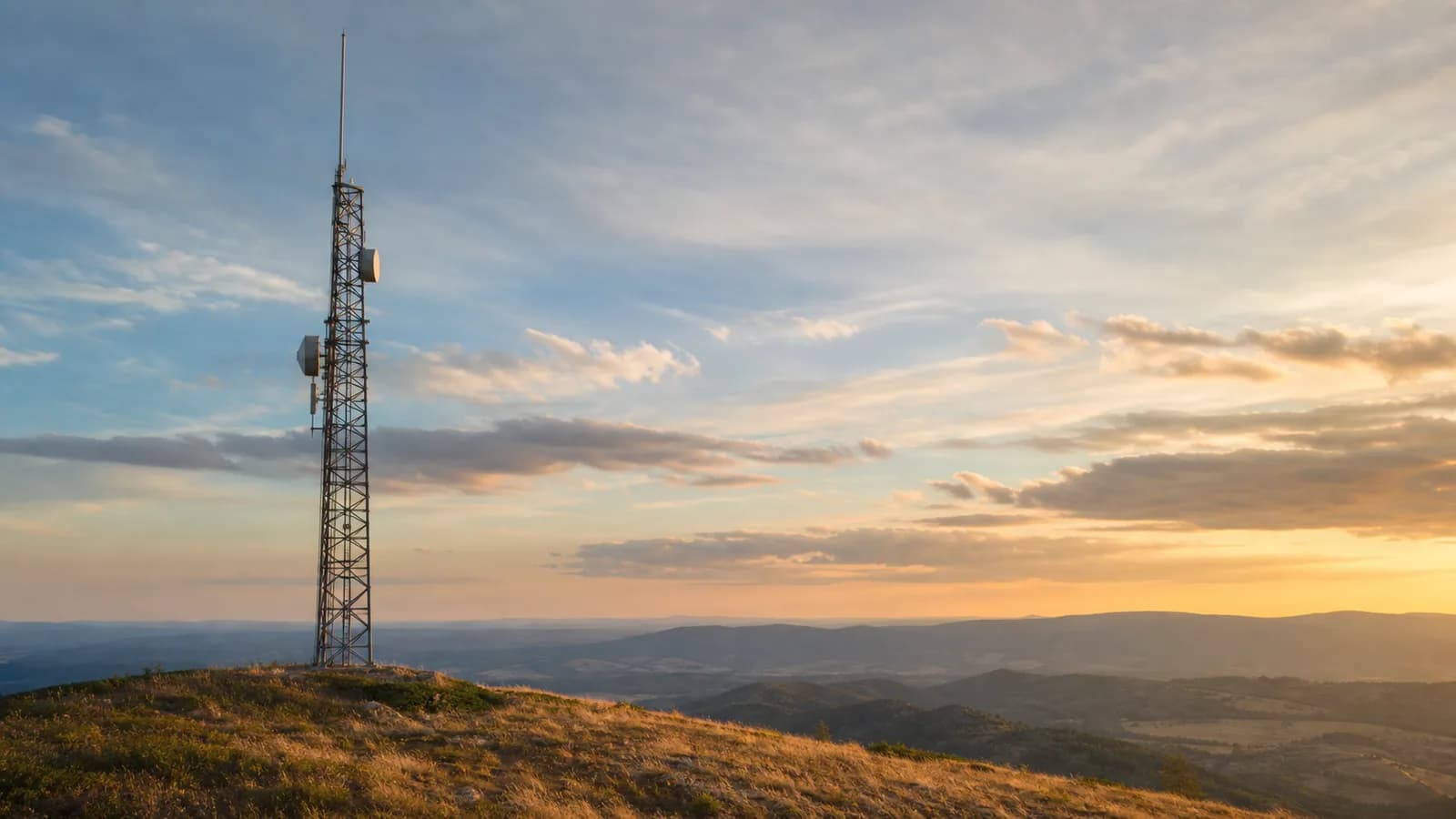
Long-distance work happens on the HF bands. With a General license, an HF radio, and a decent antenna, you can bounce signals off the ionosphere and talk to operators on other continents. Conditions vary with the time of day and the solar cycle, which is half the fun and half the frustration.
Digital modes add data and texting to the mix. DMR, System Fusion, and D-STAR carry digital voice; modes like FT8 let you make contacts at signal levels you cannot even hear. If digital interests you, start with what is DMR, browse the best DMR radios, or read our AnyTone AT-D878UVII Plus review.
Satellite contacts are real and more accessible than you would think. There are amateur satellites in orbit, and with the right handheld and a bit of practice you can make contacts through them as they pass overhead.
Emergency communication is one of ham radio's most meaningful roles. Organized volunteer groups (ARES and RACES) train to provide communications when cell networks and power fail, and they have done exactly that during hurricanes, wildfires, and floods. If preparedness is your angle, see the best radios for emergency preparedness and our emergency radio roundup.
Outdoor operating has exploded in popularity. Field Day, held the fourth weekend of each June, has thousands of operators setting up portable stations, partly as a contest and partly as a public demonstration of emergency readiness. Parks on the Air (POTA) turns a hike into a radio activation, and it is how I spend most of my weekends; you set up a portable station in a designated park, make contacts, and log them for credit, and the best radios for POTA covers the gear. There is also DXing, the pursuit of contacts with as many distant countries as possible, and contesting, weekend-long events scored on how many stations you can work, for the competitive crowd. The point is that "ham radio" is really a dozen hobbies sharing one license.
Your First Contact: What It Actually Sounds Like
The first time you key up is the part everyone remembers, and it is simpler than it looks. Most new operators make their first contact on a local repeater. You listen first to make sure the frequency is clear, press the push-to-talk button, say your call sign and that you are listening (something like "this is [your call sign], monitoring"), and let go. On an active repeater, someone usually comes back to you within a minute or two.
From there a typical exchange is relaxed: first names, locations, what radio you are running, and how well your signal is making it in, the "signal report." There is an etiquette to it, leaving gaps so others can join, and identifying with your call sign every ten minutes and again when you sign off, but nobody expects a brand-new operator to be polished. The community is used to first-timers, and a slightly nervous "this is my first contact" tends to bring out the most patient, encouraging side of the hobby. After a handful of conversations it stops feeling like a test and starts feeling like talking to neighbors you have not met yet.
The Community: What Hams Are Actually Like
The stereotype is older men in basements, and while the hobby does skew older and male, the reality is more varied than the cliche suggests. Licensees range from 12-year-old scouts to operators in their 90s, and the demographics are slowly broadening, with more young people and more women getting licensed every year.
You will find emergency responders, engineers, retirees, rural residents who need the communication, preppers, and plenty of people who just like building things and talking to strangers. What ties them together is a culture that genuinely values knowledge and is, in my experience, remarkably welcoming to beginners. The whole tradition of the "Elmer," an experienced operator who mentors a newcomer, is built into the hobby.
Socially, the hobby runs on nets, local clubs, volunteer examiner teams, and internet-linked repeater systems like EchoLink and AllStar that connect distant repeaters together. There are active communities on Reddit, YouTube, and dozens of forums. If you show up to a club meeting and say you are curious, you will almost certainly leave with three people offering to help you get licensed.
That mentoring tradition even has a name: the "Elmer," an experienced operator who takes a newcomer under their wing, and it is one of the genuinely lovely things about ham radio. Beyond clubs, the calendar is full of low-stakes ways to plug in. Hamfests are part swap meet and part social event, where you can pick up a used radio for next to nothing. Field Day weekends welcome visitors. Many clubs run their own license classes. And you can simply listen to an on-air net for weeks before you ever feel ready to check in. Almost all of it is free, and almost all of it is designed with beginners in mind.
Starting Out: What You Actually Need
You do not need much to begin, and you should deliberately start small. Here are three realistic paths.
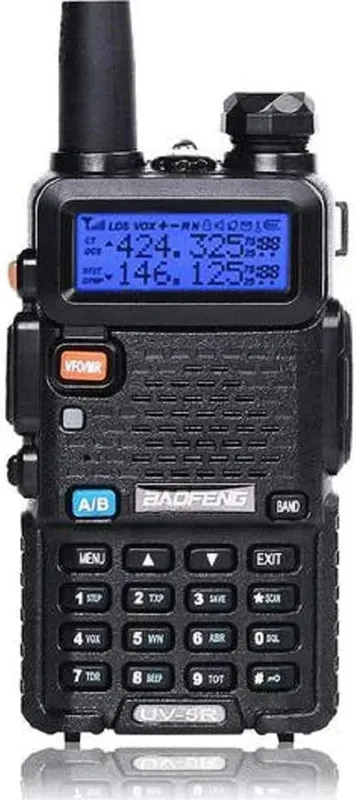
The minimum path (about $50 plus fees). A cheap dual-band handheld, a programming cable, and the free CHIRP software is a complete, working station. The Baofeng UV-5R is the radio that has trained more new hams than anything else on the market, and at its current price it is almost an impulse buy. It will not grow with you forever, but it is the right way to find out if you like the hobby.
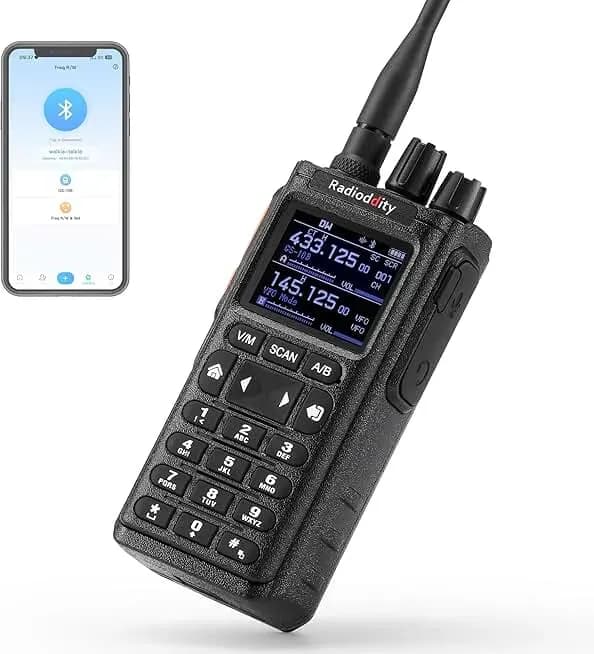
The better-starter path (about $50 to $100). Spend a little more and the experience improves a lot. The Radioddity GS-10B adds tri-band coverage, 8 watts, and Bluetooth app programming at $47.99, and it scores well on beginner-friendliness for exactly that reason. The TIDRADIO TD-H3 is another $31.99 option with USB-C charging. Either one, plus an upgraded antenna like a Nagoya whip, is a genuinely pleasant first radio.
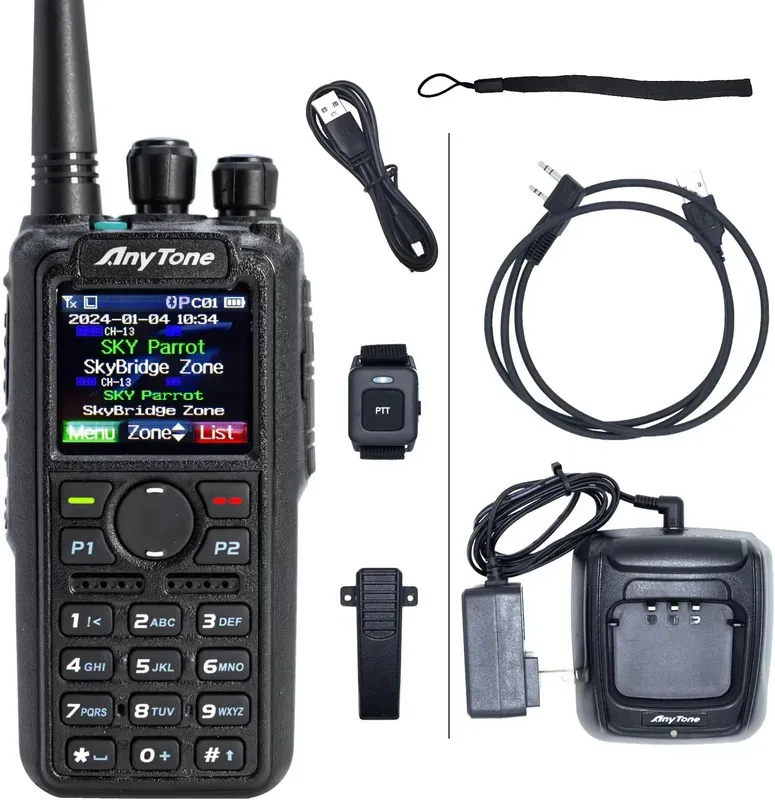
The serious-hobbyist path ($250 and up). If you already know you are committed, or you want digital modes from day one, a feature radio makes sense. The AnyTone AT-D878UVII Plus is a DMR and APRS handheld that punches well above its price once you learn its menus. Premium analog and digital-voice radios like the Yaesu FT-70DR cost more and do less on paper, but you are paying for build quality and receiver performance. HF gear for worldwide work is a later, larger investment.
What you do not need right away: an HF radio, an antenna tower, a premium brand, or all three license classes. A Technician license and a sub-$50 handheld will keep you busy for a long time. For ranked picks, see the best radios for beginners and the best handheld ham radios, and when your radio arrives, how to program a Baofeng with CHIRP walks through setup.
Realistically, the timeline from "curious" to "first contact" is one to two months: a couple of weeks of study, the exam, a week or so for your call sign to appear, and an afternoon to program your radio.
What It Costs
Ham radio is one of the cheapest hobbies to maintain once you are in. Here is the full picture.
To get started:
- Exam fee: about $15
- FCC application fee: $35 (new license)
- Radio: $16 to $300 depending on your goals
- Antenna and cable: $0 to $50 to start
So a complete, legal, working setup is genuinely possible for well under $100.
Ongoing:
- Repeater use: free (clubs appreciate voluntary donations)
- License renewal: a $35 FCC fee every 10 years
- Electricity: trivial, a handheld sips power
- Software: free (CHIRP and most tools cost nothing)
Compare that to golf, mountain biking, or flying drones and ham radio is remarkably light on recurring cost. The budget calculator can help you plan a setup against a target number. The expensive parts (HF transceivers, antenna systems, towers) are entirely optional and come later, if ever.
Common Misconceptions
A lot of what people "know" about ham radio is out of date or simply wrong.
"It's dying out." US licensing has held above 750,000 for years, with growth in younger demographics and a steady stream of newcomers drawn in by digital modes and emergency preparedness.
"It's too technical for me." The Technician exam is deliberately approachable, the question pool is public, and clubs exist specifically to help you pass. If you can study for a driver's test, you can pass this.
"It's only old guys." Still skews that way, but scouts, schools, and women-in-radio initiatives are changing the mix every year.
"Cell phones made it pointless." Different tool, different job. Cell networks fail in disasters and do not exist in much of the backcountry. Ham radio works independently of any provider, which is the entire point.
"You need expensive gear." A $16 handheld is a real, functional ham radio. Used equipment is plentiful and cheap.
"The FCC will fine me." Enforcement is rare and reserved for people who egregiously break the rules, like transmitting without a license. Operating a stock radio within your privileges is exactly what the system is designed for. For the nuance around cheap imports specifically, see is the Baofeng UV-5R legal.
"I have to learn Morse code." No. The Morse requirement was dropped years ago. Voice and digital modes are standard, and a Technician needs zero Morse. It remains available for those who enjoy it, and many do.
Should You Get Into Ham Radio?
It is a great fit if you like learning technical things, value emergency preparedness, enjoy a hands-on community, or want a lifelong hobby that costs very little to maintain. It pays off most for people who like tinkering and who have at least some local repeater or club activity to plug into.
It is probably not for you if you cannot stand rules and regulations, you want instant gratification with no learning curve, or you genuinely cannot find 20 hours to study for the entry exam. Activity also varies by area, so if you are rural and isolated with no HF gear, it can feel quiet at first.
The good news is that exploring costs nothing. Listen to a local repeater with an inexpensive receiver or even a web-based receiver, sit in on a club meeting, work through a chapter of the question pool, or run a few rounds of the practice quiz. You can decide whether the hobby clicks before you spend a dollar on a radio.
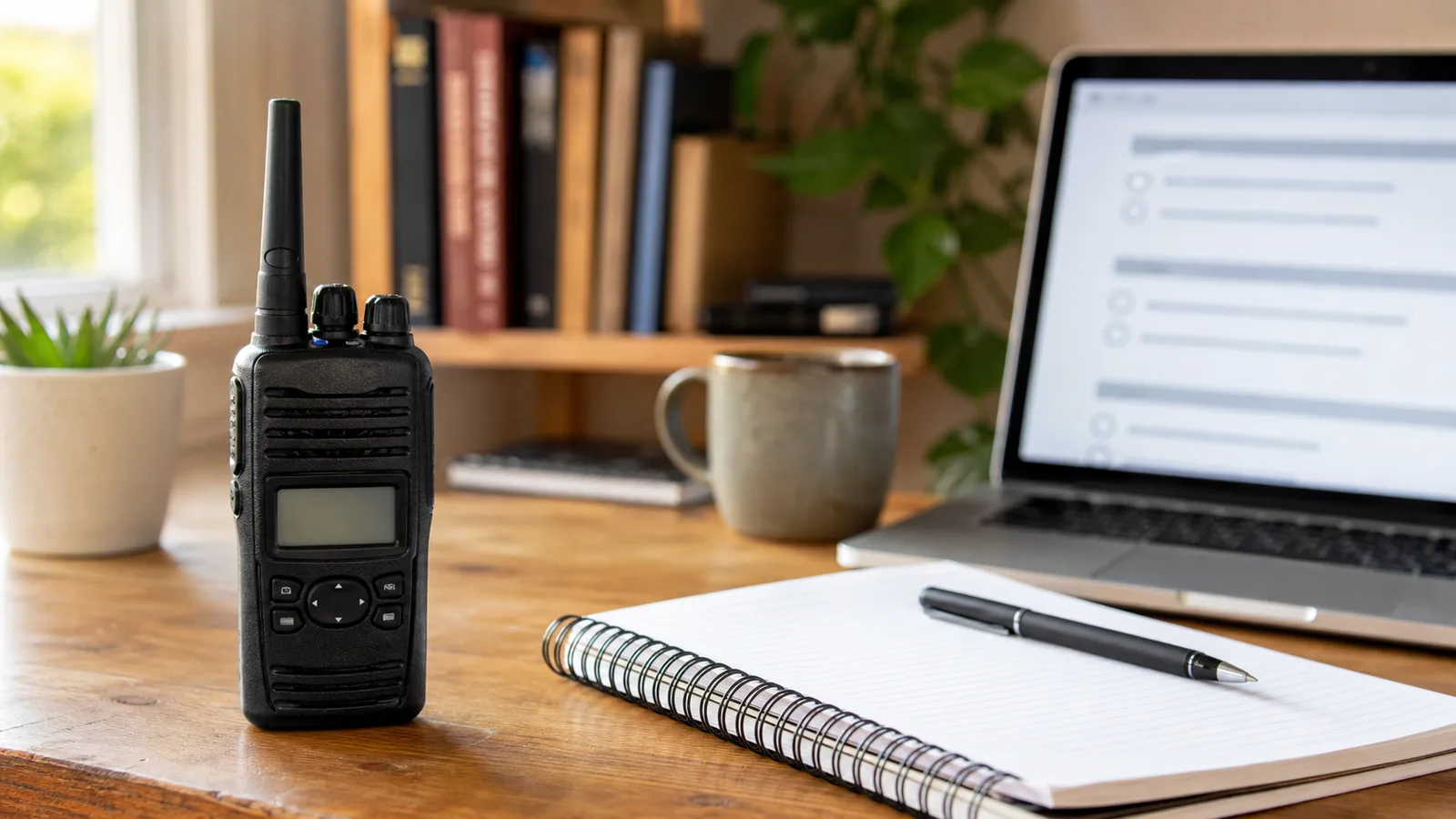
Getting Started: Your Next Steps
If this guide has you interested, here is the concrete path forward.
This week: find a local club through the ARRL directory, sit in on a meeting, and listen to a nearby repeater to hear what activity sounds like in your area.
Over the next few weeks: study for the Technician exam using a free question pool, run practice tests until you are scoring in the 80s, and book a VE session. Our complete licensing guide covers every step.
After you pass: buy an entry radio, then use how to program a Baofeng with CHIRP to load your local repeaters, and check the best radios for beginners if you have not chosen one yet.
As you grow: get outside with POTA, explore digital modes, join a net, and consider volunteering for emergency communications. The hobby is as deep as you want to make it.