The HF catalog
HF Radios and Transceivers
HF is the band range that gets you across oceans without any infrastructure at all. What separates these radios is receiver quality, not feature lists, so that is the dimension we score hardest.
Podium
Top Picks
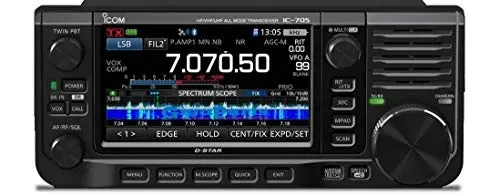
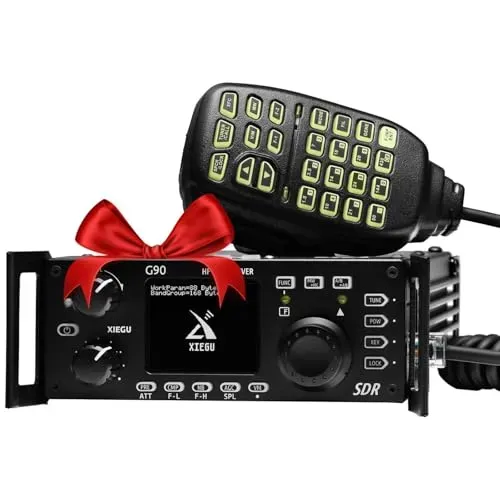
4 tracked
QRP and Portable Rigs
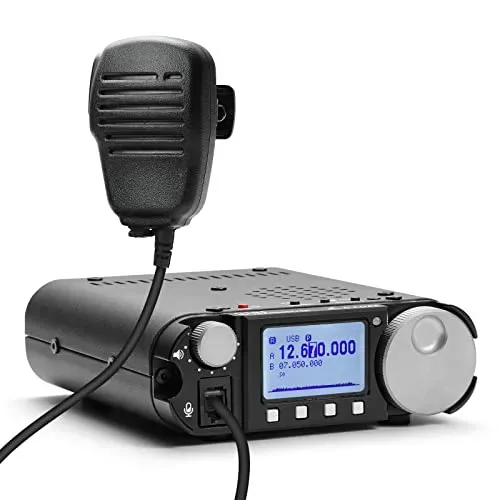
Ten watts or less, built to be carried. QRP is a real operating style rather than a compromise: the step from 10 watts to 100 is 10 dB, which a better antenna or a better location can hand you for nothing.
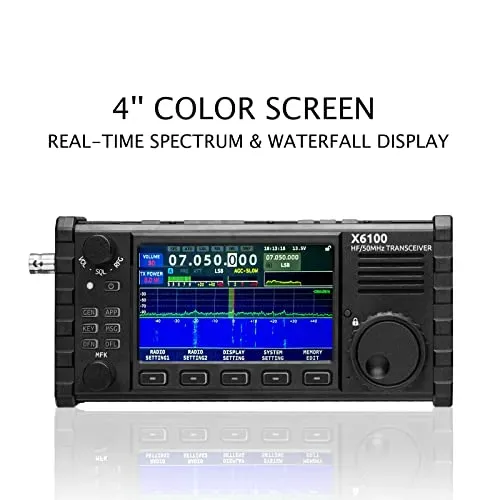
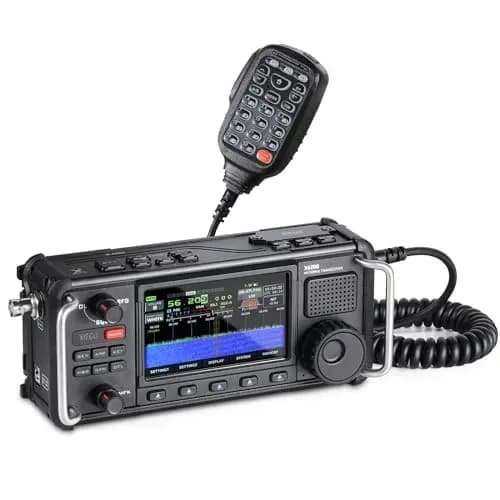
7 tracked
Full-Power Transceivers
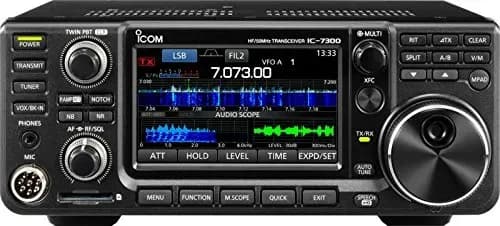
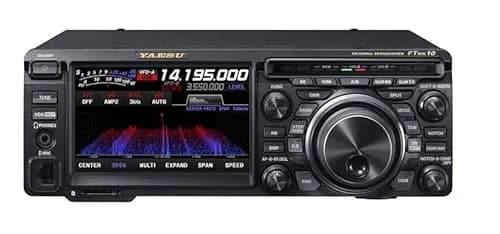
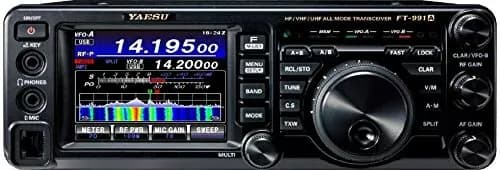
Around 100 watts, the standard output for a base station. The extra power buys margin on a poor path and the ability to be heard in a pile-up, and it costs you portability and a bigger power supply.
The dimension that matters
The Best Receiver Is Not the Best Buy
On HF, transmit is the easy half. What you are really buying is the receiver: how well it hears a weak signal sitting next to a strong one, which is what decides whether a marginal contact happens at all. It is also the spec least visible in a feature list, so we score it separately.
Sorting by that dimension alone rearranges the page, and the gap between the two columns below is the point. The finest receivers here are not the radios most people should buy, because the overall score also asks what the improvement costs.
| Transceiver | Receiver | Overall | Architecture | ATU | Price |
|---|---|---|---|---|---|
| Yaesu FTDX-10 | 100 | 78 | Hybrid SDR with a down-conversion front end | Yes | $1700 |
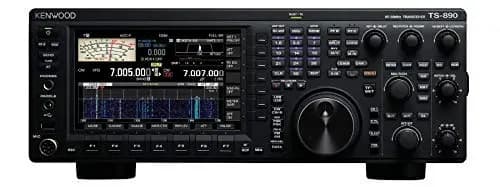
| Kenwood TS-890S | 100 | 70 | Superheterodyne | Yes | $4700 |
| Icom IC-705 | 85 | 85 | Direct sampling SDR | No | $1610 |
| Icom IC-7300 | 85 | 79 | Direct sampling SDR | Yes | $1200 |
| Xiegu X6100 | 70 | 84 | Direct sampling SDR | Yes | $506 |
| Xiegu G90 | 70 | 82 | Direct sampling SDR | Yes | $420 |
| Xiegu X6200 | 70 | 81 | Direct sampling SDR | Yes | $664 |
| Yaesu FT-991A | 70 | 77 | Superheterodyne | Yes | $1530 |
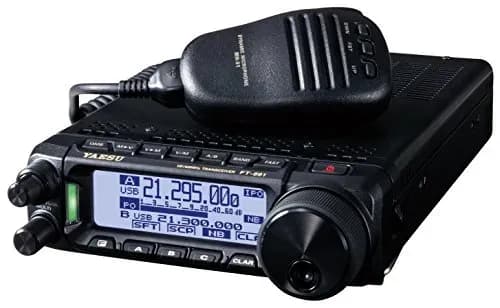
| Yaesu FT-891 | 62 | 68 | Superheterodyne | No | $810 |
| Xiegu G106 | 47 | 68 | Direct sampling SDR | No | $237 |
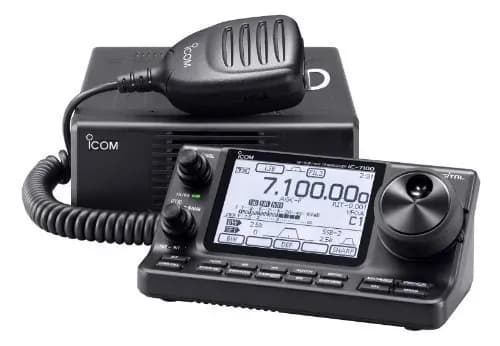
| Icom IC-7100 | 47 | 58 | Superheterodyne | No | $1050 |
A gap that is not a gap
Why None of These Are FCC Certified
Look up any radio on this page in the FCC equipment authorization database and you will find nothing covering its transmitter. That is correct. Part 97 licenses the operator rather than the equipment, and it explicitly permits amateurs to build and modify their own transmitters, so no certification is required or issued.
It is worth knowing because it is the opposite of GMRS, where the set itself must hold a Part 95E grant and some popular radios do not. If you are shopping both services, see the GMRS catalog, where we publish the grant for every radio. Grants that do exist on ham gear usually cover a Bluetooth module or a receiver, and we never present those as transmit authorization.
Method
How We Score HF Radios
HF gets its own scoring engine rather than sharing the handheld one. It adds a receiver-quality dimension and drops beginner-friendliness, because nobody buys their first HF rig expecting it to be simple, and because receiver performance is the thing that separates a $400 radio from a $4,000 one.
Read the full methodology, size an antenna with the dipole calculator, and check your feedline losses with the coax loss calculator.
Frequently Asked Questions
What is the difference between superhet and direct sampling?
A superheterodyne receiver converts the incoming signal down to a fixed intermediate frequency and filters it there with real hardware. A direct-sampling receiver digitises the antenna signal almost immediately and does the filtering in software, which is what makes a live spectrum waterfall cheap to provide. Neither wins outright: direct sampling gives you a modern display and flexible filtering for the money, while the best strong-signal performance still comes from carefully engineered front ends, whichever architecture is behind them.
Do HF radios need FCC certification?
No, and this surprises people who have bought GMRS gear. Part 97 licenses the operator, not the equipment, and it explicitly permits amateurs to build and modify their own transmitters. So every radio on this page shows no equipment authorization, and that is correct rather than a gap in our data. Any FCC grant you do find on a ham rig usually covers its Bluetooth module or its receiver, not its transmitter.
Is a built-in antenna tuner worth paying for?
For most people, yes. An internal ATU matches the modest mismatch a real antenna presents across a band, which saves you buying an external tuner and saves your finals from a poor match. It will not rescue a badly resonant antenna; its matching range is narrow compared with an external unit. If you run resonant antennas cut for each band you will barely notice it, and if you run one wire across several bands you will use it constantly.
How many watts do I need on HF?
Less than you would guess, and the antenna matters far more. The step from 5 watts to 100 watts is 13 dB, which is real but is roughly the same as what a good antenna and a decent location will give you for free. QRP operators make worldwide contacts on 5 watts every day. Buy the receiver and the antenna first; buy watts last.
What is a waterfall display for?
Seeing signals instead of hunting for them. A waterfall shows a slice of the band as a scrolling picture, so an active frequency is visible before you tune to it. For digital modes and for working a crowded band it changes how you operate, and it is the single feature most likely to make an older radio feel dated.