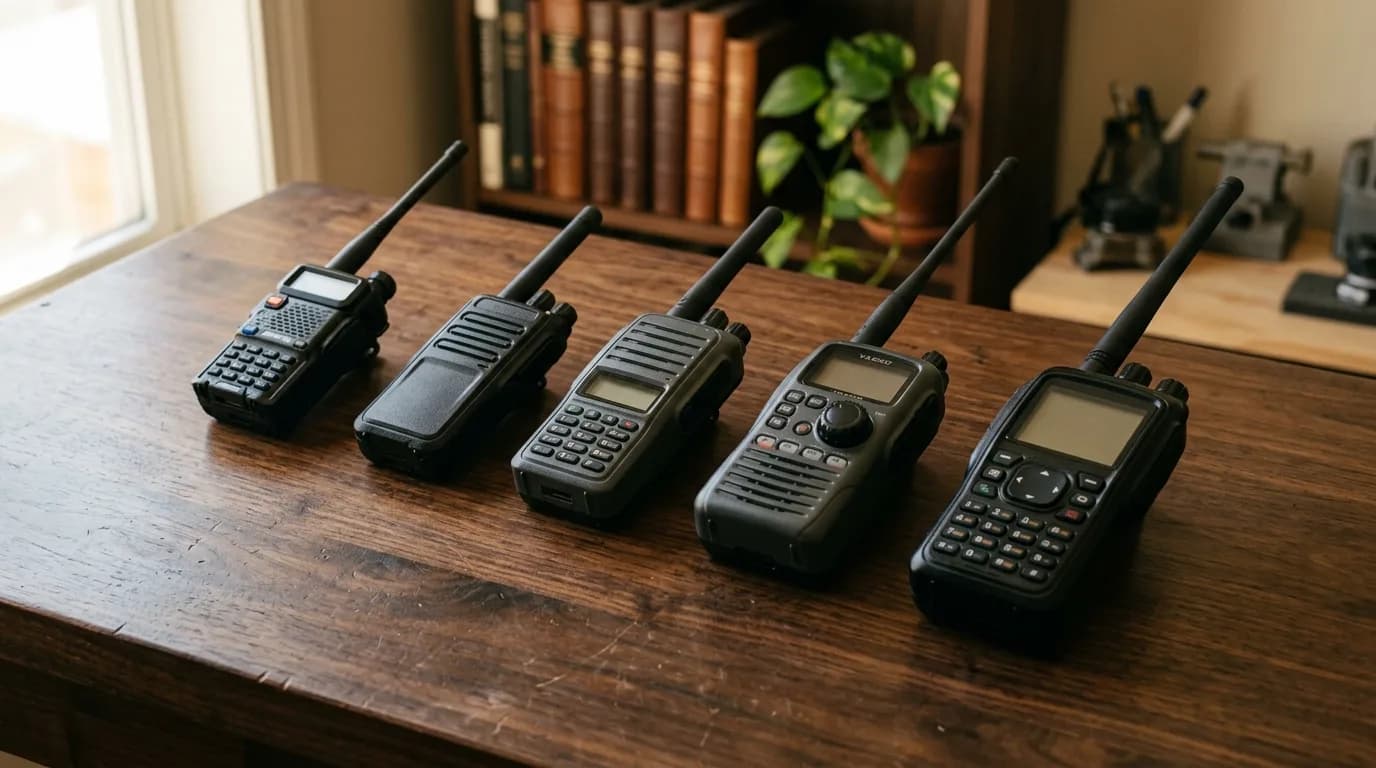

Quick answer: The Baofeng BF-5RH PRO ($70) is our top-scoring handheld ham radio for 2026 at 86 out of 100, with 10 watts of output and a 2,500 mAh battery. For DMR users, the BTECH DMR-6X2 PRO ($250) leads at 85 with the AnyTone AT-D878UVII Plus ($250) two points behind. The Baofeng UV-5R ($16) remains the cheapest credible starting point and the most documented handheld in amateur radio. If you searched for "portable ham radio" and actually want an HF rig for the field, see our portable HF picks below. All nine handheld picks scored on real manufacturer specs, not opinions.
I bought my first handheld ham radio for $25 on Amazon. It was a Baofeng UV-5R, and I had no idea what I was doing. Five years and a General-class license later, I've programmed, carried, and compared more than twenty handhelds across every price range. This guide is what I wish someone had handed me before that first purchase.
We ranked these nine dual-band VHF/UHF handhelds using RadioRanked's scoring algorithm, which weighs value, features, beginner-friendliness, and portability from real manufacturer specs and community data. No paid placements. No guesswork. Just numbers.
Quick Picks
| Radio | Price | Score | Best For |
|---|---|---|---|
| Baofeng BF-5RH PRO | $71.69 | 86 | Best overall |
| BTECH DMR-6X2 PRO | $249.89 | 85 | Best DMR all-rounder |
| AnyTone AT-D878UVII Plus | $249.99 | 83 | Best for serious DMR |
| Ailunce HD1 | unavailable | 78 | Best waterproof DMR |
| Baofeng BF-F8HP | $45.00 | 73 | Best UV-5R upgrade |
| Baofeng UV-5R | $17.16 | 69 | Best absolute starter |
| Baofeng UV-25 | Check listing | 61 | Longest battery life |
| Yaesu FT-65R | $194.96 | 52 | Best Japanese build quality |
| Yaesu FT-70DR | $299.98 | 49 | Best for System Fusion |
How We Ranked These Handhelds
Every radio on RadioRanked gets an overall score from 0 to 100 based on four dimensions: value (price vs. capabilities), features (digital modes, APRS, IP rating, power output), beginner-friendliness (ease of programming, community resources, learning curve), and portability (weight, battery life, form factor). The algorithm pulls from manufacturer specs, Amazon review data, and FCC certification records.
What we don't score: brand nostalgia, YouTube hype, or how many people on Reddit recommend something without explaining why. If you want the full breakdown, check our scoring methodology.
Budget Handhelds: Usually Under $75
This is where most hams start, and honestly, it's where most hams should start. A $30 to $70 radio will get you on the air, teach you how repeaters work, and survive being tossed in a backpack. You can always upgrade later, but the lessons you learn with a cheap radio stick with you.
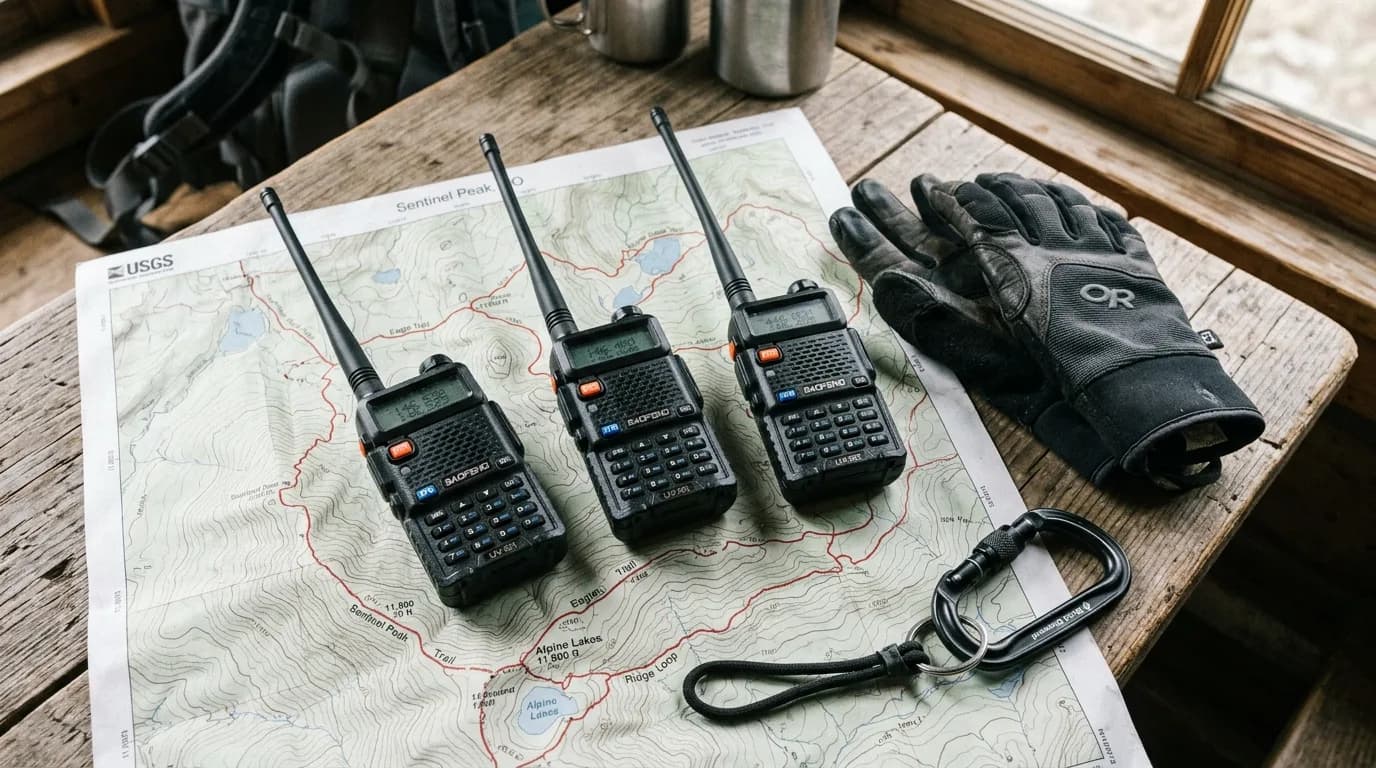
Best Overall: Baofeng BF-5RH PRO (Score: 86)
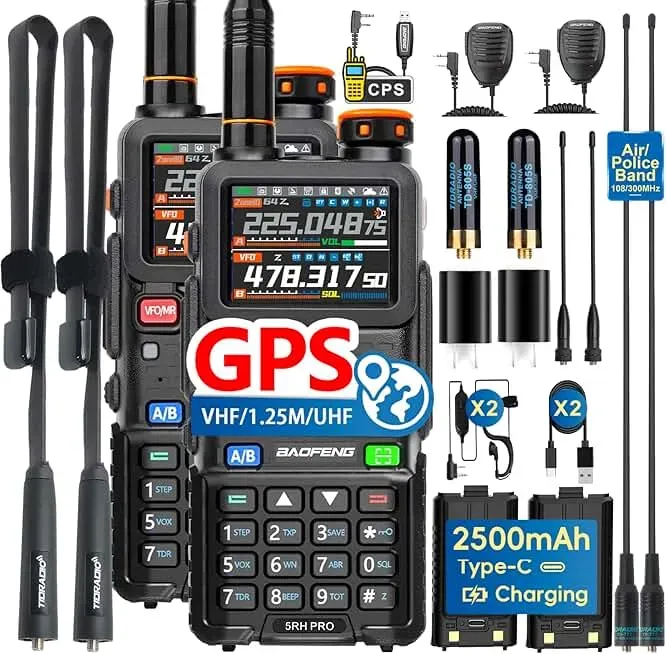
The BF-5RH PRO is our highest-scoring handheld, and the price is almost hard to believe. For $71.69 you get triband coverage (VHF, UHF, and 1.25m), 10 watts of output power, built-in GPS with APRS, IP54 weather resistance, and CHIRP compatibility. It ships as a two-radio kit, which makes the per-unit cost even more absurd.
The beginner score of 94 reflects how approachable this radio is. CHIRP support means you can program it from your computer in minutes using our CHIRP guide. The 1.25-meter band is a bonus that most radios in this price range don't touch, giving you access to the 220 MHz repeaters that are less crowded than 2m or 70cm.
Tradeoffs: It's a Baofeng, so the build quality won't match a Yaesu or Kenwood. The stock rubber duck antenna is adequate but an aftermarket upgrade helps. And 10W on a 2,500 mAh battery means you'll drain faster on high power. But at this price, with this feature set, it's the radio to beat.
Who it's for: New licensees who want everything in one package without spending $200+. POTA activators on a budget. Anyone who wants a capable dual-band radio without agonizing over the decision.
Longest Battery Life: Baofeng UV-25 (Check Listing, Score: 61)
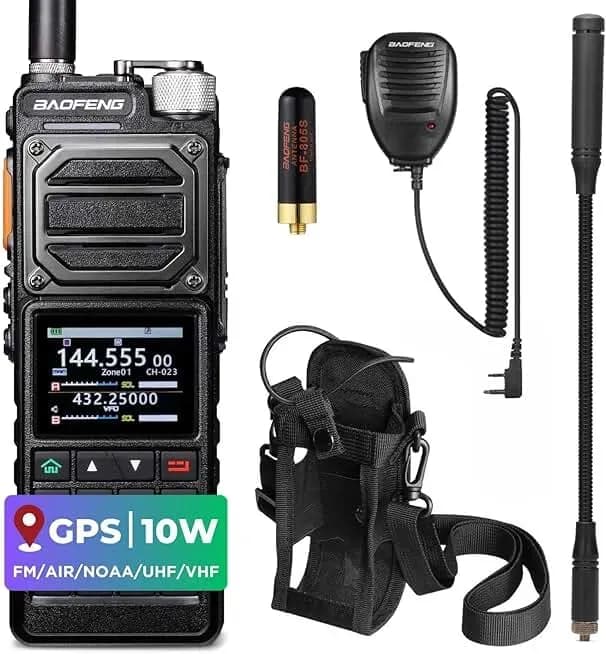
The UV-25 exists to outlast everything else in this roundup. Its 5,200 mAh battery is the largest in our handheld database, two to three times what most radios here carry, and it powers a genuinely capable package: triband coverage (VHF, UHF, and 1.25m), 10 watts of output, GPS, and CHIRP compatibility for easy programming.
As of this update, the UV-25's Amazon listing shows no price, so check the current listing before you buy. That is also why the score dropped to 61: we do not score value on a price we cannot verify.
Here's the part the spec sheet doesn't show: of every radio we link to across the site, the UV-25 has the highest rate of readers who click through and end up buying one. When a radio converts window shoppers into owners at that rate, the spec sheet is telling the truth.
Tradeoffs: The feature score of 42 reflects what's missing: no DMR, no APRS, and no IP rating, so keep it dry. The big battery adds bulk, and at 89 Amazon reviews the sample size is far smaller than the UV-5R's tens of thousands.
Who it's for: Anyone building an emergency kit or go-bag where days of standby matter more than digital modes. Field operators who hate carrying spare batteries. See how it stacks up against our top pick: BF-5RH PRO vs UV-25.
Best UV-5R Upgrade: Baofeng BF-F8HP (Score: 73)
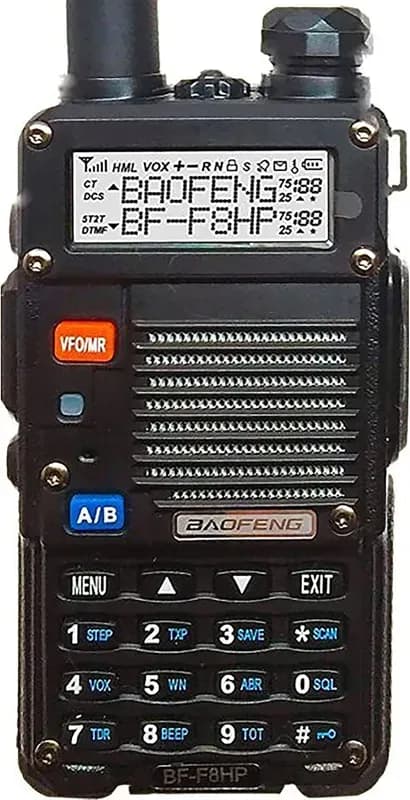
The BF-F8HP is the UV-5R's more capable sibling. Same basic form factor, same Baofeng ecosystem, but with a claimed 8 watts of output power (versus 5W on the UV-5R), a higher-capacity 2,100 mAh battery, and a better-documented user manual. With over 15,000 Amazon reviews at a 4.5-star average, it's one of the most battle-tested radios on the market.
It doesn't have DMR, APRS, or GPS. It's a straightforward analog FM handheld. That simplicity is a feature for some operators. Fewer menus, fewer things to configure wrong, and a huge community of users who've solved every possible problem you'll encounter.
Tradeoffs: No digital modes means this is a dead end if you want DMR later. No IP rating means keep it dry. The interface is vintage Baofeng, which means cryptic menu numbers unless you program it with CHIRP.
Who it's for: Anyone who already likes the UV-5R form factor and wants more power and a slightly better experience. A solid option if you're building an emergency kit and want a proven, simple radio.
Best Absolute Starter: Baofeng UV-5R (Score: 69)
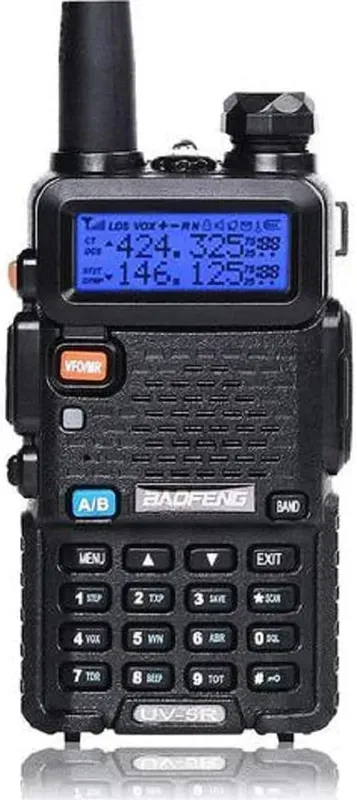
The UV-5R has introduced more people to amateur radio than any Elmer alive. At $17.16, it's cheaper than most programming cables. Dual-band VHF/UHF, 5 watts, CHIRP-compatible, and backed by the largest online community of any handheld radio. If something goes wrong, there's a forum post about it.
Its overall score of 69 reflects real limitations. The feature score (18) is rock-bottom because it lacks every modern feature: no DMR, no APRS, no GPS, no IP rating. The 1,800 mAh battery is the smallest in our roundup. But the value score (95) and beginner score (89) are both exceptional because nothing else lets you get on the air for this little money with this much community support.
If you're wondering about legality, we covered that in depth: Is the Baofeng UV-5R Legal? Short answer: yes, with a ham license on amateur frequencies.
Tradeoffs: The rubber duck antenna is barely functional. Audio quality is passable, not good. You will outgrow this radio. That's fine. Outgrowing a $17.16 radio is a great problem to have.
Who it's for: Brand-new licensees (or about-to-be-licensees studying with our practice quiz) who want to spend the bare minimum to see if ham radio sticks. Also a reasonable beater radio for situations where you might lose or break it.
See how these two compare head-to-head: BF-5RH PRO vs UV-5R or BF-F8HP vs UV-5R.
Mid-Range Handhelds: $75 to $200
The mid-range is where you start getting features that budget radios simply can't offer: waterproofing, DMR digital voice, better build quality, and more polished ergonomics. The prices are higher, but the per-year cost of a radio you keep for five or ten years makes the math work.
Best Waterproof DMR: Ailunce HD1 (Score: 78)
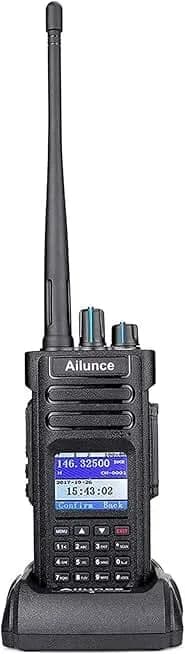
The Ailunce HD1 has been the best value in the mid-range bracket, though you'll want to confirm it's actually buyable before you plan around it. Its Amazon listing now reads unavailable, against the $97 it carried in past updates to this guide. When it's in stock, you get DMR Tier II, APRS, GPS, and genuine IP67 waterproofing (submersible to 1 meter for 30 minutes). The 3,200 mAh battery is the second-largest in this roundup, behind the UV-25's 5,200 mAh. Its score has slipped to 78, which tracks with that higher, harder-to-buy price.
IP67 matters more than most buyers realize. If you're activating parks for POTA, hiking in rain, or stashing a radio in a go-bag that might get wet, sealed electronics are not optional. Most Baofeng handhelds have zero water resistance.
Tradeoffs: The Ailunce community is smaller than Baofeng's or AnyTone's, so you'll find fewer tutorials and forum threads. No CHIRP support means you're using Ailunce's own CPS software for programming. The learning curve for DMR configuration is real; our What is DMR guide covers the basics.
Who it's for: Operators who want DMR without paying $250, outdoor users who need weather protection, and anyone building a long-range setup on a budget.
Best Japanese Build Quality: Yaesu FT-65R (Score: 52)
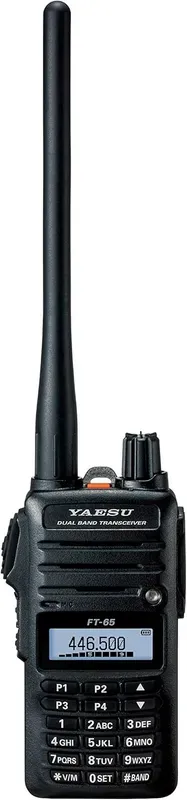
The FT-65R is the only radio on this list from one of the "big three" Japanese manufacturers, though its price has climbed enough that it no longer undercuts the premium DMR radios later in this guide. The score of 52 looks modest next to the Baofengs above it, but that's because our algorithm weights value heavily, and $194.96 for a basic FM handheld with no digital modes is a tougher sell by the numbers.
What the numbers don't fully capture is build quality. The FT-65R feels different in your hand than a $30 Baofeng. The knobs are precise, the chassis is solid, the audio is clean. It has IP54 weather resistance. Yaesu's receiver quality is a step above, which matters on weak signals and crowded repeaters. And with a 4.6-star Amazon rating from 458 reviews, long-term satisfaction is high.
It's CHIRP-compatible, which makes initial setup straightforward. The beginner score of 78 reflects its approachable interface, though fewer online resources exist compared to the Baofeng universe.
Tradeoffs: No DMR, no APRS, no GPS. Just clean analog FM on two bands. At $194.96, you're paying nearly triple what a BF-5RH PRO costs for a radio that technically does less. The question is whether Yaesu build quality and receiver performance are worth that premium to you.
Who it's for: Operators who value build quality over feature count. A great radio for beginners who plan to keep it for years. Hams who've owned cheap radios and want something that feels like a tool, not a toy. See the direct comparison: BF-5RH PRO vs FT-65R.
Premium Handhelds: Over $200
Premium handhelds are for operators who know what they need. These radios pack DMR, APRS, GPS, Bluetooth, and advanced digital modes into packages that are built to last. The prices are significant, but for active hams who use their radio daily, the investment pays for itself.
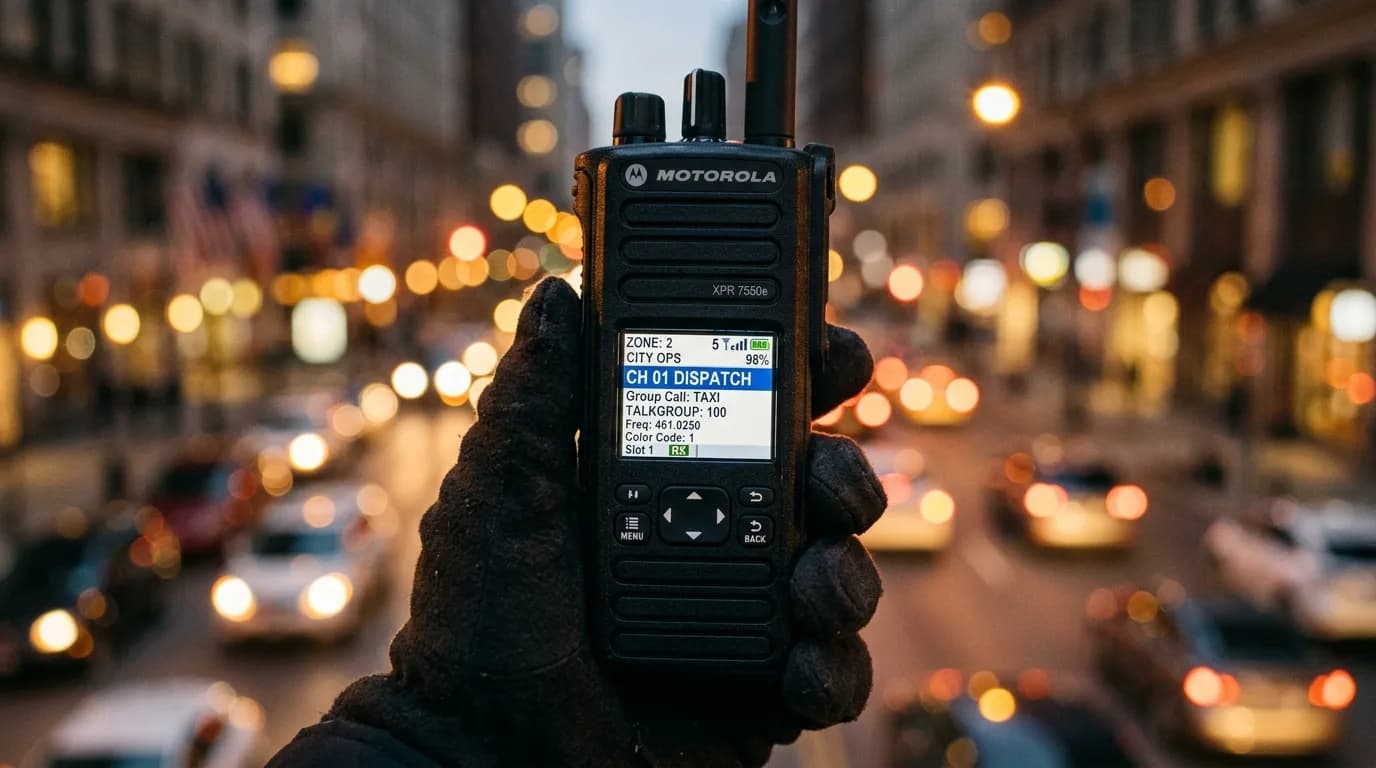
Best DMR All-Rounder: BTECH DMR-6X2 PRO (Score: 85)
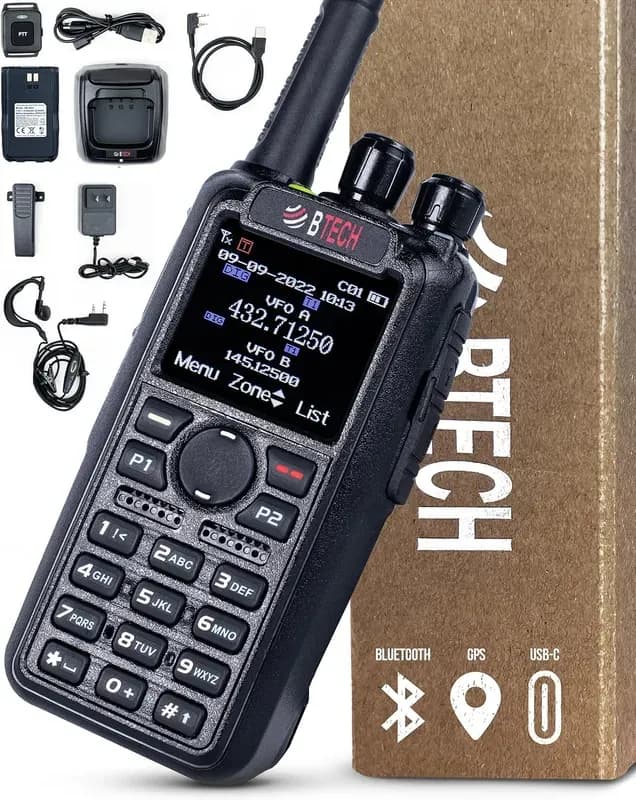
The DMR-6X2 PRO ties for the second-highest score in our entire database. For $249.89, you get DMR Tier I and II, APRS, GPS, Bluetooth, a color display, and 7 watts of output on a 3,100 mAh battery. It supports dual-band simultaneous monitoring, which means you can listen to a DMR talkgroup and an analog repeater at the same time.
The feature score of 84 is one of the highest we've measured. The value score of 80 reflects the fact that $249.89 buys you a genuinely premium feature set; you'd pay $400+ for equivalent capabilities from Kenwood or Icom.
Tradeoffs: The beginner score of 52 tells the real story. DMR programming is complex, the CPS software has a learning curve, and there's no CHIRP support. This is not a first radio. If you're new to DMR, expect to spend time learning codeplugs, talkgroups, and time slots before your first QSO.
Who it's for: Licensed operators who want DMR and APRS in one radio without spending $400. Net controllers, EMCOM volunteers, and hams who want a do-everything handheld.
Best for Serious DMR: AnyTone AT-D878UVII Plus (Score: 83)
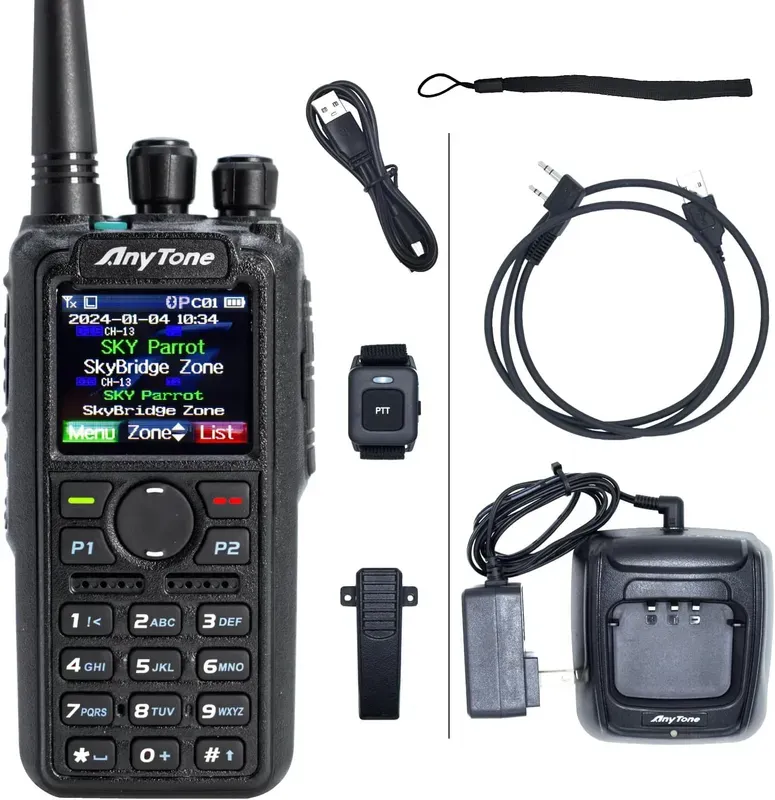
The AT-D878UVII Plus is the radio that most experienced DMR operators will point you to if you ask them what to buy. AnyTone has built the strongest reputation in the DMR handheld space, and the 878 is their flagship. DMR Tier I and II, APRS, GPS, Bluetooth, 7 watts, 3,100 mAh battery, and a massive contact database that can store hundreds of thousands of DMR IDs. Worth flagging: the original 878UV is no longer sold, so this pick is the D878UVII Plus revision, which carries the DMR feature set over and adds Bluetooth PTT and a USB-C battery.
The 878 platform has a long track record, though its current Amazon listing is a new one for the II Plus with only 6 ratings on it. The CPS software is the best in the DMR world (which admittedly is a low bar, but AnyTone's is genuinely usable). The community is large and helpful, with active forums, Facebook groups, and YouTube walkthroughs.
Tradeoffs: No CHIRP support; its IP54 rating covers splash and dust, not submersion. At $249.99, it costs the same as the BTECH DMR-6X2 PRO, and the two trade punches on features. See the head-to-head comparison to decide between them. The learning curve is steep for DMR newcomers.
Who it's for: Operators who are committed to DMR and want the radio with the best software ecosystem and community support. A strong choice if you're joining a DMR repeater network or getting into digital voice for the first time.
Best for System Fusion: Yaesu FT-70DR (Score: 49)
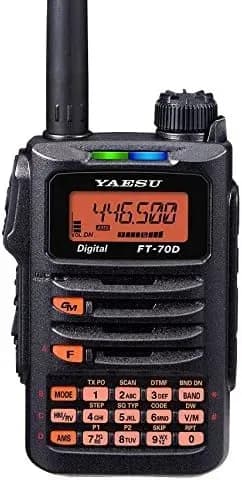
The FT-70DR is the entry point to Yaesu's System Fusion digital mode (C4FM). If your local repeater infrastructure runs Fusion, this is the cheapest way in. IP54 weather resistance, solid Yaesu build quality, and CHIRP compatibility for analog channels.
The overall score of 49 is the lowest on this list, and it's worth explaining why. At $299.98 for a 5-watt handheld with a 1,800 mAh battery and no APRS or GPS, the value score (23) is tough. You're paying a premium for the Yaesu name and C4FM access. Whether that's worth it depends entirely on your local repeater landscape.
Tradeoffs: If your local repeaters are analog FM or DMR, there's no reason to buy this radio. The 4.8-star Amazon rating comes from only 6 reviews, so the sample size is small. No DMR means you can't access the broader digital network that most operators are building on.
Who it's for: Operators with local Yaesu System Fusion repeaters who want digital voice on their handheld. If that's not your situation, the AT-D878UVII Plus or DMR-6X2 PRO gives you more for less. See the comparison.
Portable Ham Radios Beyond the Handheld
If you searched for the best portable ham radio and landed here, you're probably in the right place. Every radio ranked above is portable in the way most people mean it: battery-powered, pocket-sized, and ready to key up a local repeater the moment you turn it on. For talking across town, checking into a net, or getting your first taste of amateur radio outside the house, a handheld from this list is the portable radio to buy.
But there's a second group searching that same phrase, and a handheld is the wrong tool for them. If you want to work stations hundreds or thousands of miles away without relying on a repeater, or you're planning a POTA activation where you'll set up a wire antenna and run HF for a few hours, you need a portable HF radio, not a handheld. Handhelds top out at VHF/UHF and need a repeater or line of sight for range; HF gets around that by bouncing signals off the ionosphere.
The Xiegu X6100 ($505.75) and Xiegu X6200 ($664.05) are our picks here. Both score 89 on portability, higher than every handheld in this guide, and both pack into a day pack alongside a wire antenna. The X6100 runs 10 watts and the X6200 runs 8 watts with a newer receiver. If you're serious about QRP operating and want the best radio money can buy for it, the Icom IC-705 ($1609.94, portability score 85) is the premium option. It costs roughly two to two and a half times what a Xiegu does, but the receiver and build quality are in a different class.
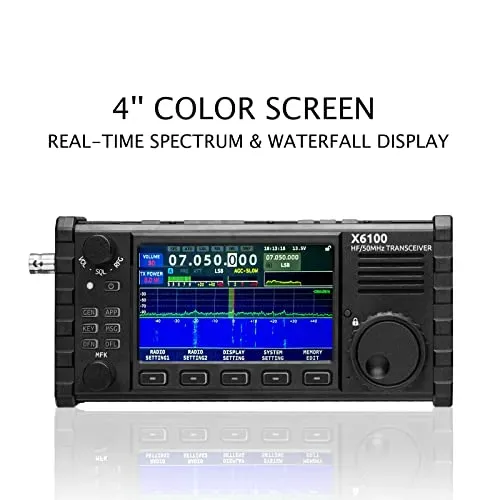
None of these belong in the handheld comparisons above; they're a different category solving a different problem. But if "portable" is what brought you here, they deserve a look before you buy a handheld you don't actually need.
Full Comparison Table
| Radio | Price | Score | Power | Bands | DMR | APRS | IP | Battery | CHIRP |
|---|---|---|---|---|---|---|---|---|---|
| BF-5RH PRO | $71.69 | 86 | 10W | VHF/UHF/1.25m | No | Yes | IP54 | 2,500 mAh | Yes |
| DMR-6X2 PRO | $249.89 | 85 | 7W | VHF/UHF | Yes | Yes | IP54 | 3,100 mAh | No |
| AT-D878UVII Plus | $249.99 | 83 | 7W | VHF/UHF | Yes | Yes | IP54 | 3,100 mAh | No |
| Ailunce HD1 | unavailable | 78 | -- | VHF/UHF | Yes | Yes | IP67 | 3,200 mAh | No |
| BF-F8HP | $45.00 | 73 | 8W | VHF/UHF | No | No | -- | 2,100 mAh | Yes |
| UV-5R | $17.16 | 69 | 5W | VHF/UHF | No | No | -- | 1,800 mAh | Yes |
| UV-25 | Check listing | 61 | 10W | VHF/UHF/1.25m | No | No | -- | 5,200 mAh | Yes |
| FT-65R | $194.96 | 52 | 5W | VHF/UHF | No | No | IP54 | 1,950 mAh | Yes |
| FT-70DR | $299.98 | 49 | 5W | VHF/UHF | No | No | IP54 | 1,800 mAh | Yes |
How to Pick the Right One for You
Whether you're picking a handheld or wondering if a portable HF rig fits your plans better, start with three questions:
What's your budget? If you have $16 to $50, get the UV-5R or BF-F8HP and start learning. If you have $70, the BF-5RH PRO is the best value in the entire database. If you have $150 to $250, you're choosing between build quality and digital features.
Do you need digital modes? If your local repeaters are analog FM (most are), you don't need DMR yet. Start with an analog radio, learn the basics, and add DMR later if you want it. If you already know you want DMR, the Ailunce HD1 (when it's in stock, around $150) is the lowest-priced DMR pick in this roundup, the Baofeng DM32 at $55 is the cheapest DMR in our catalog, and the AT-D878UVII Plus at $250 is the best. Our DMR guide covers what you need to know.
Where will you use it? If you're doing POTA activations, hiking, or emergency preparedness, you need something genuinely portable and water-resistant. The Ailunce HD1 (IP67) and BF-5RH PRO (IP54) are the standouts among handhelds. If it's mostly nets from your living room, water resistance doesn't matter.
Still deciding between VHF and UHF? Every radio on this list is dual-band, but our VHF vs UHF guide explains when each band matters.
If you haven't gotten your license yet, start there: How to Get Your Ham Radio License. You can study while your radio ships.
Programming Your First Handheld
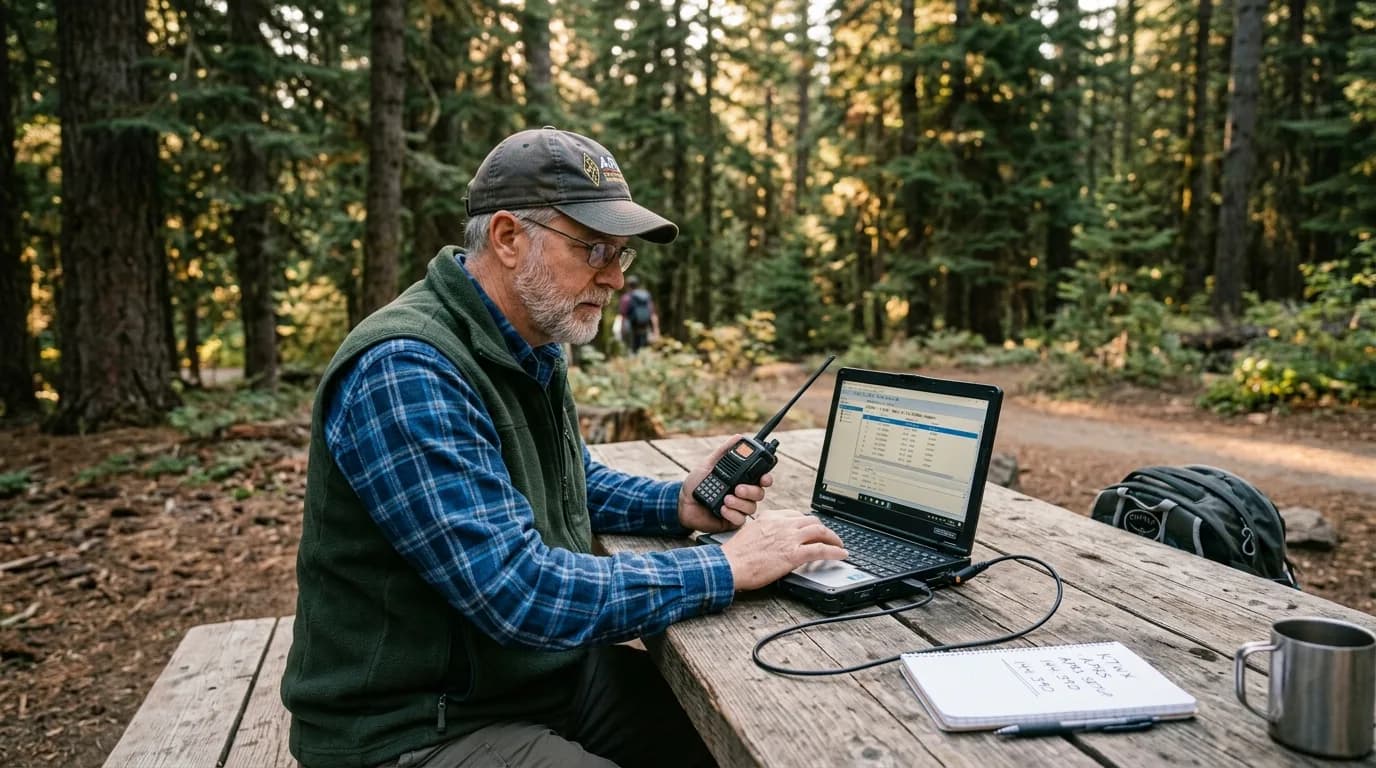
The single best thing you can do after buying any radio on this list is program it with CHIRP. CHIRP is free, open-source software that lets you load repeater frequencies, set tones, and configure channels from your computer instead of punching through tiny radio menus.
Six of the nine radios in this roundup support CHIRP directly (UV-5R, UV-25, BF-F8HP, BF-5RH PRO, FT-65R, FT-70DR). For the others, you'll use the manufacturer's CPS software, which is less pleasant but gets the job done.
The workflow is simple: buy a USB programming cable ($10 to $15), connect your radio to your laptop, import your local repeaters from RepeaterBook inside CHIRP, and upload. Five minutes, and you're ready to talk. You can also check our band chart to understand which frequencies you're licensed to use.
Programming was the part of ham radio that surprised me the most. I expected it to be hard. With CHIRP, it took less time than setting up my Wi-Fi router.
Bottom Line
Most people reading this should buy the Baofeng BF-5RH PRO. At $71.69 with a score of 86, it's the highest-rated handheld in our database and it packs features (triband, APRS, GPS, IP54) that used to require $200+ radios. It's the sweet spot.
If you want the cheapest entry worth recommending, the UV-5R at $17.16 is still the gateway radio for good reason. If you want DMR, the Ailunce HD1 (out of stock) gets you there without breaking the bank, and the AnyTone AT-D878UVII Plus at $249.99 is the gold standard. If you value Japanese build quality above all else, the Yaesu FT-65R is honest, reliable, and built to last.
I started with a $16 UV-5R and eventually upgraded to a $250 rig. Both taught me something. The UV-5R taught me how repeaters work. The DMR radio taught me that I should have bought the UV-5R first anyway, because understanding analog makes digital click faster.
Pick a radio, get your license if you haven't, and get on the air. You can browse all our handheld radios or dive deeper into the best radios for beginners and best radios under $100.