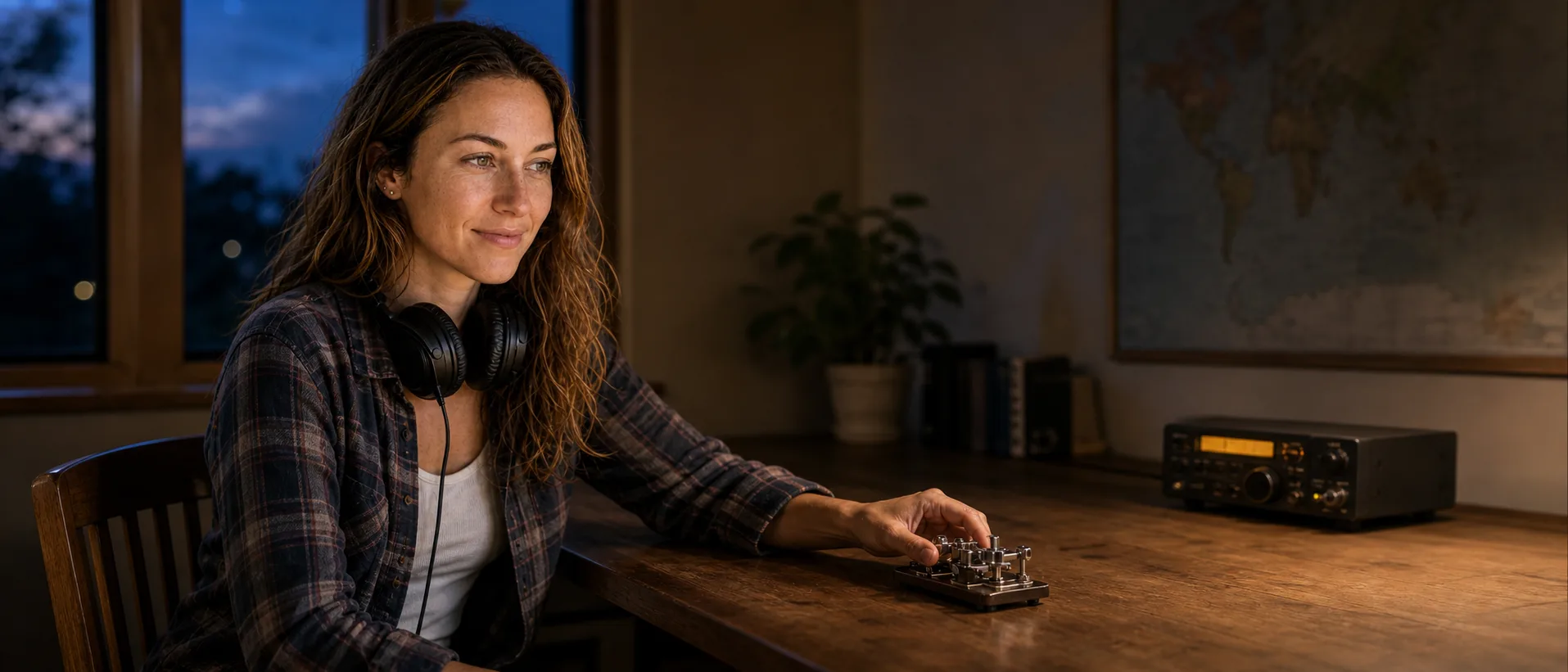

A base station is the radio you stop apologizing for. After a year or two of working repeaters from a handheld, most operators hit the same wall: 5 watts into a rubber duck antenna only goes so far, and the bands where the really interesting contacts happen, 40 meters at sunset, 20 meters on a weekend contest, are not reachable from an HT at all. This guide covers the radios worth building a station around in 2026, at every budget from under $500 to well past $5,000.
If you want the short answer: the Icom IC-7300 is the best first base station for most operators, and it is not particularly close.
Quick Picks
| Pick | Radio | Score | Price |
|---|---|---|---|
| Best for most hams | Icom IC-7300 | 79 | $1199.95 |
| Best receiver for the money | Yaesu FTDX-10 | 79 | $1699.95 |
| Best all-in-one (HF + VHF/UHF) | Yaesu FT-991A | 77 | an unlisted price |
| Best budget base station | Xiegu G90 | 81 | $420.00 |
| Best compact 100W | Yaesu FT-891 | 68 | $809.95 |
| Best money-no-object | Kenwood TS-890S | 70 | $4699.95 |
| Best VHF/UHF base (mobile rig) | AnyTone AT-D578UVIII PLUS | 75 | $494.99 |
Prices are current Amazon listings at publish time and move around; the product pages track them daily.
How We Scored These
Every radio here carries a RadioRanked score from 0 to 100, computed from manufacturer specs, receiver quality, feature set, value per dollar, and buyer sentiment. HF rigs get an extra dimension the handhelds do not: a receiver quality score, because on HF the receiver is what separates a radio you tolerate from a radio you keep for fifteen years. You can read the full methodology on our scoring page. One honest note up front: our two highest-scoring HF radios overall are actually the portable Xiegu X6100 and Icom IC-705, but those are field radios that trade transmit power for battery operation. This guide is about radios that live on a desk and put out real power, so the portables sit this one out. They are all on the HF radios page if a field rig is what you actually want.
What Counts as a Base Station?
The lines between radio classes are mostly about power and where the power comes from.
A handheld runs about 5 watts from an internal battery. A mobile radio runs 25 to 65 watts from a vehicle's 12-volt system. A base station is any radio operating from a fixed location on AC power through a power supply, usually at 100 watts on HF, with a real antenna doing most of the work. That last clause matters more than any spec sheet: a 100 watt radio into a poorly placed wire will lose to a 20 watt radio into a proper dipole nearly every time. If you take one thing from this article, it is that the antenna budget deserves as much respect as the radio budget. Our antenna guide and dipole calculator are the places to start.
There is also a fourth path that the marketing pages skip: using a mobile radio as a base. Bolt a 50 watt mobile rig to a shelf, feed it from a 30 amp power supply, hang an antenna outside, and you have a legitimate VHF/UHF base station for well under $700 total. We cover the best rigs for that approach below, and the full mobile roundup goes deeper.
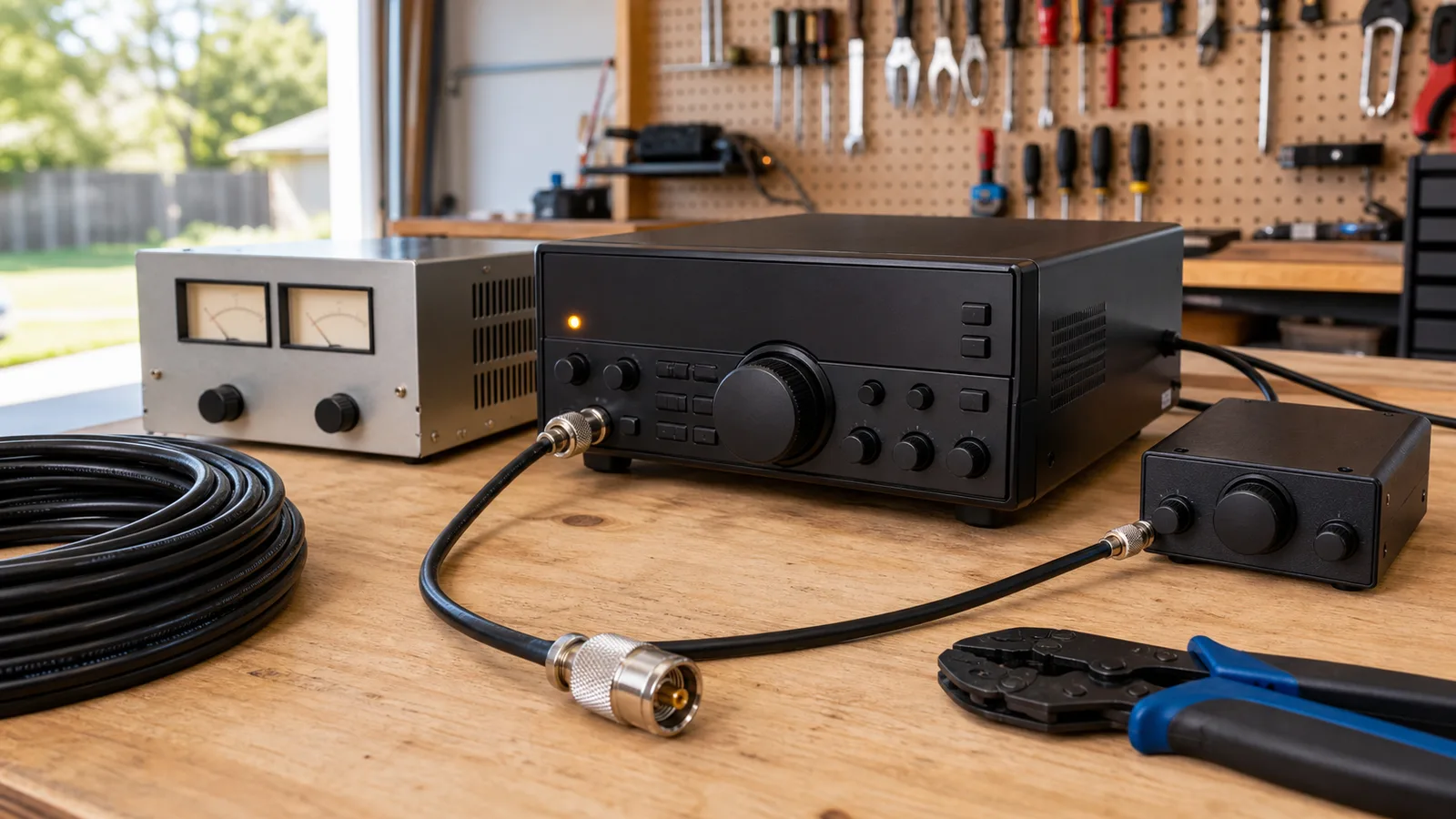
As for where the station lives: any spot with AC power, a desk, and a reasonable path for coax to the outside world qualifies. Basements stay cool and quiet, spare bedrooms are comfortable, and garage corners work fine if summer heat is managed. Apartment operators have fewer antenna options but more than the folklore suggests; an end-fed wire out a window or a balcony-mounted vertical has made plenty of DX contacts. The one non-negotiable is getting the antenna outside, or failing that, into an attic. Indoor antennas next to the radio are how you make noise, not contacts.
New to the bands themselves? Ham Radio Bands Explained covers what you can actually do on each one and which license class unlocks it.
Best Base Station for Beginners
If this is your first desk radio, resist two common beginner instincts: chasing the full 100 watts and shopping the used market for someone's decade-old flagship. A Technician or General license does not need the legal limit to make contacts. Twenty watts works the world routinely on FT8 and CW, and the honest priority order is antenna first, receiver second, watts a distant third. A used contest-grade rig can out-spec a new radio on a data sheet, but it also comes with decade-old menus, no factory warranty, and none of the visual band-sense tools a beginner actually needs to learn where activity lives.
Two features matter more than anything else for a first station: a built-in antenna tuner, because a first wire antenna is rarely a perfect match, and a real waterfall display, because watching a band instead of tuning it blind is what turns "spinning the dial" into "finding contacts" in weeks instead of months.
Best beginner base station: Icom IC-7300. It has both of those features built in, a full 100 watts for when you want it, and the largest base of beginner-friendly tutorials of any radio in this guide. It is the safe, well-supported first HF radio, and the reason it leads this list.
Best budget beginner pick: Xiegu G90. At under $500 it still gets you a genuine SDR waterfall and the best built-in tuner in its price class, at 20 watts instead of 100. For a beginner who is not yet sure how deep this hobby goes, that is a smart way to find out before spending IC-7300 money. See more radios in that range on HF Under $1,000.
Best for Most Hams: Icom IC-7300
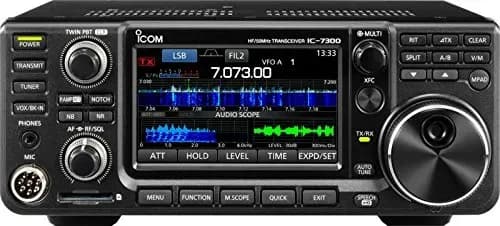
The IC-7300 changed what an entry-level HF radio is expected to be. When it launched, a real-time spectrum scope and waterfall display were features you paid $3,000 or more to get. The IC-7300 put a direct-sampling SDR receiver, a color touchscreen waterfall, and a built-in antenna tuner into a radio that now sells for about $1199.95, and the rest of the industry has spent the years since catching up.
In practice, the waterfall is the feature that changes how you operate. Instead of tuning blindly up the band hoping to stumble on activity, you see every signal across the segment at a glance and click on the ones you want. For a newer general-class operator learning where activity lives, it compresses months of band-sense into weeks. The 100 watt output, USB sound card for digital modes like FT8, and enormous base of tutorials, presets, and community knowledge round out the case: when something confuses you at 9 PM, someone has already posted the answer.
Tradeoffs are real but modest. The receiver, scored 85 here, is excellent for the price yet measurably behind the FTDX-10's in crowded-band conditions, and there is no VHF/UHF coverage, so local repeater work still needs a second radio. Nine hundred of every thousand new HF operators should stop reading here and buy this radio. See how it stacks up against the step-up pick in our IC-7300 vs FTDX-10 comparison.
Best Receiver for the Money: Yaesu FTDX-10
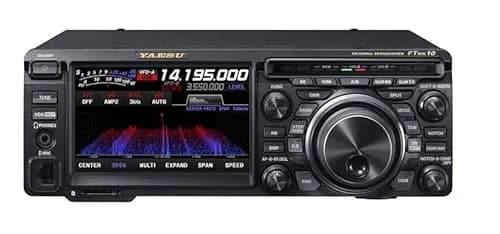
The FTDX-10 exists for one reason: receiver performance. Its hybrid architecture pairs a narrow-band SDR with down-conversion circuitry descended from Yaesu's contest-grade FTDX101 line, and it posts dynamic-range numbers that used to require twice the spend. It earns a 100 receiver score in our data, tied with a radio that costs three times as much.
What does that buy you in practice? On a quiet Tuesday afternoon, honestly, not much over an IC-7300. The difference shows up when 40 meters is wall-to-wall on a contest weekend and the station you want is 2 kHz away from a locally loud multiplier. The FTDX-10 keeps the weak signal readable where lesser front ends fold into noise and phantom signals. If you already know you are the operator who chases DX pileups at 5:30 AM, the extra outlay over the IC-7300 is the cheapest receiver upgrade you will ever buy.
The tradeoffs: menus run deeper and less friendly than Icom's touchscreen flow, the 5.9 kilogram chassis is a desk commitment, and like the IC-7300 it stops at 6 meters with no VHF/UHF. Score: 79, and the receiver is doing the lifting.
Best All-in-One: Yaesu FT-991A
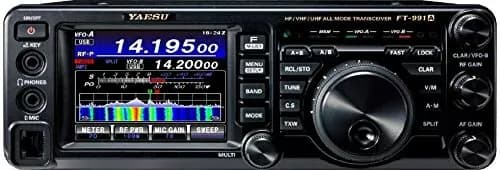
The FT-991A is the only radio in this guide that covers HF, 6 meters, 2 meters, and 70 centimeters at real power in a single box, 100 watts on HF and 50 on VHF/UHF, with every mode from CW to C4FM Fusion digital voice included. Its 98 feature score is the highest of any radio in our HF catalog, and for an operator with one desk, one antenna feedthrough, and one budget line, the appeal is obvious: this is a whole shack in 4.3 kilograms.
The honest cost of that versatility is that each individual function gives up something to a dedicated rig. The receiver is a conventional superhet, scored 70, that trails both Icom's and Yaesu's own FTDX-10; the spectrum display is slower and smaller than the IC-7300's; and if you later add a dedicated VHF/UHF radio anyway, the compromise stops paying rent. Buy it when the all-in-one shape genuinely fits your station plan, not just your curiosity. The IC-7300 comparison lays the choice out spec by spec.
Best Budget Base Station: Xiegu G90
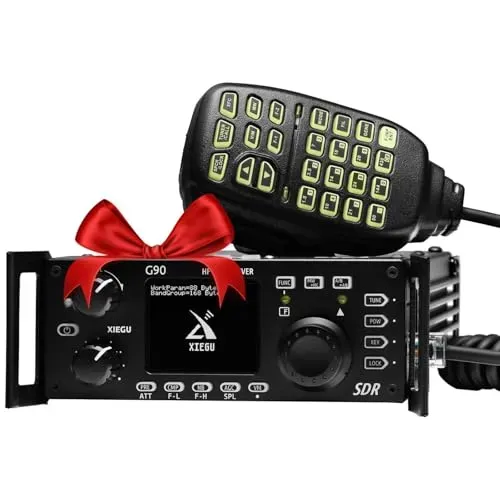
At under $500, the G90 is the cheapest respectable path onto the HF bands, and "respectable" is carrying weight in that sentence. You get a genuine direct-sampling SDR receiver with a small waterfall, coverage of the HF bands at 20 watts, and the best built-in antenna tuner in the price class by a wide margin. That tuner will happily load antennas that make a resonant-antenna purist wince, which is exactly what a first station with a compromise wire antenna needs.
Twenty watts is a fifth of the power of everything else in this section, and on SSB during marginal conditions you will feel it. But CW and FT8 flatten the power gap dramatically, and plenty of operators work the world at 20 watts on digital modes before ever missing the other 80. The display is small, the ergonomics are field-radio ergonomics, and there is no 6 meter coverage. As a first HF radio for someone who is not sure how deep this hobby will go, it scores 81 in our data, higher than the IC-7300, purely on value per dollar. The G90 vs FT-891 comparison is the classic budget-tier decision.
Best Compact 100W: Yaesu FT-891
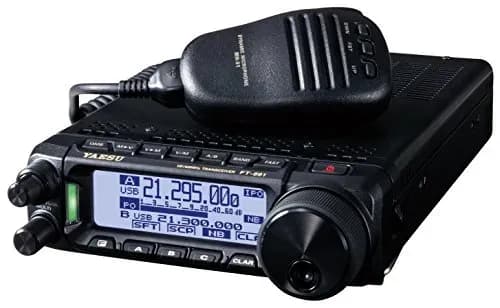
The FT-891 answers a specific question: what is the least money and desk space that gets you a full 100 watts on HF? At $809.95 and 1.9 kilograms, it is the do-everything rig for operators who want one radio for the desk, the truck, and the occasional POTA activation. The transmitter is clean and the receiver, while a conventional superhet without a waterfall, is a solid performer scored 62.
What you give up against the IC-7300 is the entire modern interface layer: no spectrum display, no touchscreen, no built-in tuner, and menu navigation through a small monochrome screen that will have you keeping the manual PDF open on your phone for the first month. Operators who know their way around a radio shrug at all of this; first-time HF buyers tend to find the IC-7300's extra $430 well spent. Score: 68.
Best Money-No-Object: Kenwood TS-890S
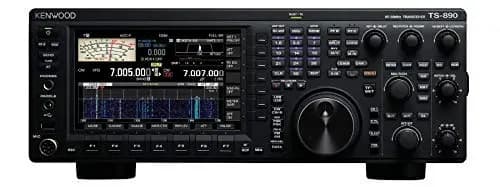
The TS-890S is what a base station looks like when the receiver budget has no ceiling. Its down-conversion superheterodyne front end posts contest-grade dynamic range numbers, a perfect 100 receiver score in our data, and unlike the FTDX-10 it surrounds that receiver with a 7-inch display, dual antenna ports, and the kind of 15.8 kilogram build quality that stays put when you spin the weighted tuning knob hard.
Two cautions. First, the Amazon listing reads $4699.95, and authorized ham dealers frequently price this radio meaningfully lower, so shop around before clicking anything. Second, its 70 overall score in our value-weighted system is not a knock on the engineering, it is arithmetic: you are paying a steep premium for the last few decibels of receiver performance that only matter in pileups and contests. The operators who need this radio already know who they are.
The Mobile Radio as a Base Station
For local repeater nets, emergency preparedness, and daily VHF/UHF chatter, you do not need an HF rig at all. A 50 watt mobile radio on a power supply is the classic budget base station, and it outperforms any handheld by an order of magnitude once a real antenna is on the roof.
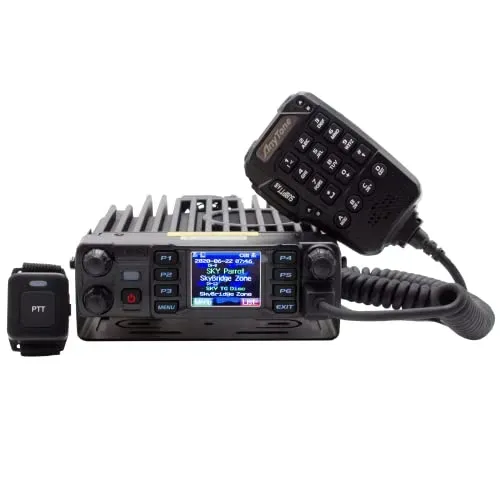
The AT-D578UVIII PLUS is the pick if digital voice is in your plans. It is a tri-band, 50 watt rig with full DMR support, APRS, and a scored 75 that leads our entire mobile category. The codeplug learning curve is genuinely steep; budget a weekend and our DMR picks page for context.
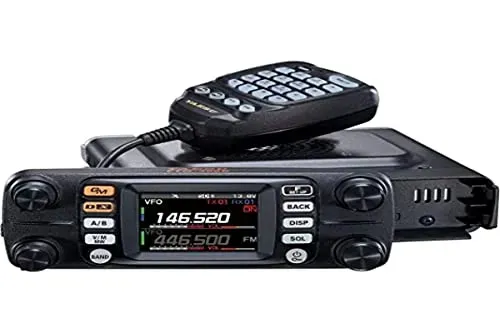
Prefer Yaesu's ecosystem or C4FM Fusion? The FTM-300DR (scored 69) does true dual-band simultaneous receive with clean analog audio and Fusion digital, backed by a three-year warranty. And the Kenwood TM-V71A, an analog workhorse with a 4.8-star buyer rating and EchoLink integration, remains the "buy it once, ignore it for a decade" option; its Amazon availability comes and goes, so check the product page for a live offer. The AT-D578 vs TM-V71A comparison is exactly the digital-versus-analog decision most upgraders face.
Add a 30 amp supply and an outdoor antenna and the whole station lands between $600 and $900. The full mobile roundup covers the rest of the category.

What Your Budget Actually Buys
The radio is only part of a working station. Here is how complete setups shake out at each tier, radio plus the essentials.
Under $500: on the air, honestly. A Xiegu G90 with a homebrew wire dipole and a used 25 amp supply, or a budget mobile rig like the AnyTone AT-778UV at $124.00 with an outdoor dual-band antenna. Compromises everywhere, contacts anyway.
$500 to $1,500: the sweet spot. An FT-891 or IC-7300 at the top of the range, a quality 30 amp supply around $120, a resonant dipole or end-fed antenna, and decent coax. This tier is where most hams land and most stay, happily.
$1,500 to $3,000: dedicated instruments. An FTDX-10 or FT-991A, plus meaningful antenna investment, a proper tuner if your antenna needs one, and a desk microphone. Alternatively: an IC-7300 for HF plus a full mobile-as-base VHF/UHF setup, two stations for the price of one premium rig.
$3,000 and up: contest grade. A TS-890S class radio, directional antennas, possibly an amplifier. At this tier the antenna system routinely costs more than the radio, and should.
Run your own numbers with the budget calculator.
The Rest of the Station
Four line items separate a radio in a box from a station on the air.
Power supply. A 100 watt HF radio draws around 23 amps on transmit; buy a 30 amp regulated 13.8 volt supply and never think about it again. Expect $100 to $150 for a quality switching unit.
Antenna. The single biggest performance variable in the entire station. A resonant wire dipole cut with our dipole calculator costs under $50 in parts and outperforms most compromise commercial antennas at three times the price. Antenna types explained here.
Feedline. Coax loss is real money silently leaving your signal. For HF runs under 100 feet, RG-8X is fine; for VHF/UHF or longer runs, step up to LMR-400. The coax loss calculator shows exactly what your run costs in decibels.
Tuner. If your antenna is resonant where you operate, skip it. If you are loading one wire on multiple bands, the IC-7300, FTDX-10, FT-991A, and G90 all include internal tuners that handle modest mismatches; wide-range external tuners start around $200. Check your match with the SWR calculator.
Our complete setup guide walks the whole install, grounding included.
Should You Buy Used?
The used market is genuinely good in this hobby. Hams baby their equipment, radios from the 1990s still work, and 40 to 60 percent discounts against new pricing are normal at hamfests and on club classifieds. A used IC-7300 is the single best value in HF right now if you can find one locally and test it before paying.
Two rules keep it safe: buy radios you can power up and hear before money changes hands, and be suspicious of any HF rig described as "worked fine last time I used it." Older rigs also predate USB sound cards and waterfall displays, so if digital modes are in your plans, the convenience gap between a $300 vintage rig and a modern SDR radio is wider than the spec sheets suggest.