
For most of amateur radio's history, voice meant analog: FM on VHF and UHF, SSB on HF. That still works perfectly, but a growing share of activity has moved to digital. Digital voice squeezes your audio into a compressed data stream, links repeaters across the internet so a 5-watt handheld in Denver can talk to someone in Tokyo, and adds features like text messaging, GPS position, and per-contact caller ID.
The catch, and it is a big one, is that the digital modes do not talk to each other. DMR, D-STAR, and System Fusion are three separate, incompatible systems. A DMR radio cannot key up a D-STAR repeater any more than a fax machine can call a landline. So choosing a digital mode is less about which is "best" and more about which one your local repeaters run, which ecosystem you want to buy into, and how much complexity you are willing to tolerate.
This guide breaks down all four of the digital systems you will hear about, DMR, D-STAR, Fusion, and APRS, with honest tradeoffs and a clear recommendation for where most new operators should start.
The Four Modes at a Glance
Three of these (DMR, D-STAR, Fusion) are digital voice modes that compete with each other. The fourth, APRS, is a data mode that does something completely different and happily coexists with any of them.
| Mode | What it is | Network | Voice codec | Standard | Radio cost | Setup difficulty |
|---|---|---|---|---|---|---|
| DMR | Digital voice | BrandMeister (largest) | AMBE+2 | Open (ETSI) | $55–250 | Hardest |
| D-STAR | Digital voice | Reflectors | AMBE (older) | Proprietary (Icom) | $350–700 | Easy once set up |
| Fusion / C4FM | Digital voice | Wires-X | AMBE+2 | Proprietary (Yaesu) | $150–400 | Easiest |
| APRS | Data, not voice | Digipeaters + APRS-IS | n/a (packet) | Open | $60+ | Moderate |
All three digital voice modes need at least a Technician license, because they run on the 2-meter and 70-centimeter bands, which Technicians have full access to. If you are not licensed yet, start with our licensing guide.
DMR: The Affordable, Popular One
DMR (Digital Mobile Radio) is the mode most new hams end up on, for one simple reason: it is cheap. DMR began as a commercial land-mobile standard, so the radios are mass-produced for business users and the amateur versions inherit those economies of scale. You can get on DMR for under $60.
It is also an open standard, defined by ETSI (the European Telecommunications Standards Institute), which is part of why so many manufacturers build for it. The amateur world uses what is called DMR Tier II, which splits a single 12.5 kHz channel into two time slots using TDMA. In plain terms, that means two separate conversations can share one frequency at the same time without interfering.
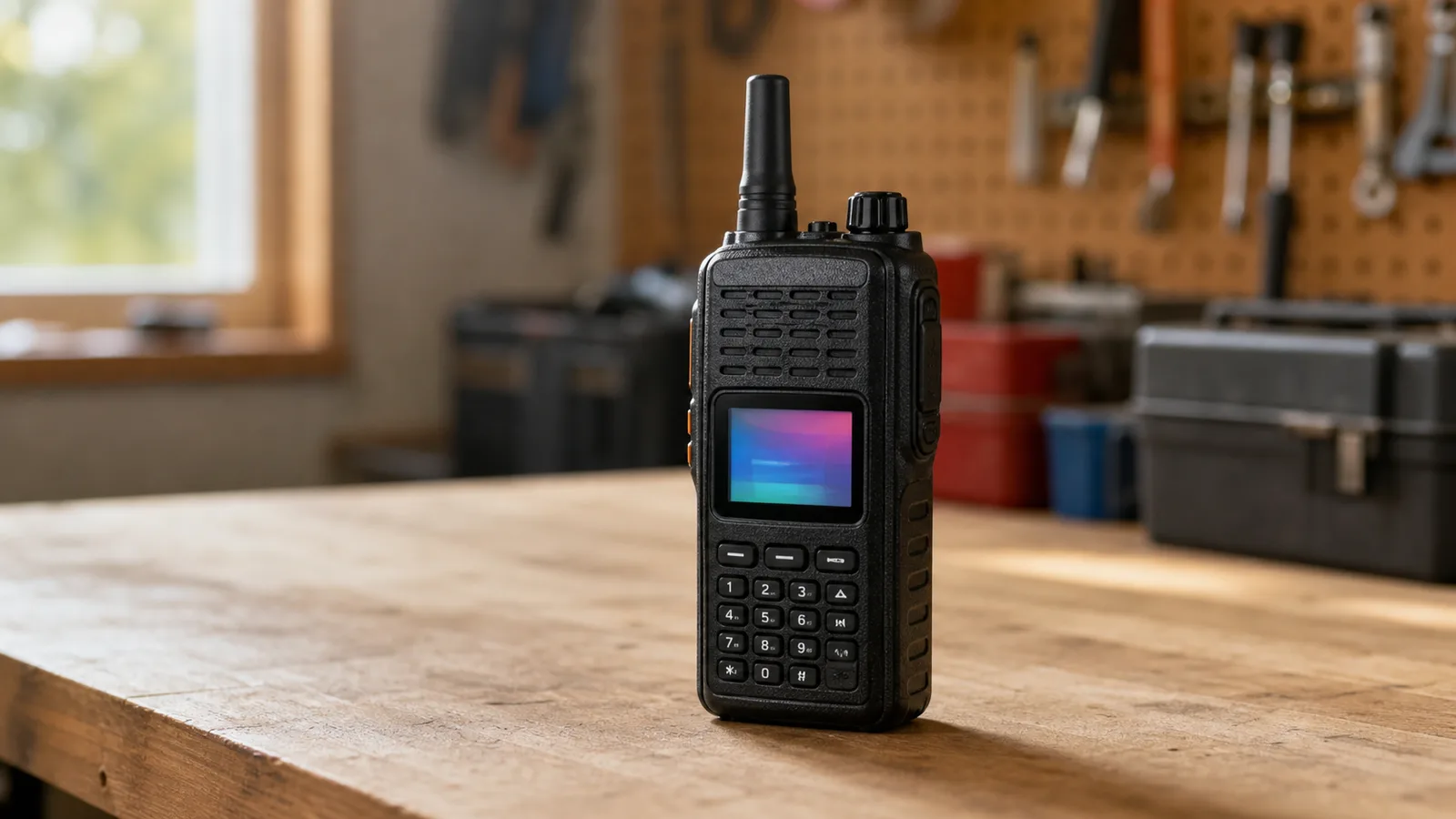
DMR organizes the world into talkgroups: think of them as chat rooms. There is a talkgroup for the whole USA, one for your state, ones for specific regions, and thousands for hobbies and interests. You select a talkgroup, key up, and anyone monitoring it anywhere on the network hears you. The largest network tying all of this together is BrandMeister, which is free to use; smaller networks like TGIF and DMR-MARC also exist.
The downside is setup. DMR radios are programmed with a "codeplug," a configuration file that defines your talkgroups, time slots, color codes (a digital equivalent of a CTCSS tone), and a contact list that can run to tens of thousands of entries. Building one from scratch is the steepest learning curve in this entire article. Most people start from a community codeplug for their region and edit from there.
For a deeper treatment of how DMR works under the hood, see our dedicated What Is DMR explainer.
DMR radios worth knowing
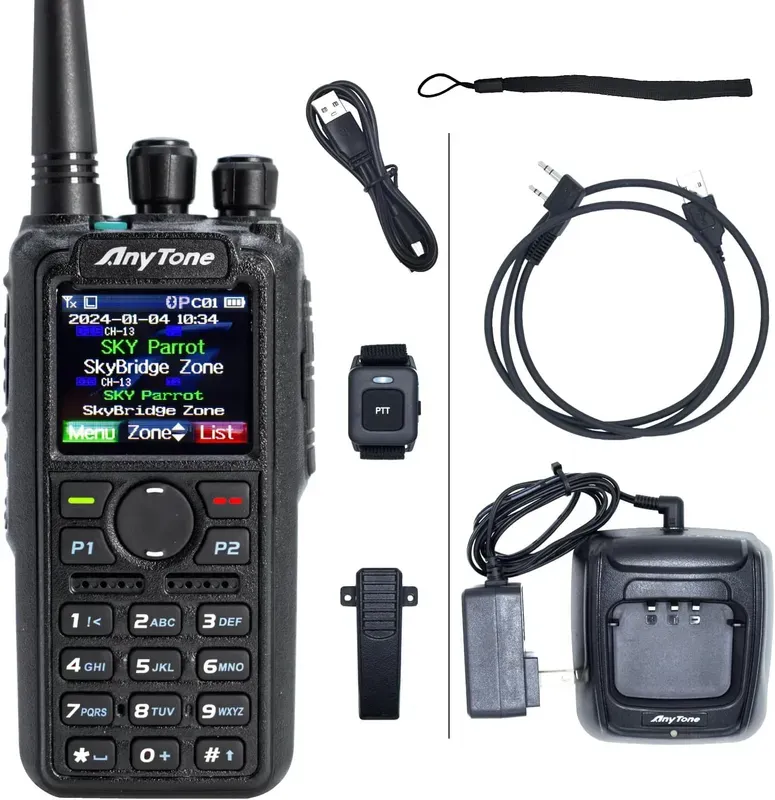
The AnyTone AT-D878UVII Plus is the de facto standard DMR handheld. It does DMR and analog, includes GPS and APRS, and has the deepest community support, which matters enormously when you are hunting for a codeplug or troubleshooting. Our full AnyTone review covers the menu system, which is its main weakness.
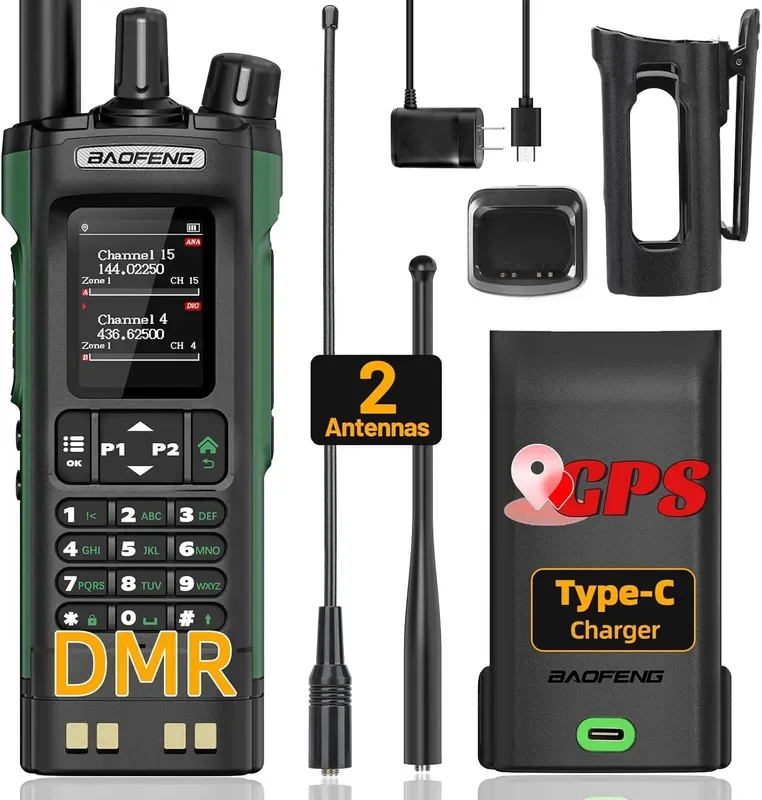
If you just want to try DMR without spending $250, the Baofeng DM-32 gets you DMR Tier II, APRS, and GPS for around $49.99. It is rougher around the edges and the software is fiddly, but it is the cheapest honest way to find out whether digital voice is for you. Browse the full lineup on our best DMR radios page.
Some budget DMR radios advertise "AES256 encryption" as a feature. FCC Part 97.113(a)(4) prohibits transmitting messages encoded to obscure their meaning, so you cannot legally use it on US amateur frequencies. Owning a radio that can do it is fine; turning it on when you transmit on ham bands is not. Leave encryption off.
D-STAR: The Icom Ecosystem
D-STAR (Digital Smart Technologies for Amateur Radio) is the oldest of the three digital voice modes, developed by the Japan Amateur Radio League and built almost exclusively by Icom (with a couple of Kenwood models). It is a proprietary system, and in practice that means buying into Icom's hardware ecosystem from the handheld up to the repeater.
D-STAR's network is organized around reflectors, internet-connected hubs that link repeaters together. Once your radio is configured for your local repeater, day-to-day operation is genuinely simple, arguably the easiest of the three to use once it is set up. The infrastructure is mature and has been nationally interconnected for years.
There are two honest knocks against D-STAR. First, cost: Icom D-STAR handhelds typically run $350 to $700, several times the price of a budget DMR radio. Second, its voice codec is the original AMBE, an older generation than the AMBE+2 used by DMR and Fusion, and many operators find its audio a touch more robotic, though this is subjective and depends heavily on the radio and the link path.
A note on our coverage: RadioRanked focuses on budget and mid-range handhelds, and we do not currently stock Icom D-STAR radios. If D-STAR is strong in your area and you want into that ecosystem, the Icom ID-50A and ID-52A are the current mainstream handhelds to research. We would rather tell you that plainly than pretend our catalog covers a mode it does not.
C4FM / System Fusion: Yaesu's Middle Ground
System Fusion is Yaesu's proprietary digital mode, and the underlying signal is called C4FM (four-level frequency-shift keying). It sits between DMR and D-STAR on almost every axis: easier to set up than DMR, cheaper than D-STAR, with audio quality on par with DMR since it also uses the AMBE+2 codec.
Fusion's killer convenience feature is AMS (Automatic Mode Select). A Fusion repeater running AMS can accept both analog FM and digital C4FM and sort them out automatically, so a Fusion repeater never locks out the analog crowd. Internet linking is handled by Wires-X, Yaesu's system of internet-connected nodes and "rooms" (the Fusion equivalent of talkgroups or reflectors).
The tradeoffs are the familiar proprietary ones: a smaller radio selection than DMR, all from one manufacturer, and a user base that varies a lot by region. Fusion is strong in some areas and nearly absent in others, so check your local repeater list before committing.
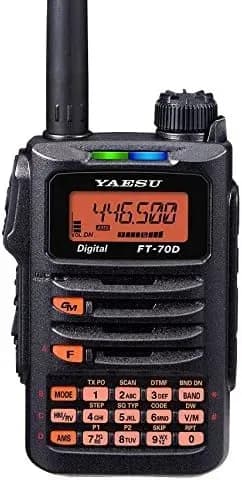
Fusion is well represented in our catalog, at both ends of the range. The Yaesu FT-70DR is the entry point: a no-frills dual-band Fusion handheld for around $299.98 that skips the GPS and touchscreen of pricier Yaesu models but gets you on C4FM with Yaesu build quality. Our FT-70DR review digs into whether the premium over a Baofeng is justified.
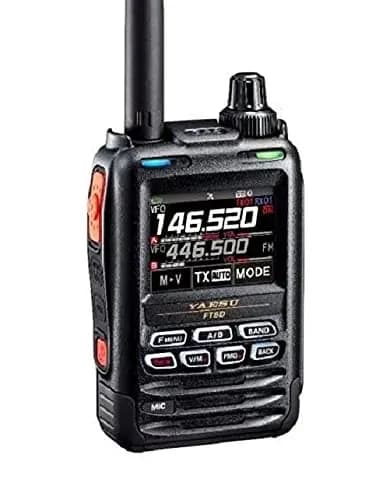
At the other end of the lineup sits the Yaesu FT-5DR, Yaesu's flagship Fusion handheld at around $499.95. It adds two independent receivers, a full-color touchscreen with a real-time band scope, a built-in GPS feeding a 1200/9600 bps APRS modem, Bluetooth, IPX7 waterproofing, and the Wires-X Portable Digital Node function. It is a lot of radio, and the price reflects that; it earns its keep only if you are committed to Fusion and want the best hardware Yaesu makes. If you are weighing the two, our FT-5DR vs FT-70DR comparison lays out who each one is for.
APRS: Data, Not Voice
APRS (Automatic Packet Reporting System) is the odd one out, and the most misunderstood. It is not a voice mode at all. Created by Bob Bruninga, WB4APR, it is a data system for broadcasting small packets of information: your GPS position, a short text message, weather data, or telemetry. If you have ever seen a live map of ham operators moving around in real time, that is APRS.
In North America, almost all APRS activity happens on a single frequency, 144.390 MHz, using 1200-baud packet (AX.25). The network is built from digipeaters (radios that rebroadcast packets to extend their reach) and IGates (stations that feed RF packets into the internet-based APRS-IS network, where anyone can see them on sites like aprs.fi).
Because it rides on the VHF/UHF bands, APRS coexists with whatever else your radio does. Plenty of DMR handhelds, including the AnyTone above, transmit APRS position beacons alongside their digital voice. The classic use cases are tracking yourself on a hike or a POTA activation, sending short messages where there is no cell coverage, and automatic weather station reporting.
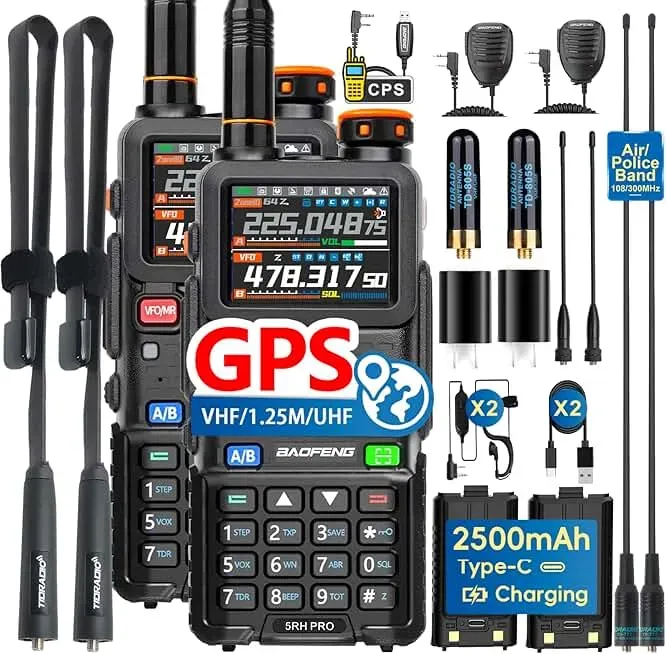
For a clean, affordable APRS-and-analog handheld without the DMR complexity, the Baofeng BF-5RH PRO packs APRS, GPS, and 10 watts into a tri-band radio for around $71.69. See the best APRS radios page for more options.
Hotspots: How Most People Actually Get on Digital
Here is the thing nobody tells beginners: you often do not need a local digital repeater at all. A hotspot is a tiny device, usually a Raspberry Pi running the free Pi-Star software with an MMDVM board, or a self-contained commercial unit, that bridges your handheld to the internet. Your radio transmits to the hotspot on very low power (around 10 to 20 milliwatts, often sitting on your desk a few feet away), and the hotspot relays you onto DMR, D-STAR, or Fusion networks over your home internet.
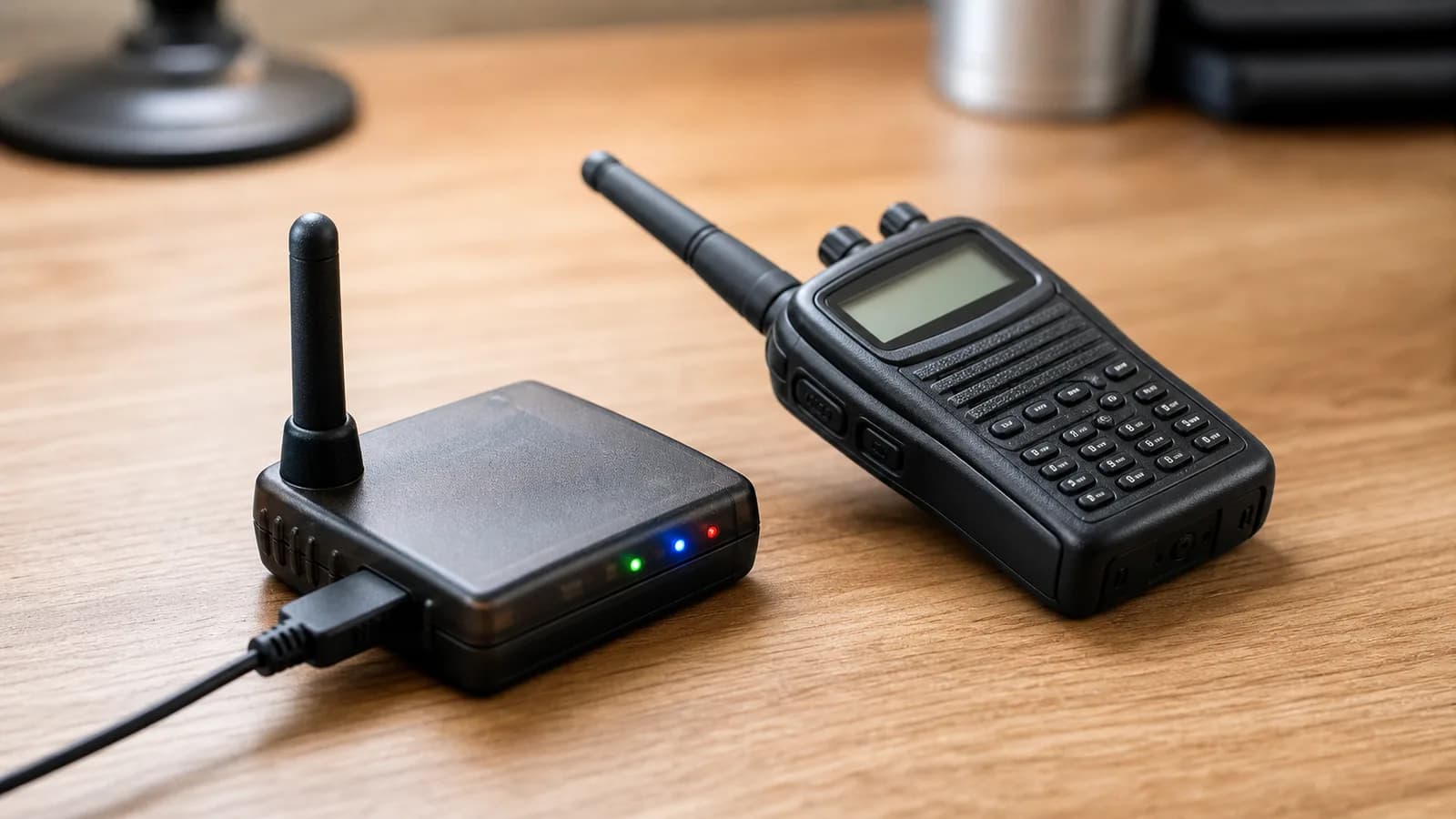
This changes the math completely. If there is no DMR repeater within 50 miles of you, a $100 hotspot still puts you on every BrandMeister talkgroup in the world. Many hams run digital modes almost entirely through a hotspot. It is also the most reliable way to try a mode before you know whether your area has repeater coverage for it.
The Interoperability Problem
It bears repeating because it trips up so many newcomers: the three digital voice modes cannot talk to each other directly. A DMR radio, a D-STAR radio, and a Fusion radio standing on the same table are mutually deaf. Each uses a different protocol and, in D-STAR's case, even a different codec.
Bridging between modes is possible but requires transcoding, special cross-mode reflectors, or hardware that decodes one and re-encodes the other. It is firmly an advanced-operator project, not something you set up on day one. The practical lesson: pick the mode your community actually uses, because owning a radio for the "wrong" mode in your area means talking to nobody.
Cost and Setup, Side by Side
| Mode | Entry radio cost | Network cost | Setup effort | Easiest path to first contact |
|---|---|---|---|---|
| DMR | ~$55 (budget) to ~$250 (flagship) | Free (BrandMeister) | High (codeplug) | Borrow a regional codeplug, edit your callsign in |
| Fusion | ~$150 to ~$400 | Free (Wires-X) | Low to moderate | Program local repeater, select a Wires-X room |
| D-STAR | ~$350 to ~$700 | Free (most reflectors) | Low once configured | Register your callsign, set repeater + reflector |
| APRS | ~$60+ (built-in) | Free | Moderate | Set callsign + SSID, beacon on 144.390 MHz |
DMR has the lowest hardware cost but the highest setup effort. Fusion costs more upfront but is the gentlest to configure. D-STAR is the priciest to buy into. APRS is cheap and unique, but it is a complement to a voice mode, not a replacement for one.
Which Mode Should You Choose?
The honest decision tree is shorter than the spec sheets suggest:
- Start by checking your local repeaters. Use RepeaterBook to see which digital modes are active near you. The mode with the most local activity wins by default, because a digital radio is only as useful as the people you can reach with it.
- On a budget, or no clear local winner? Choose DMR. It is the cheapest, the most popular nationwide, and a hotspot guarantees you access regardless of local repeater coverage. Accept that the setup will take an evening.
- Want the least fuss and own (or like) Yaesu? Choose Fusion. AMS analog fallback and Wires-X make it the most beginner-friendly digital voice experience.
- Already in the Icom ecosystem, or D-STAR is dominant locally? Choose D-STAR, and budget accordingly.
- Want position tracking, messaging, or emergency data? Add APRS to whatever else you run. It is not an either/or.
If you are brand new and just want to get on digital with the widest reach for the least money, DMR with a hotspot is the answer most experienced operators will give you. If you value a smooth first experience over saving money, Fusion is the gentler on-ramp.
Getting Started
Whichever mode you land on, the path looks the same:
- Get licensed (Technician is enough) and pick your mode based on local activity.
- Register your callsign where required. DMR needs a RadioID number; D-STAR needs a one-time gateway registration.
- Get a codeplug or configuration. For DMR, download a community codeplug for your region rather than building one from scratch. CHIRP handles analog channels on many of these radios, but digital configuration needs the manufacturer's software; see our CHIRP guide for where that line sits.
- Find a net. Local clubs run scheduled digital nets that are the friendliest place to make your first contact. Listen first, then check in.
- If your area is thin on repeaters, buy a hotspot. It removes the local-coverage problem entirely.
Digital modes look intimidating from the outside, but the barrier is almost entirely the initial setup. Once your radio is programmed and you have made a contact or two, it becomes routine. Start with the mode your neighbors use, lean on community codeplugs and nets, and do not be afraid to ask; the digital crowd is used to walking newcomers through it.