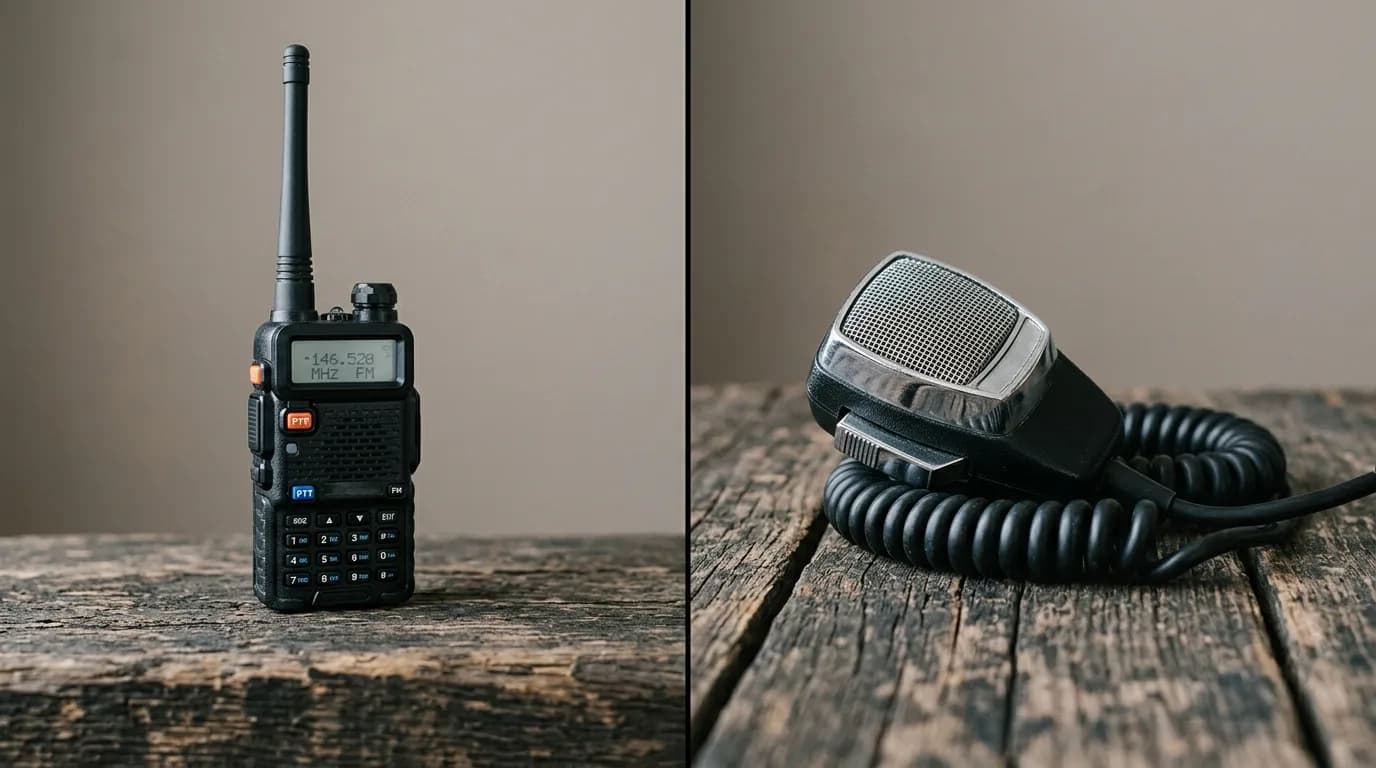

Quick answer: CB radio is license-free with 4 watts of power and 1 to 5 miles of typical range, popular in trucking and off-road culture. Ham radio requires a 35-question Technician exam (a $35 to $50 one-time cost) and unlocks up to 1,500 watts of power, repeater networks reaching 50+ miles, digital modes like DMR, and access to dozens of frequency bands. Pick CB for casual short-range and convoy comms; pick ham radio for hobby depth, range, and emergency capability.
Ham radio and CB radio both let you talk to people over the air without a cell tower. That's where the similarity ends. They run on different frequencies, follow different rules, attract different communities, and serve different purposes. Neither is objectively "better." The right choice depends on what you need.
I used a CB in college for a summer job driving a delivery truck. It did exactly what I needed: short-range coordination with other drivers on a shared channel. A decade later, I have a General-class ham license, a POTA logbook, and gear that can reach repeaters 50 miles away. Different tools for different problems. This guide helps you figure out which one fits yours.
CB Radio: The Basics
Citizens Band (CB) radio is a two-way radio service that anyone can use without a license. The FCC set aside 40 channels on the 27 MHz band (HF) for public use, and that's what you get. No exam, no application, no call sign. Buy a radio, plug it in, and start talking.
CB radios are limited to 4 watts of output power by FCC rule (Part 95). That translates to roughly 1 to 5 miles of range in typical conditions, sometimes up to 10 miles with line-of-sight terrain and a good antenna. Most CB equipment is designed for mobile or base station use; handheld CB radios exist but are uncommon.
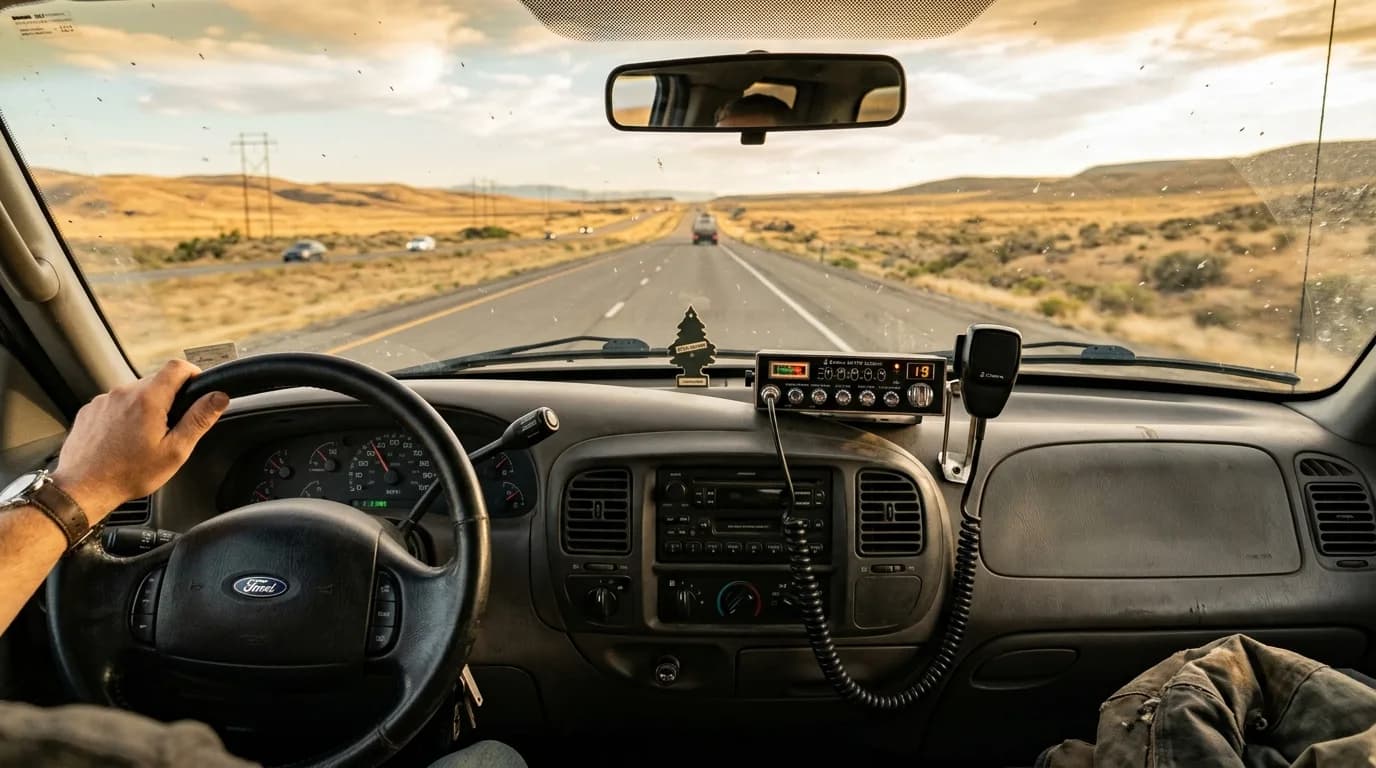
The CB community is strongest in trucking, off-road/4x4 culture, and road-trip coordination. Channel 19 is the unofficial trucker channel. Channel 9 is the emergency channel. The culture has its own vocabulary (10-codes, handles instead of real names) and a casual, loose vibe that's part of the appeal.
Typical CB setup cost: $50 to $200 for radio plus antenna. No licensing fees. No ongoing costs.
Ham Radio: The Basics
Amateur radio (ham radio) is an FCC-licensed radio service with access to dozens of frequency bands, digital modes, repeater networks, and a worldwide community of over 700,000 licensed operators in the US alone.
The tradeoff for all that capability is a license. You need to pass a 35-question multiple-choice exam to earn your Technician class license, which gives you access to the VHF and UHF bands (2 meters and 70 centimeters) that most handheld radios operate on. The total licensing cost is $35 to $50, it requires a few weeks of study, and there's no age limit. Our guide to getting your ham radio license walks through the entire process.
With a Technician license, you can transmit at up to 1,500 watts (though most handhelds run 5 to 10 watts), access repeaters that extend your range to 50+ miles, use digital modes like DMR, and participate in emergency communication networks (ARES/RACES). Upgrading to General class opens up the HF bands, where you can talk to operators worldwide.
The ham community is large, organized, and welcoming to newcomers. Local clubs, repeater nets, Field Day events, Parks on the Air (POTA), and online forums like r/amateurradio create a hobby with real social depth.
Typical ham setup cost: $30 to $200 for a handheld radio, plus $15 for licensing. Ongoing costs are minimal.
Head-to-Head Comparison
| Factor | CB Radio | Ham Radio |
|---|---|---|
| License required | No | Yes ($35-50, 2-4 weeks study) |
| Exam | None | 35 questions, ~74% to pass |
| Power output | 4W max | 5-1,500W (license dependent) |
| Frequency bands | 27 MHz (40 channels) | Multiple: 2m, 70cm, HF, and more |
| Range (simplex) | 1-5 miles | 3-15 miles (varies by band) |
| Range (repeater) | Rare; few CB repeaters exist | 50+ miles via repeater network |
| Handheld options | Few, mostly mobile/base | Many dedicated handhelds |
| Entry cost | $50-200 (radio + antenna) | $65-250 (radio + antenna + license) |
| Digital modes | Not standard | DMR, D-STAR, C4FM, APRS |
| Emergency integration | No formal networks | ARES, RACES, mutual aid |
| Community size (US) | ~500K active users | ~700K+ licensed operators |
| Learning curve | Minimal | Moderate (exam + programming) |
| Etiquette | Casual, handle-based | Structured, call-sign-based |

When CB Radio Is the Better Choice
CB makes sense when simplicity and immediacy matter more than range or capability.
Trucking. CB is the lingua franca of the road. If you drive for a living, CB is not optional; it's the standard communication tool that connects you to other drivers, traffic updates, and road conditions. Channel 19 is how truckers have coordinated for decades.
Off-road and 4x4 groups. The off-road community runs on CB. Your trail ride group almost certainly uses CB for vehicle-to-vehicle coordination. Showing up with a ham radio when everyone else is on CB channel 4 doesn't help anyone.
Quick family coordination. On a road trip with multiple cars, CB gives everyone instant communication with zero setup. No programming, no repeater lookups, no licensing. Buy two radios, pick a channel, go.
No time or interest in studying. If you need a radio this weekend and don't want to study for an exam, CB is ready immediately.
Honest CB drawbacks: Range is limited (1 to 5 miles typical). The 40-channel band gets crowded and noisy, especially near highways. There's no repeater infrastructure to extend your range. The technology is essentially static; CB hasn't evolved meaningfully in decades. And the community, while fun, is much smaller and less organized than ham outside the trucking world.
When Ham Radio Is the Better Choice
Ham radio makes sense when you want a hobby, not just a tool.
Emergency preparedness. If you're serious about emergency communications, ham radio is the only two-way radio service with organized emergency networks. ARES (Amateur Radio Emergency Service) and RACES provide structured volunteer communication during disasters. CB has no equivalent. For emergency-focused radios, we have a dedicated ranking.
Long-range communication. With a Technician license and a $70 handheld, you can hit repeaters 50 miles away. With a General license and an HF rig, you can talk to operators on the other side of the planet. CB tops out at a few miles under normal conditions.
Technical depth. If you're interested in how radio actually works, propagation, antenna design, digital signal processing, satellite communication, ham radio has limitless depth. CB offers none of that.
Community and mentorship. Ham clubs meet regularly, run training sessions, organize Field Day events, and welcome beginners. The licensing process itself connects you to a community of volunteer examiners who want you to succeed.
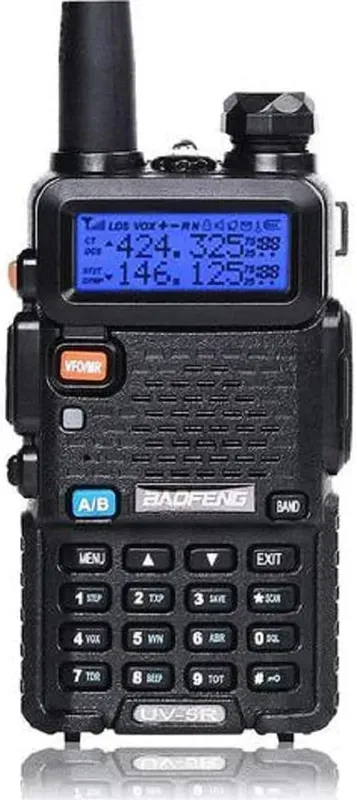
Honest ham drawbacks: The license requirement is a real barrier, even if it's a low one. Initial setup is more complex; you'll need to program your radio with CHIRP or manufacturer software. The etiquette is more formal (call signs, not handles). And the equipment can cost more if you want capabilities beyond a basic handheld, though a Baofeng UV-5R at $17.16 gets you started.
Which Should You Choose? A Decision Guide
Ask yourself these questions:
Do you need a radio today? CB. You can buy one, plug it in, and start talking. Ham requires a license first.
Are you willing to study for 2 to 4 weeks? If yes, ham gives you vastly more capability for roughly the same money.
Is your primary use case driving or off-roading? CB. It's the established standard in those communities.
Do you want a long-term hobby? Ham. CB is a tool; ham is a hobby with progression (Technician to General to Extra), community events, and endless learning.
Is emergency communication important to you? Ham. No contest. ARES, RACES, and repeater networks make ham radio the backbone of volunteer emergency comms.
Do you want to talk beyond 5 miles? Ham. Repeaters, HF, and digital modes extend your range far beyond what CB can do.
Can't decide? Start with CB for immediate use. If you find yourself wanting more range, more community, or more technical depth, that's your sign to study for a ham license. Many hams started as CB users. The two aren't mutually exclusive; you can own both.
Cost Comparison
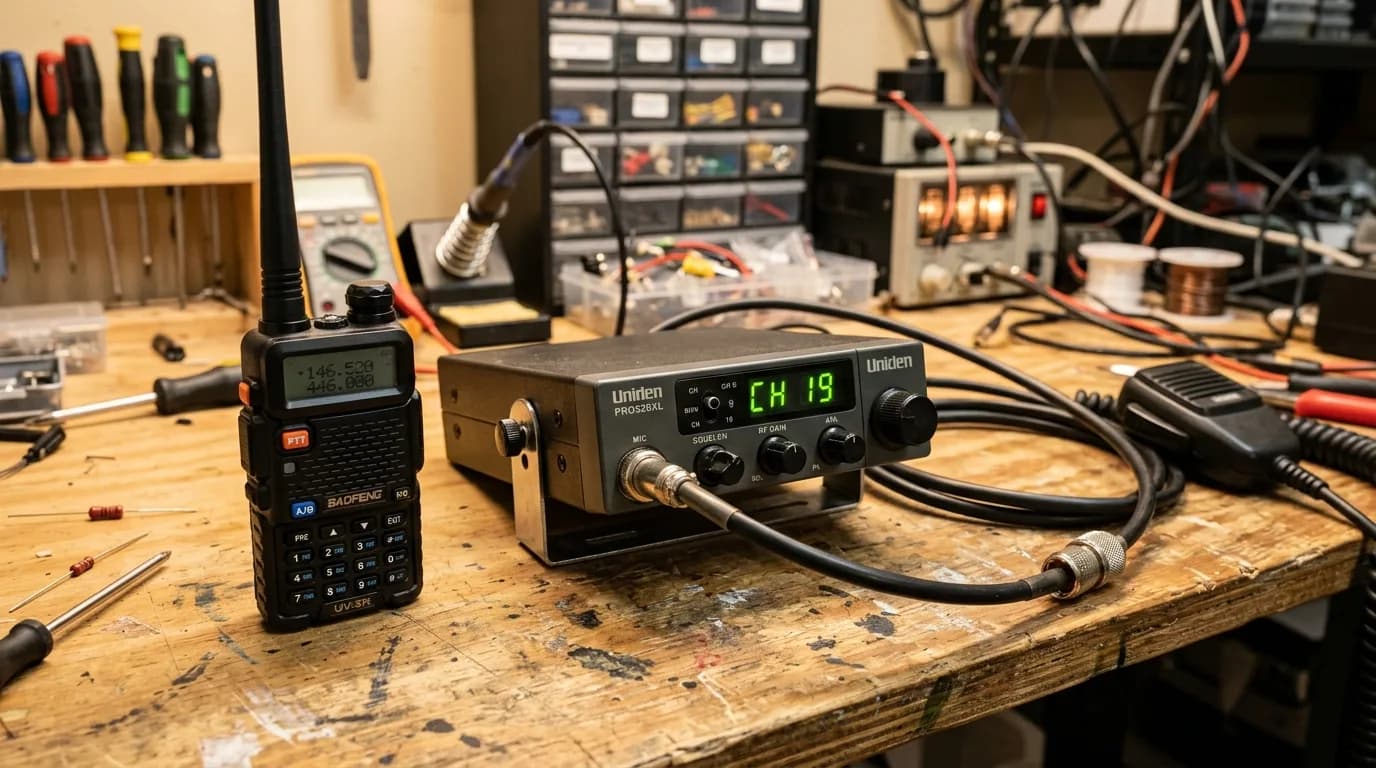
CB Radio Startup
- Radio: $40 to $150
- Antenna: $20 to $100
- Cable and connectors: $10 to $20
- Total: $70 to $270
- Ongoing: Minimal (replacement parts only)
Ham Radio Startup
- FCC application fee: $35 (one-time)
- Exam session fee: $0 to $15
- Study materials: $0 (free online via HamStudy.org, YouTube)
- Radio: from a UV-5R at $17.16 to a BF-5RH PRO at $71.69
- Antenna upgrade: $0 to $20 (stock antenna works to start)
- Total: $50 to $255
- Ongoing: $0 (license renewal is free; exam fee is one-time)
The cost difference is smaller than most people expect. A basic ham setup with a Baofeng and a Technician license can cost less than a mid-range CB radio with a proper antenna.
The Licensing Question
The license is the biggest psychological barrier to ham radio, but the actual barrier is low. Here's the reality:
- 35 multiple-choice questions. You need 26 correct (74%) to pass.
- No Morse code. The FCC eliminated the code requirement in 2007.
- $35 FCC application fee plus $0 to $15 exam session fee. Your license is valid for 10 years. Renewal is free.
- Free study resources. HamStudy.org and the ARRL question pools are all you need.
- Study time: Most people pass in 2 to 4 weeks of casual study. Some pass in a weekend of focused cramming.
If you can pass a driver's test, you can pass the Technician exam. Our licensing guide has the full walkthrough, and our practice quiz lets you test yourself with real exam questions.
If You Choose Ham: Next Steps
Pass your exam, get your call sign, and pick a radio. The fastest path from "interested" to "on the air" looks like this:
- Study for 2 to 4 weeks using free resources
- Find a local exam session at ARRL.org
- Pass the exam and get your call sign (usually within a week)
- Buy a radio and program it with CHIRP
- Find local repeaters on RepeaterBook and start listening
For radio recommendations, check our best handheld ham radios roundup, our beginner buying guide, or the best radios for beginners. If you're on a tight budget, our Baofeng guide covers every model worth buying.
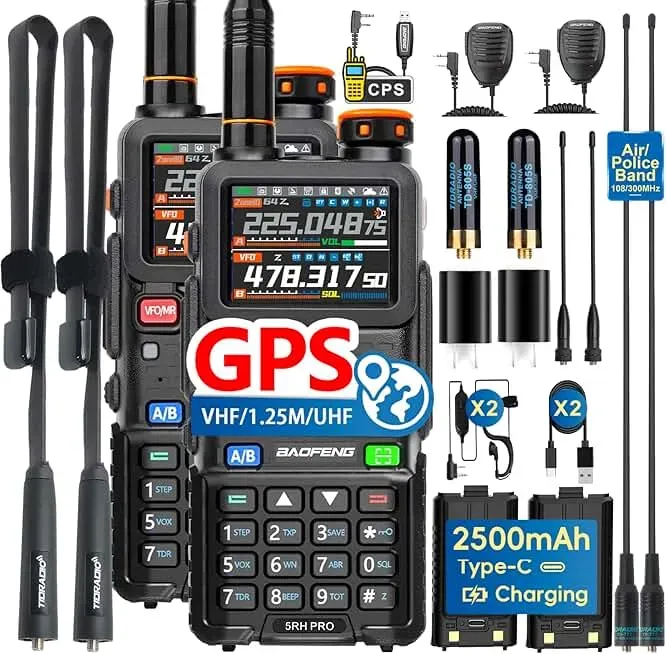
And if you're unsure which frequency bands you'll be using, our VHF vs UHF guide explains the practical differences.
Bottom Line
Ham radio and CB radio are not competitors. They solve different problems for different people.
Choose CB if you want quick, license-free communication for driving, off-roading, camping, or short-range coordination. It's immediate, simple, and part of its own culture.
Choose ham if you want a hobby with real depth, long-range capability, organized emergency networks, digital modes, and a community that will still be teaching you something new ten years from now.
I respect CB culture. I chose ham because I wanted more: more range, more community, more learning. Both are valid choices. Pick the one that fits your life, and if you pick wrong, switching is easy.