Mission briefing
Best DMR Handheld Radios in 2026
DMR handheld radios are built for amateur radio operators who want the clarity and efficiency of digital voice communication alongside the flexibility to operate on traditional analog frequencies. They're especially popular with hams who participate in linked repeater networks, digital talkgroups, or emergency communications teams where reliable, interference-resistant audio makes a real difference.
When evaluating DMR handhelds, the specs that matter most are output power, APRS support, and GPS integration. Power determines how reliably you'll hit distant repeaters, while APRS and GPS open up position reporting and tracking capabilities that are increasingly common in both everyday ham use and emergency deployments. A radio that covers all three gives you a genuinely versatile tool rather than a single-purpose device.
The BTECH DMR-6X2 PRO earns the top spot by delivering a well-rounded feature set, strong software support, and a build quality that holds up in real-world use, all at a price point that makes it accessible without feeling like a compromise.
Ranked by our feature score, a weighted model of specs, features, value and Amazon review data, across 5 qualifying radios in this category.
#1 · Our Top Pick
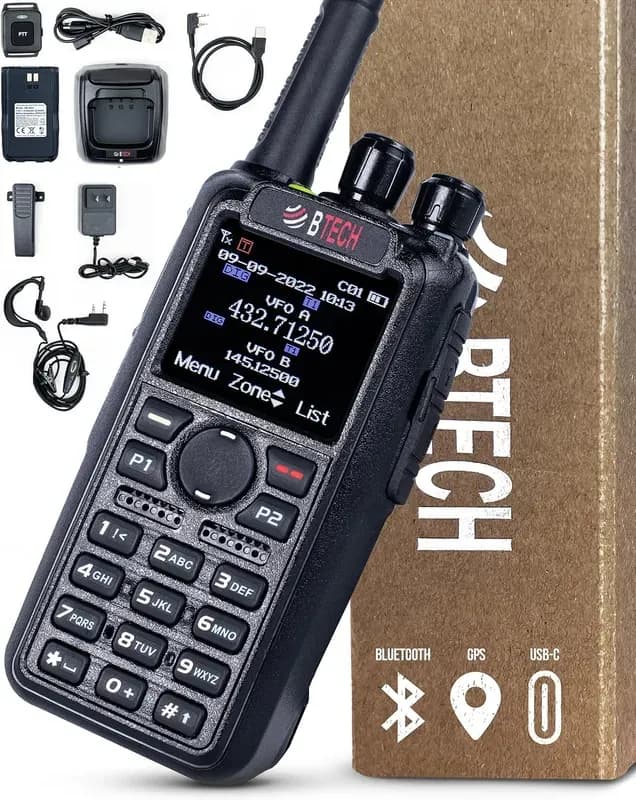
The BTECH DMR-6X2 PRO is aimed at the digitally curious ham who wants to step beyond basic FM repeater work without committing to a top-shelf Kenwood or Motorola price tag. It fits best in the hands of a General or Extra class operator who already understands DMR fundamentals and wants a versatile field radio rather than a primary shack piece. The feature set is genuinely strong for the price point. DMR Tier I and II support with MOTOTRBO compatibility means this radio can operate on most North American DMR networks, and the inclusion of both analog and digital APRS (transmit and receive) paired with integrated GPS makes it a capable platform for position reporting and mesh coordination. The Talker Alias display adds practical clarity on busy talkgroups. Bluetooth opens options for wireless programming and audio accessories without a cable hunt. At $249.89, the value proposition is harder to defend once you factor in the lack of a stated IP rating and the missing medium and low power output figures, details that matter in the field. This one rewards buyers who are already comfortable with CPS programming tools like CHIRP; newcomers may find the learning curve discouraging.
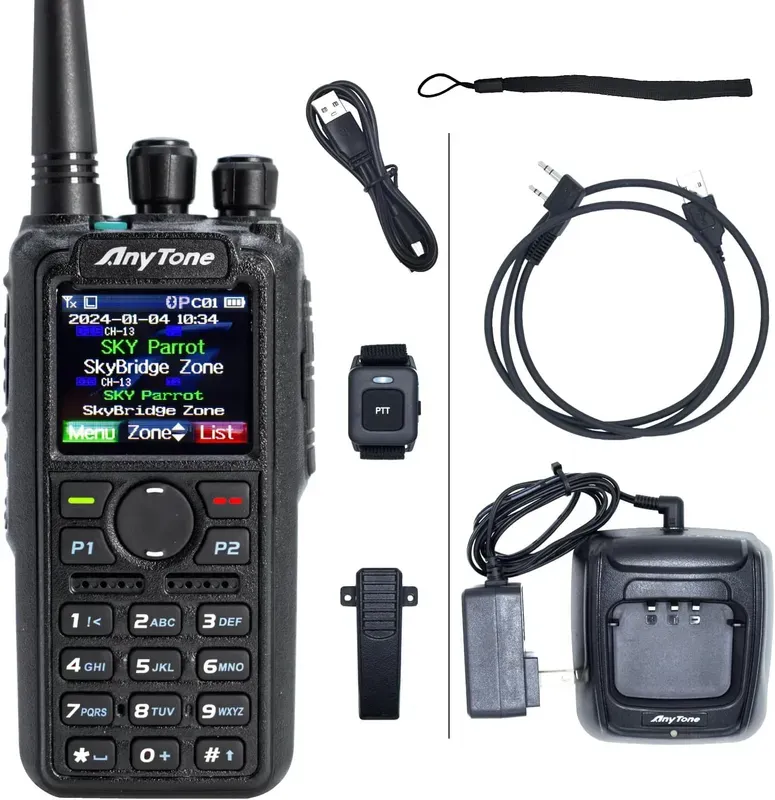
$249.99 · 7W · 3100mAh
This radio is aimed squarely at the intermediate-to-advanced operator who wants a full-featured DMR HT without stepping into commercial-tier pricing. It is not a first radio, and it does not pretend to be. If you are already comfortable with codeplug workflows and want GPS, APRS, and Bluetooth in a single handheld under $250, this is a credible option to evaluate. The 4000-channel memory and integrated GPS make it genuinely useful for operators active on DMR talkgroups across multiple regions, and the APRS implementation runs independently without needing a separate TNC. At 7W on VHF, output is competitive for a handheld, though the 280g weight and IP54 splash resistance mean it is better suited to structured field use than prolonged outdoor exposure. Beginner-friendliness scores toward the lower end of the scale, which is an honest reflection of the codeplug-centric programming model. At $249.99, the feature-to-price ratio is reasonable for what the hardware delivers, though buyers who will not use DMR or APRS are paying for modes they will never touch. Buy it if you are ready to invest time in configuration; pass if you want something to program in an afternoon.
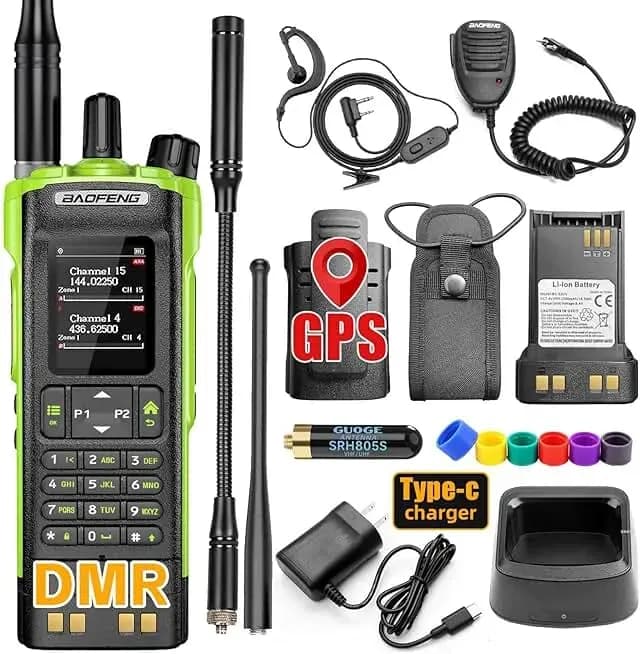
$63.99 · 10W
The Baofeng DM-32UV Pro is aimed at Technician and General class operators who want a foot in the DMR world without committing to a Tier II radio at twice the price. It fits between a basic analog HT and a purpose-built DMR portable, which makes it a reasonable first digital radio rather than a replacement for one. The feature set scores well for this price bracket: DMR digital mode, APRS, and integrated GPS give you text messaging, position reporting, and talkgroup access on a single device. The 4000-channel memory is generous, and 10W output on VHF/UHF is competitive at this tier. The beginner-friendliness score is middling, so expect a learning curve if this is your first DMR rig; CHIRP support will help on the analog side, but DMR codeplug management is a separate task entirely. There is no water resistance rating here, which limits its appeal for portable outdoor use. At $99.99, this is a value-oriented buy for operators who want to experiment with DMR and APRS without significant financial risk. Those needing field-durable gear or a polished out-of-box experience should look elsewhere.
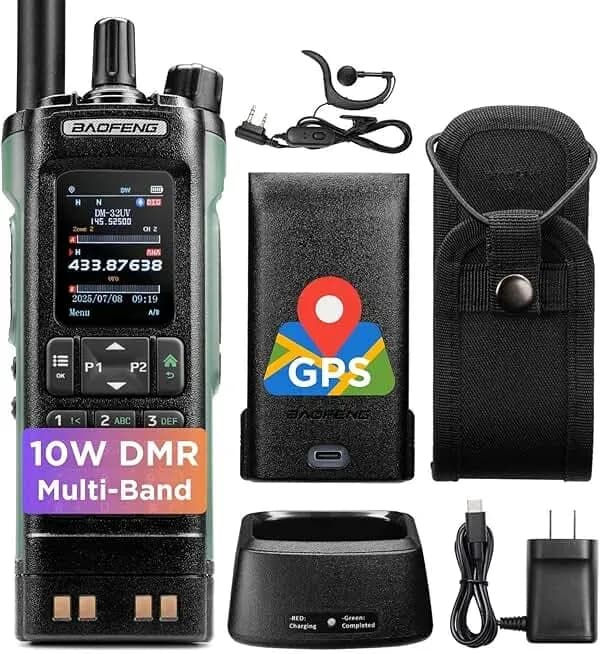
$59.99 · 10W · 2500mAh
Operators looking to step into DMR without committing to a mid-range budget will find the DM-32UV GPS APRS a credible entry point. It sits squarely between a basic analog HT and a purpose-built digital radio, making it a reasonable first DMR rig or a low-risk addition to a go-bag. The headline specs hold up under scrutiny. Ten watts on VHF and UHF is genuinely useful for hitting distant repeaters, and DMR Tier I and II with dual time slot support means you can operate on most DMR infrastructure without workarounds. The integrated GPS and APRS capability adds real practical value for portable ops and public service events, and 4000 memory channels is generous headroom for anyone running multiple band plans or DMR talk group lists. Features score well for the price bracket, though beginner-friendliness is middling, so expect a learning curve if DMR is new territory. At $59.99, the value case is straightforward for a technically literate buyer who knows what they are getting into. The radio is not water resistant, which matters for field use, and medium and low power output figures are unspecified. If you need a ruggedized digital HT, look elsewhere; if you want affordable DMR plus APRS in one chassis, this deserves a close look.
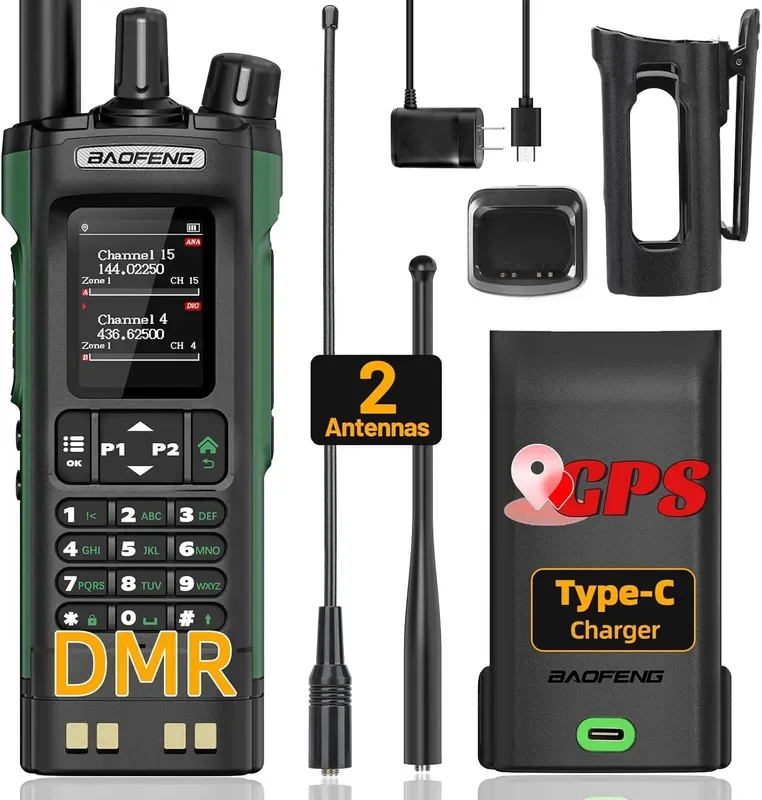
$49.99 · 8W · 2500mAh
The Baofeng DM32 is aimed squarely at newly licensed operators and budget-conscious hams looking to step into DMR without committing to a Tier II radio at three times the price. It sits in a crowded field of entry-level dual-banders, but the addition of GPS and APRS support gives it a meaningful edge over comparably priced analog-only handhelds. At 8W output across VHF and UHF, the RF performance is adequate for most repeater work. The 4000-channel memory is generous for the price point, and CHIRP compatibility means you are not locked into Baofeng's programming software. DMR dual-mode operation lets you run digital talkgroups alongside conventional analog nets without carrying a second radio, which is the practical case for buying this over a simpler HT. Where the DM32 gives ground is portability: at 350g it is noticeably heavier than lighter competing handhelds, and it carries no water resistance rating at all, so field use in variable weather is a real consideration. At $54, this is a reasonable first step into digital for hams who want DMR and APRS without a serious financial commitment. Operators who need field durability or a refined DMR implementation should look higher up the price ladder.
Head-to-head