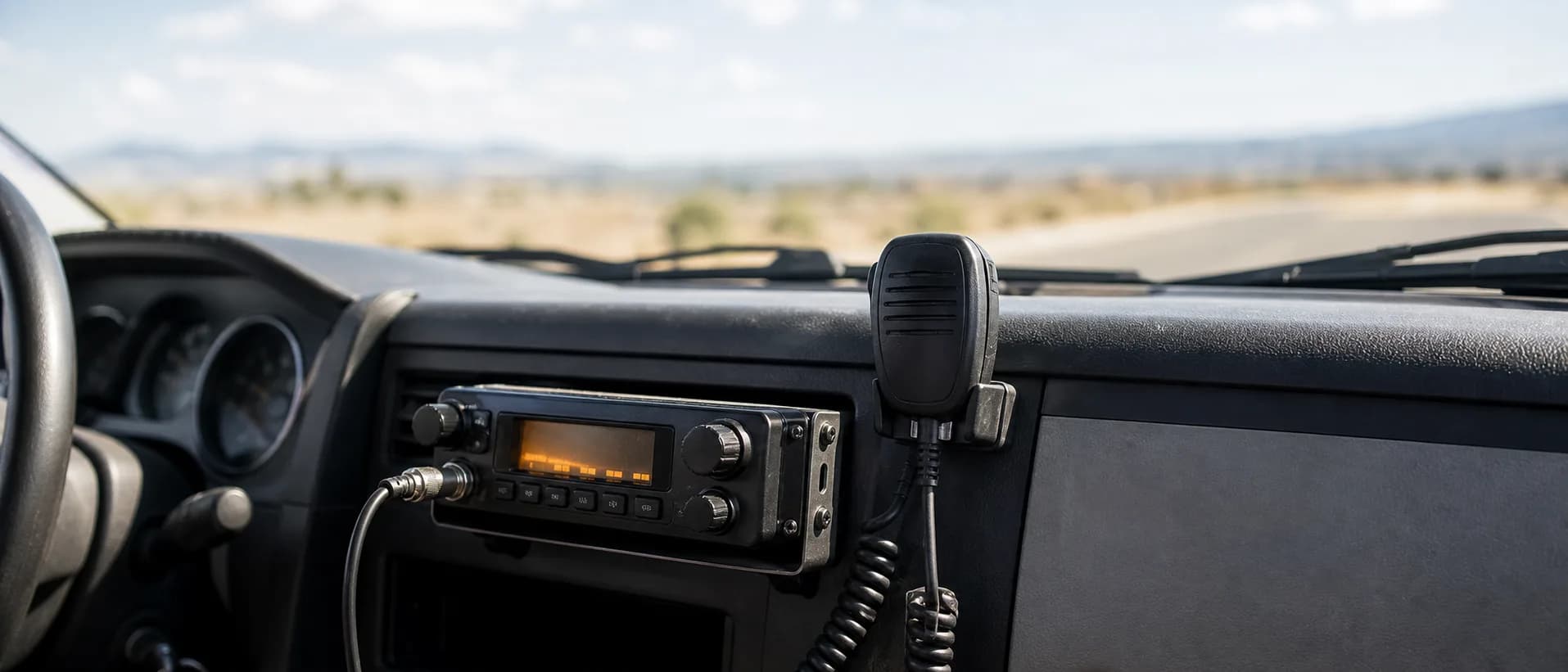

A mobile radio is the upgrade that changes how often you actually get on the air. Where a handheld gives you 5 watts and a stubby antenna, a mobile rig puts 50 watts into a real antenna on your roof or your roofline, with a receiver that pulls in weak repeaters a handheld never hears. Mount it in the truck and your commute becomes drive time on the local net; set it on the desk with a power supply and you have a capable base station for a fraction of an HF rig's price.
The tricky part is that "best mobile ham radio" means very different things to different operators. A new Technician wants a simple, bulletproof 2m/70cm rig for the car. A digital operator wants DMR or Fusion built in. Someone chasing 10-meter openings wants a multi-band radio. So rather than force a single ranking that pretends those are the same need, we picked the best radio for each job. Our overall data-driven favorite is the Yaesu FTM-300DR, but the right radio for you depends on what you want to do with it.
Quick Picks
| Category | Radio | Why it wins |
|---|---|---|
| Best overall | Yaesu FTM-300DR | Fusion, APRS, GPS, and true dual receive in one clean 50W package |
| Best value | AnyTone AT-778UV | A simple, CHIRP-friendly 25W dual-bander at the lowest cost of entry |
| Best for DMR | AnyTone AT-D578UVIII PLUS | The most feature-dense rig here: tri-band 50W DMR with APRS and Bluetooth |
| Best build quality | Icom IC-2730A | Icom's clean receiver and detachable head, if you only need analog |
| Most reliable workhorse | Kenwood TM-V71A | The 4.8-star classic, with built-in EchoLink and a rock-solid front end |
| Best high-power single-band | Icom IC-2300H | 65 watts of rugged, MIL-STD 2-meter output |
| Best multi-band | TYT TH-9800 | Quad-band: transmits on 10m, 6m, 2m, and 70cm |
| Best for 220 MHz | BTECH UV-25X4 | One of the few affordable mobiles that works the quiet 1.25m band |
| Best APRS display | Yaesu FTM-400XDR | A large touchscreen with a live APRS map in the dash |
| Best accessory support | BTECH UV-50X2 | 50W analog with the widest aftermarket mic compatibility |
How We Picked These
Every radio here is scored on the same data-driven engine we use for handhelds, adapted for mobiles: transmit power is weighted more heavily (it is the whole point of a mobile), and the portability dimension is dropped, because nobody carries a rig bolted to a dash. You can see the full ranked list on our mobile radios page, and the scoring details on our methodology page.
We split the picks into categories on purpose. The data ranks the feature-loaded digital rigs at the top, which is fair, but it would bury radios like the Icom IC-2730A and Kenwood TM-V71A that experienced operators consider among the best analog mobiles ever built. A category-by-category list tells you the truth a single number cannot: the best mobile for a DMR enthusiast is not the best mobile for a new Technician who just wants to hit the repeater on the drive home.
Best Overall: Yaesu FTM-300DR
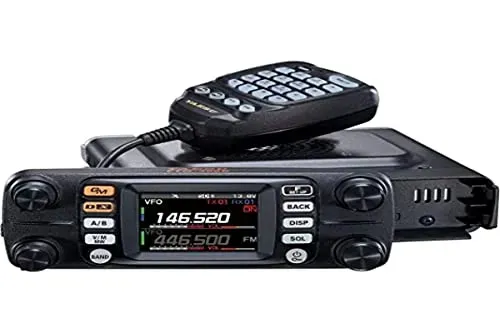
The FTM-300DR is the rig we would put in our own vehicle if we had to pick one. It runs 50 watts on both 2 meters and 70 centimeters, does Yaesu's C4FM System Fusion digital mode alongside ordinary analog FM, and includes APRS at both 1200 and 9600 baud with GPS built in. The standout is true simultaneous dual-band receive, so you can monitor a repeater on 2 meters and a simplex frequency on 70cm at the same time.
It earns the top spot because it does the most things well without demanding the setup gymnastics of a DMR codeplug. Built-in Bluetooth handles a wireless headset, the automatic memory band grouping keeps a busy repeater list tidy, and the three-year Yaesu warranty is reassuring for gear that will live through vehicle heat and vibration. The one honest caveat: Fusion is a Yaesu-only digital standard, so its digital value depends on whether your area has active Fusion repeaters or Wires-X nodes. If it does, this is the easy pick. If your local digital scene runs DMR instead, read on.
Best Value: AnyTone AT-778UV
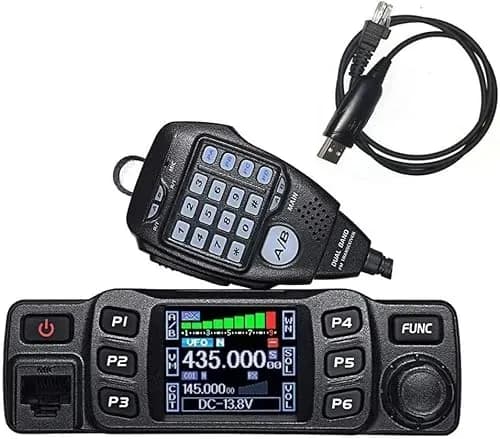
If you just want a reliable mobile to hit local repeaters without spending real money, the AT-778UV is the honest answer. It is a no-frills 25-watt dual-band analog FM radio with a color display, a basic 200-channel memory, and full CHIRP support, which makes programming painless. It ships with the mic and programming cable in the box.
Twenty-five watts is less than the 50-watt rigs here, but it is five times what your handheld puts out, and for most suburban and metro repeater work it is plenty. This is the radio for the newly licensed Technician building a first station on a budget, or anyone who wants a cheap, capable second rig for another vehicle. Do not expect digital modes or a deep feature set; the AT-778UV is deliberately simple, and that simplicity is exactly why it is the best value in the lineup.
Best for DMR: AnyTone AT-D578UVIII PLUS
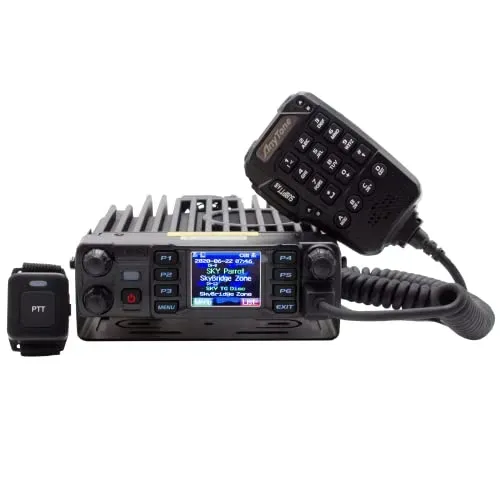
For operators going deep on digital, the AT-D578UVIII PLUS is the most capable radio in our mobile lineup and the highest-scoring at 74. It is a tri-band rig (VHF, 1.25m, and UHF) that runs 50 watts, does DMR Tier II plus analog, and stacks on APRS, GPS, and Bluetooth audio. If you want one radio that covers nearly everything from the vehicle, this is it. Our digital modes guide and What is DMR explainer cover the world it opens up, and the best DMR radios page rounds up the handheld options.
The cost is not just the premium price. DMR means building a codeplug: talkgroups, time slots, color codes, and a contact list that can run into the tens of thousands of entries. Plan to spend an evening with the AnyTone software, ideally starting from a community codeplug for your region, before your first digital contact. For an operator who is comfortable with that, or eager to learn it, nothing else here competes on capability.
Best Build Quality: Icom IC-2730A
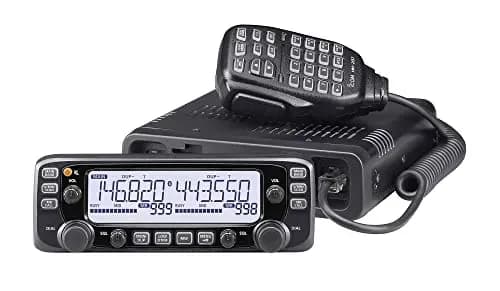
The IC-2730A is the radio experienced operators name when they talk about what a well-built analog mobile feels like. The detachable controller head mounts cleanly on the dash while the body tucks out of sight, the large white backlit display reads at a glance, and Icom's receiver does a genuinely good job rejecting interference on a crowded band plan.
We will be straight about the data: this radio's value score is the lowest in our lineup, because it is analog-only at a premium price in a year when digital-capable rigs cost the same or less. The score reflects that math honestly. What it does not capture is receiver quality and long-term reliability, which are exactly why operators keep choosing the IC-2730A over nominally more feature-rich radios. If you want digital voice, look elsewhere. If you want the cleanest-receiving, best-built analog dual-bander you can mount in a vehicle, this is the one.
Most Reliable Workhorse: Kenwood TM-V71A
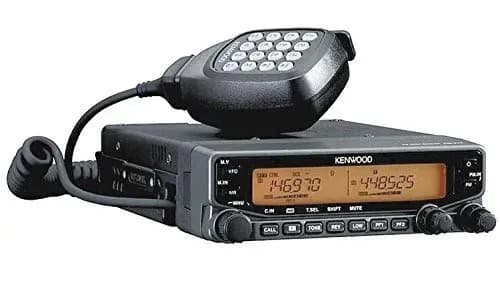
The TM-V71A has been on the market for years and carries the highest customer rating in our lineup at 4.8 stars, which tells you most of what you need to know. It is a 50-watt analog dual-bander with 1000 memory channels, dual receive on the same band, and built-in EchoLink support, including an automatic dialer and full sysop node mode for running an internet-linked node.
It is the radio we recommend to someone who wants to buy once and not think about it again. The receiver is excellent, the controls are logical, and the EchoLink integration is a genuinely useful feature that few other mobiles build in. Like the Icom, it is analog only, so it is not the pick if you want DMR or Fusion. But for a dependable, long-haul VHF/UHF mobile that just works, it has earned its reputation.
Best High-Power Single-Band: Icom IC-2300H
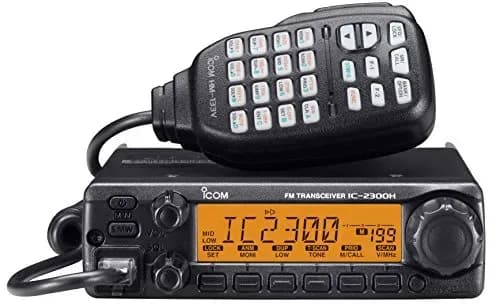
Not everyone needs two bands. If your activity lives on 2 meters, the IC-2300H gives you a stout 65 watts of output, more than the 50-watt dual-banders, built to MIL-STD-810G durability standards. It keeps things simple: 207 channels, a clear display, analog FM, and CHIRP support.
This is the rig for the operator who works a distant 2-meter repeater or runs simplex and wants every watt and a radio that shrugs off rough use. The tradeoff is right there in the description: it is 2 meters only, with no UHF and no digital. That is not a flaw, it is a deliberate focus, and for a single-band VHF station it does the job better and tougher than a split-the-difference dual-bander.
Best Multi-Band: TYT TH-9800
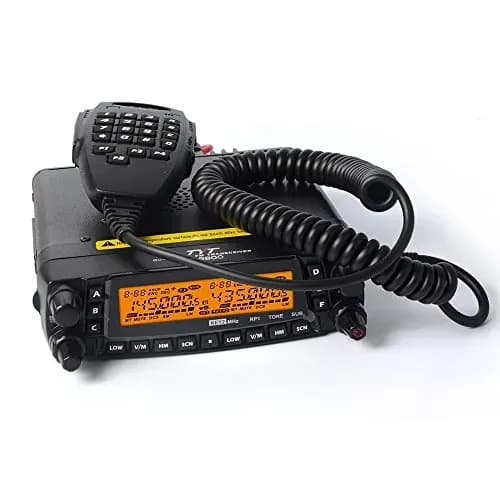
The TH-9800 is the cheap ticket to bands most mobiles ignore. It transmits on four bands: 10 meters (29 MHz), 6 meters (52 MHz), 2 meters, and 70 centimeters, at 50/40 watts, with a remote-mountable faceplate and 800 channels. When 10 meters opens during a solar peak, or 6 meters lights up with summer sporadic-E, you can work it from the same radio that handles your local repeaters.
It is a budget radio and the four-star rating reflects that; build quality is acceptable rather than exceptional. Two things trip people up, so we will say them plainly: you must use a true quad-band antenna (a dual-band antenna will not work properly), and you need to set CTCSS tones correctly to avoid transmit noise. Get those right and the TH-9800 delivers band coverage that would otherwise cost far more.
Best for 220 MHz: BTECH UV-25X4
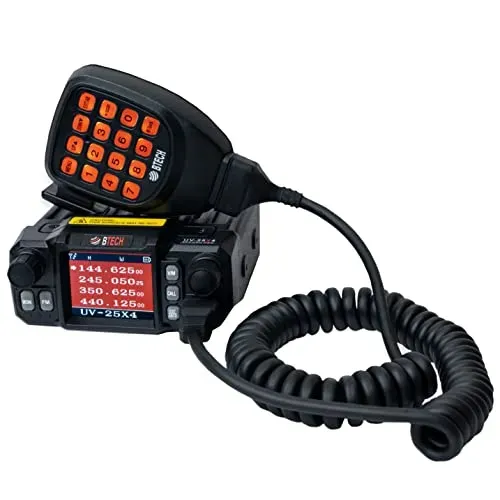
The 1.25-meter band (around 222 MHz) is quiet, underused, and oddly hard to find a radio for. The UV-25X4 is one of the few affordable mobiles that transmits on it, alongside the usual 2m and 70cm, at 25 watts. It runs as multiple radios in one with dual-watch monitoring, uses the common K1 accessory jack for wide aftermarket mic support, and converts to a base station with an optional power supply. It is CHIRP compatible.
This is a niche pick, and that is the point: if you have a 220 repeater in range or you want to explore a band with elbow room, very little else competes at this price. The honest notes are the 25-watt ceiling rather than 50, and an audible relay click when you dual-watch 220 MHz alongside VHF or UHF. Neither is a dealbreaker for the operator who specifically wants 1.25m coverage.
Best APRS Display: Yaesu FTM-400XDR
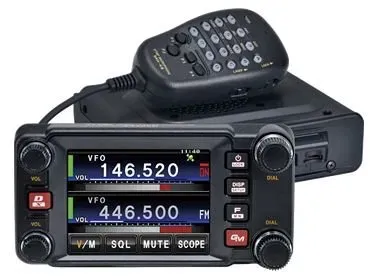
The FTM-400XDR is the touchscreen sibling of our top pick. It runs 50 watts, does C4FM Fusion and analog, and centers everything on a large color touchscreen that doubles as a live APRS map and GPS readout. For an operator who spends time watching APRS traffic or tracking station positions, seeing it laid out visually in the dash is genuinely useful. Wideband receive lets it monitor aviation and other services alongside the ham bands, and a microSD slot handles logging.
It splits opinion. Touch controls are great for maps and menus but fiddly for quick adjustments while driving, and unlike the FTM-300DR there is no Bluetooth, which stands out at a premium price for an older-generation flagship. Pick it specifically for the graphical APRS experience; if you want the cleaner, newer Fusion package, the FTM-300DR is the better buy.
Best Accessory Support: BTECH UV-50X2
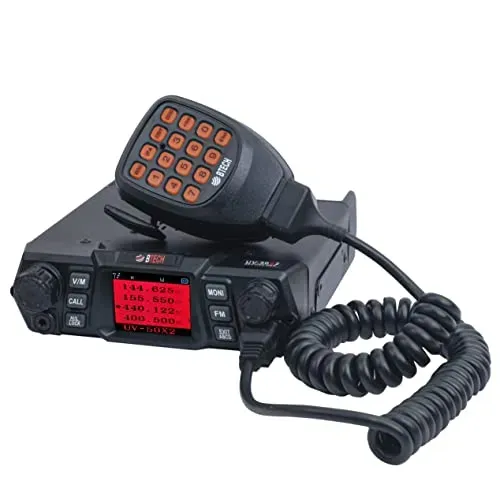
The UV-50X2 is a straightforward 50-watt analog dual-bander whose calling card is flexibility. The RJ45 microphone port and included K1 audio adapter give it the widest aftermarket accessory compatibility in the lineup, so you can pair it with whatever speaker mic or headset suits your install, and it converts cleanly to a base station with an optional power supply. Dual-watch monitoring covers up to three channels.
It sits in an awkward spot: a mid-priced analog radio in a market where that money also buys digital. If you want DMR or Fusion, this is not your radio. But if you specifically want simple, reliable 50-watt analog FM with the freedom to build out your own audio setup, the UV-50X2 makes a reasonable case for itself.
Mobile vs Handheld: Why Bother?
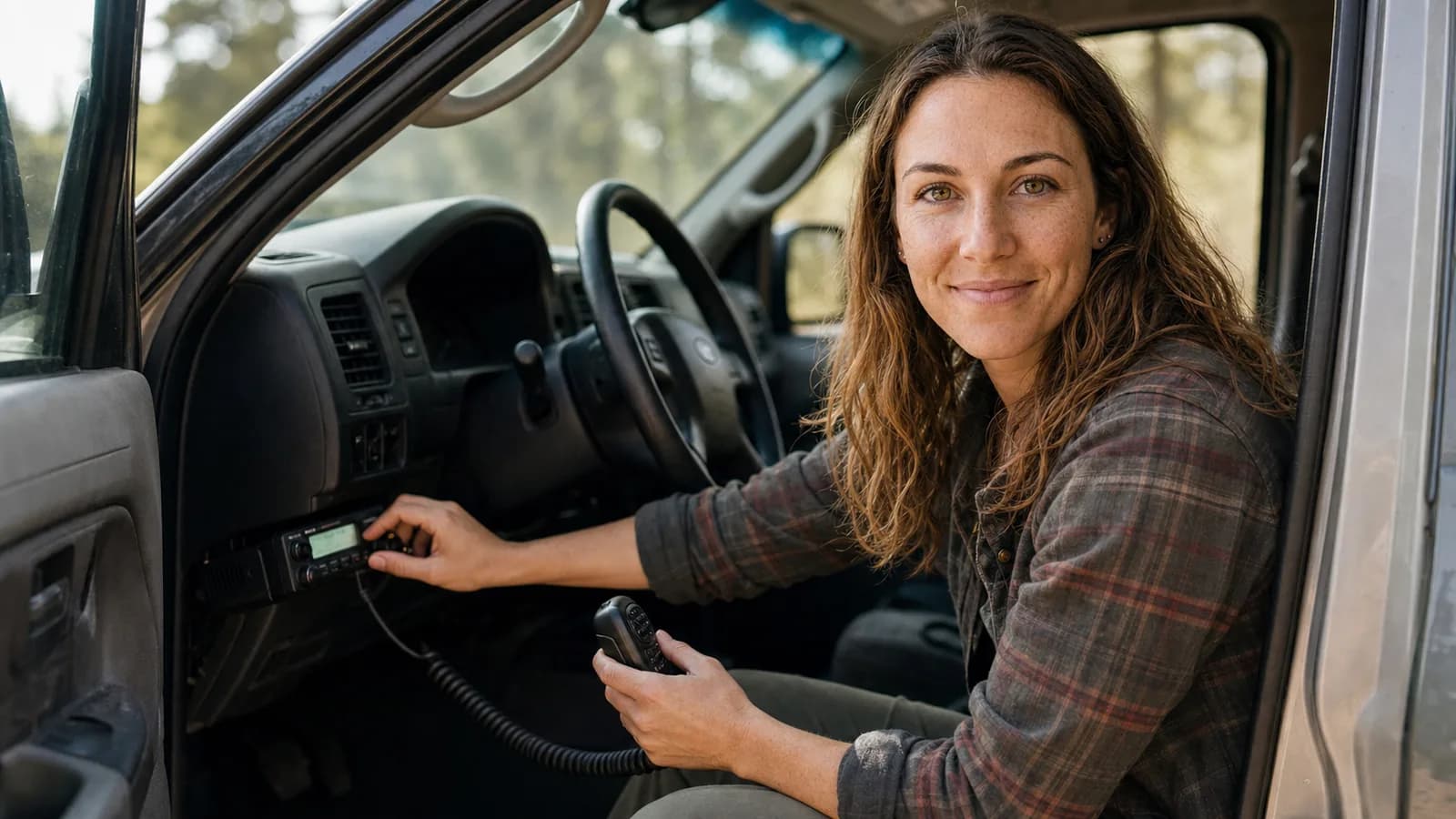
If you already own a handheld, the obvious question is whether a mobile is worth it. The short answer is range and reliability. A handheld is line-of-sight limited at 5 watts on a tiny antenna; a mobile gives you 25 to 65 watts feeding a full-size antenna mounted high on a vehicle or a mast at home. That combination, more power and a far better antenna, is what lets you reach repeaters and simplex contacts a handheld simply cannot.
A mobile also has a better receiver, real heat dissipation for sustained transmit, and a proper microphone. None of that replaces a handheld for walking around or grab-and-go use, which is why most operators end up owning both. If you are still shopping for that first handheld, see our best handheld ham radios roundup. The mobile is the next step, not the first one.
What to Know Before You Buy a Mobile
A mobile radio is not quite plug-and-play. Three things matter before you order:
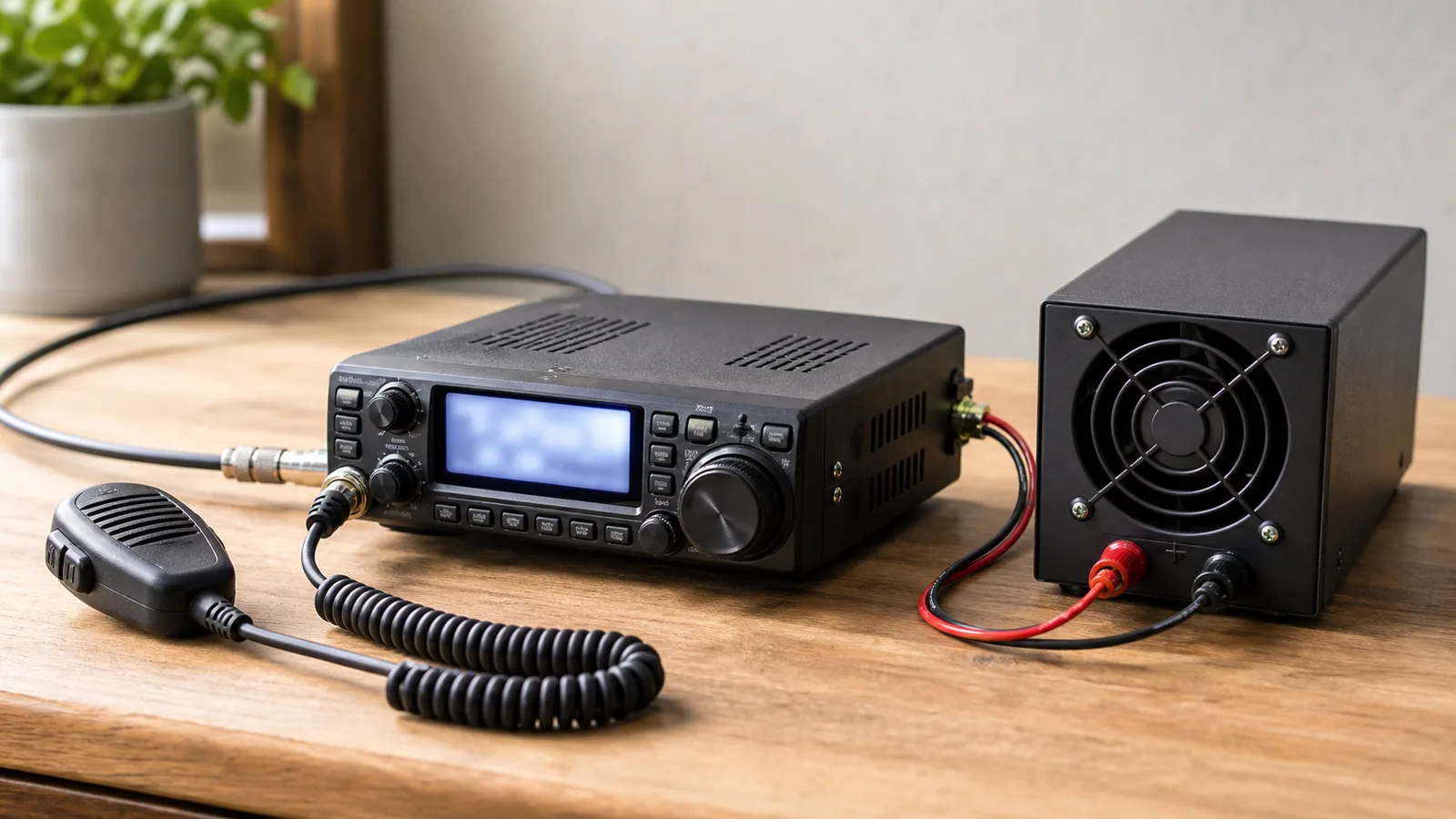
Power. A 50-watt mobile draws roughly 11 to 13 amps on transmit. In a vehicle, wire it directly to the battery with an inline fuse, not the accessory socket. For a base station, you need a 12V DC power supply rated for at least 25 to 30 amps; the radio's price does not include one.
Antenna. The antenna matters more than the last few watts of power. A magnetic-mount dual-band antenna is the easy starting point for a vehicle; a permanent NMO mount performs better. For a base station, an outdoor vertical up high beats anything indoors. Match the antenna to the radio's bands, which is critical for the quad-band TYT TH-9800.
Mounting and programming. Most of these radios offer a detachable or remote faceplate so the controls sit within reach while the body hides under a seat. And almost all of them program fastest from a computer; our CHIRP guide covers the analog rigs, while the digital radios need their manufacturer's software for codeplug and Fusion setup.
How to Choose
Match the radio to what you actually do:
- First mobile, tight budget, just want repeaters: AnyTone AT-778UV.
- One radio that does nearly everything: Yaesu FTM-300DR.
- You are committed to DMR: AnyTone AT-D578UVIII PLUS.
- You want the best-built analog rig and digital does not matter: Icom IC-2730A or Kenwood TM-V71A.
- You only need 2 meters and want maximum power: Icom IC-2300H.
- You want 10m and 6m too: TYT TH-9800.
You can compare the full lineup, with live prices and scores, on our mobile radios page. Whichever you choose, get your license sorted first, then plan your antenna and power before the radio arrives so you can be on the air the day it does.