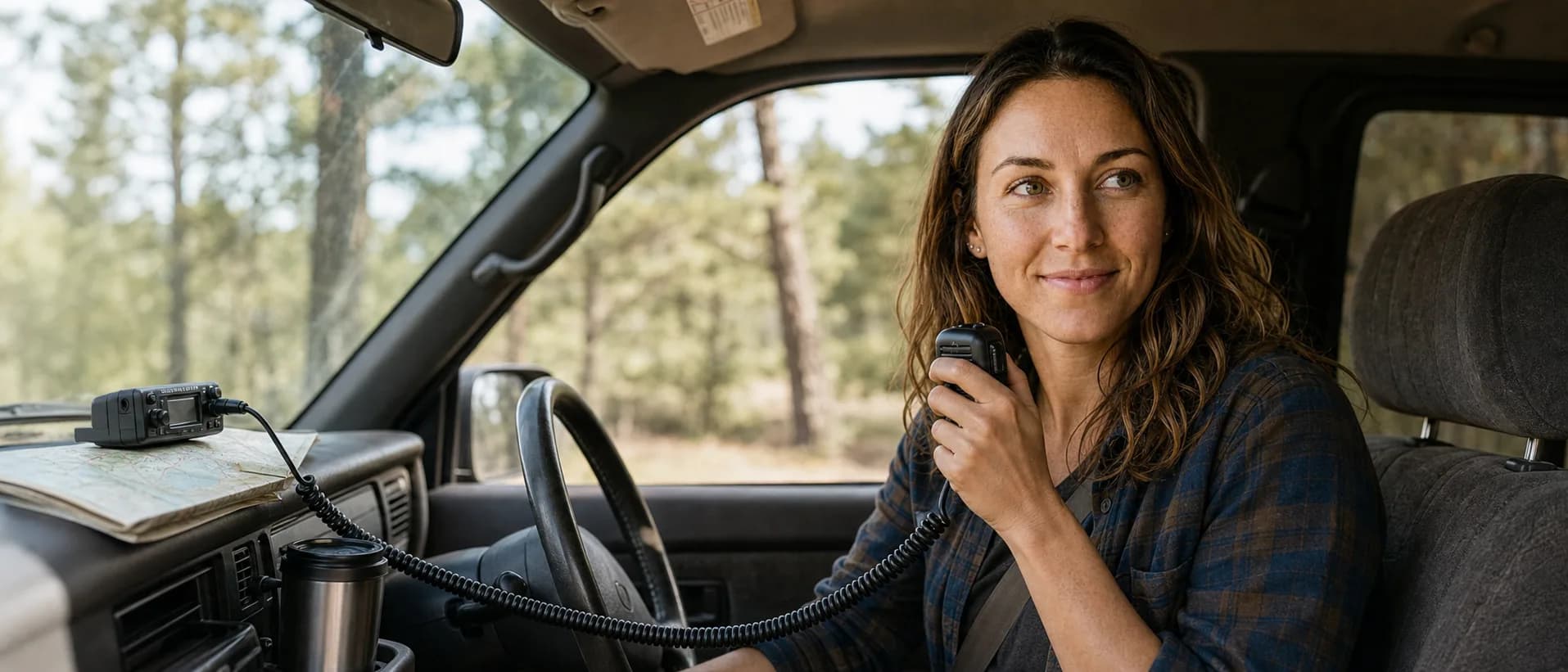

Search for a GMRS mobile radio and Google hands you store pages and forum threads, because nobody has written the actual buyer's guide. So we did the reading: every major community thread on the subject, the FCC equipment authorization registry for every radio here, and the live Amazon pricing we track daily. If you want the short answer, the Radioddity DB20-G at $84.99 is the right first mobile for most people, and the Midland MXT575 is the 50-watt radio to grow into.
Every pick below carries a verified FCC Part 95E grant, which is the legal requirement for transmitting on GMRS. That is not a given in this market, and we list each radio's FCC ID and grant date further down so you can check the registry yourself.
Quick Picks
| Radio | Price | Power | Repeater support | Best for |
|---|---|---|---|---|
| Radioddity DB20-G | $84.99 | 20W (19.5W measured) | Yes | First mobile, no permanent install |
| Midland MXT275 | $199.99 | 15W | 8 channels, no split tone | Simplest clean install |
| Midland MXT115 | an unlisted price | 15W | 8 channels, no split tone | Entry Midland, when in stock |
| Radioddity DB35-G | $113.99 | 35W (32W ERP) | Yes | Newest mid-power option |
| Midland MXT575 | $439.99 | 50W | Yes, incl. split tone | Max power, controls on the mic |
| Wouxun KG-1000G | See note | 50W | Yes, the most flexible | Repeater power users |
Two availability notes, because they matter: the MXT275 and KG-1000G are both community favorites and both show "currently unavailable" on Amazon as we publish. Their product pages track the listing daily; ham radio retailers usually stock both. We kept them in the guide because a roundup of what is merely in stock this week would misrepresent what the community actually recommends.
How We Chose
We have not bench-tested these radios. This guide synthesizes three things: community consensus from the largest GMRS forums and subreddits (we counted distinct recommenders per model across five ranking sources), the FCC equipment authorization registry (certification status, grant dates, and measured power output for every pick), and the daily-refreshed price and availability data on our GMRS category pages. Where owners report problems, we say so, with the specific complaint. Our methodology is public; GMRS radios are certification-gated rather than score-ranked in our database.
Best First Mobile: Radioddity DB20-G
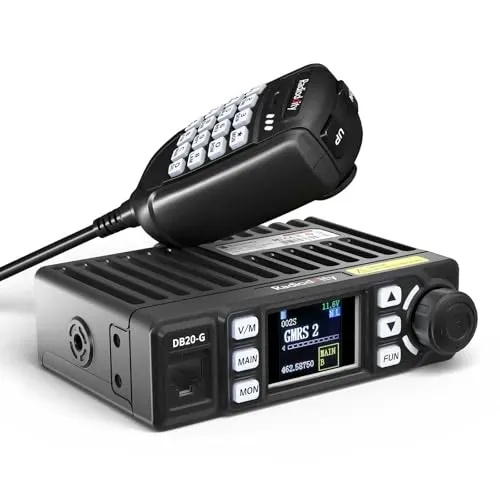
$84.99 · 20.00W · VHF/UHF
In the biggest community thread on starter GMRS mobiles, the DB20-G drew more recommendations than any other radio at any price, with one forum regular calling it flatly "the correct answer." The reasons are practical: it costs $84.99, it is the size of a paperback, and it powers from a cigarette-lighter plug, which means your first mobile radio does not require drilling holes or running fused power to the battery.
The FCC grant is where we can add something the forums cannot: the registry shows about 19.5 watts of measured conducted power against the 20-watt marketing, which is honest as these things go (we have seen far worse gaps). It is repeater capable, holds 500 channels, syncs its display with Radioddity handhelds like the GM-30, and CHIRP supports it.
Owner-reported warts, so you are not surprised: the menu system is cryptic, a scan/squelch bug that sticks the audio open annoyed one owner into returning theirs, and the internal speaker is quiet enough that many owners add an external one. None of that has dented its standing as the default first mobile, and at this price it leaves budget for the thing that actually determines your range: the antenna.
Simplest Install: Midland MXT275
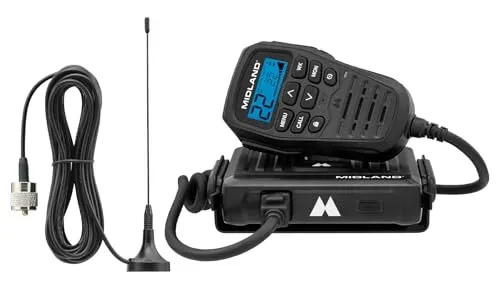
$199.99 · 15.00W
The MXT275 puts every control on the microphone, so the radio body disappears behind the dash and the install looks factory. Overlanders in our sources loved exactly that, and the broader numbers back them up: on Midland's own store it carries a 4.8-star average across more than 650 reviews, the most owner feedback of any radio in this guide.
The community's honest read: 15 watts is plenty for trail convoys and simplex work provided the included antenna gets upgraded or mounted properly (the MXTA26 upgrade antenna came up repeatedly). The real limitation is repeater flexibility. Eight repeater channels and no split-tone support means it works fine on standard repeaters but cannot handle the nonstandard configurations that some networks use, and that is the line where buyers should look at the Wouxun instead.
Availability: the Amazon listing we track came back in stock after this guide first ran ($180.49 at last refresh). Check the product page for the live price. For the full Midland lineup, including the new MXT115P PRO, see our Midland GMRS brand guide.
The Entry Midland You Can Buy Today: MXT115
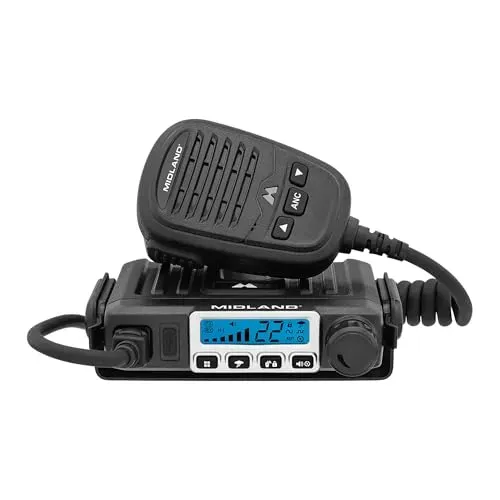
$199.99 · 15.00W
With the MXT275 out of stock on Amazon and Midland's own site moving to the newer MXT115P PRO, the MXT115 is the entry MicroMobile you can actually order today. Same Midland house style: pick a channel by number, no menus to learn, NOAA weather scan built in, magnetic-mount antenna in the box so it goes from doorstep to bumper in an afternoon.
It shares the MXT275's constraint set: 15 watts, 8 repeater channels, no split tone. If your local repeater network is standard and your use is family, farm, or trail, that constraint will never bite. If you know you will chase distant repeaters, spend up or go Radioddity/Wouxun.
Newest Mid-Power: Radioddity DB35-G
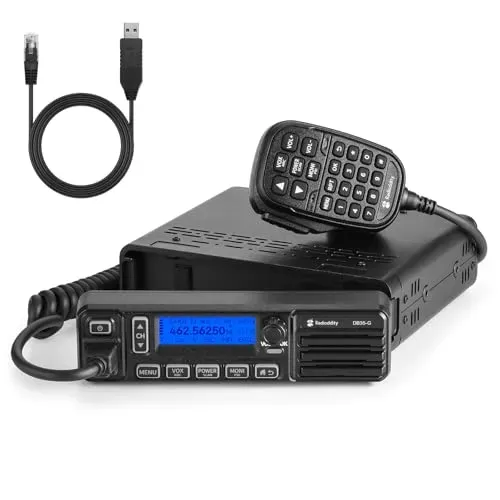
$113.99 · 35.00W · VHF/UHF
The DB35-G is the newest radio in this guide, with an FCC grant dated March 27, 2026. That is genuinely new, which cuts both ways: it has no community track record yet, and we frame it accordingly. What the registry and spec sheet say: 35 watts advertised with roughly 32 watts measured ERP on the grant, a control head that detaches from the chassis so the faceplate mounts on the dash while the body hides under a seat, noise reduction, and dual-band scanning receive.
Radioddity earned the benefit of the doubt here by building the community's favorite budget mobile. If you want more punch than the DB20-G without flagship money, this is the spec-forward middle option, bought on the brand's record rather than this model's.
Max Power, Cleanest Install: Midland MXT575
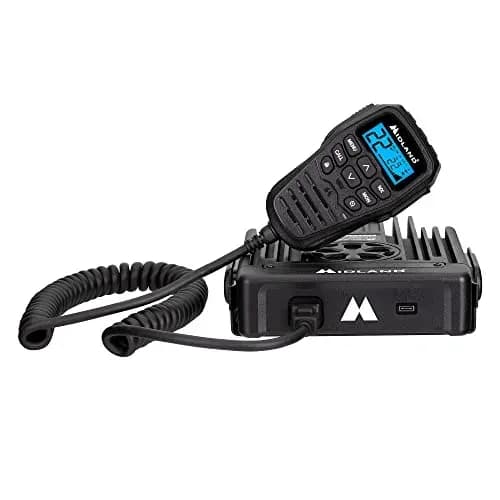
$439.99 · 50.00W
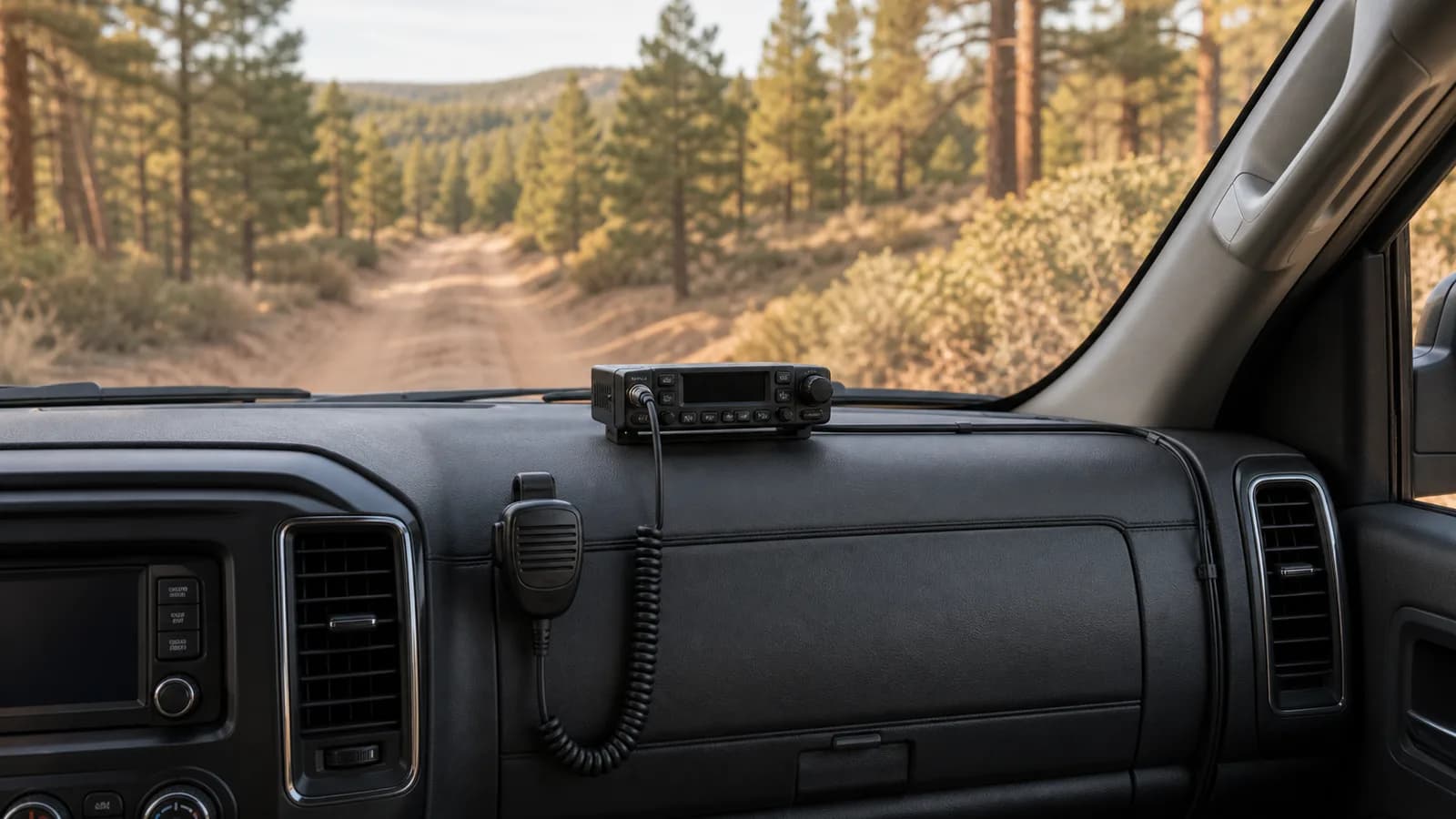
The MXT575 was the single most recommended radio across our sources, and the recommendations all cite the same two things: the full legal 50 watts, and a control scheme that lives entirely on the microphone. The radio body can go under a seat or behind a panel; the only thing in your cab is a mic. For overlanders who care what the cab looks like, that sealed the choice.
Unlike its little siblings, the MXT575 does support split-tone repeaters, which removes the classic Midland objection. What you pay for that is real money at $439.99. The honest question from the forums applies: 50 watts does not buy the range most people imagine (more on that below), so buy this for the install quality and headroom, not because the wattage number is bigger.
Repeater Power Pick: Wouxun KG-1000G
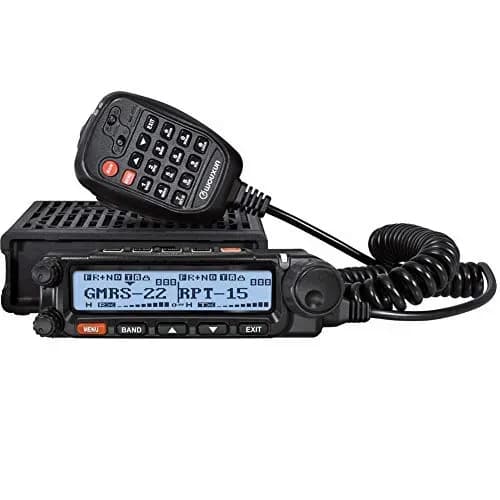
Among GMRS regulars who live on repeaters, the KG-1000G is the answer. Four different voices across our sources called it out, typically in the same breath as "costs more than some people want to spend." It pairs 50 watts with the most flexible repeater and tone configuration in consumer GMRS, plus a removable head unit for clean mounting.
It is also currently unavailable on Amazon, which is why there is no price on its embed; GMRS-focused retailers typically carry it and its KG-1000G Plus refresh. If your GMRS life is a repeater network, this is the radio the network's regulars are using; check the product page for tracked availability.
15 vs 35 vs 50 Watts: What Power Actually Buys
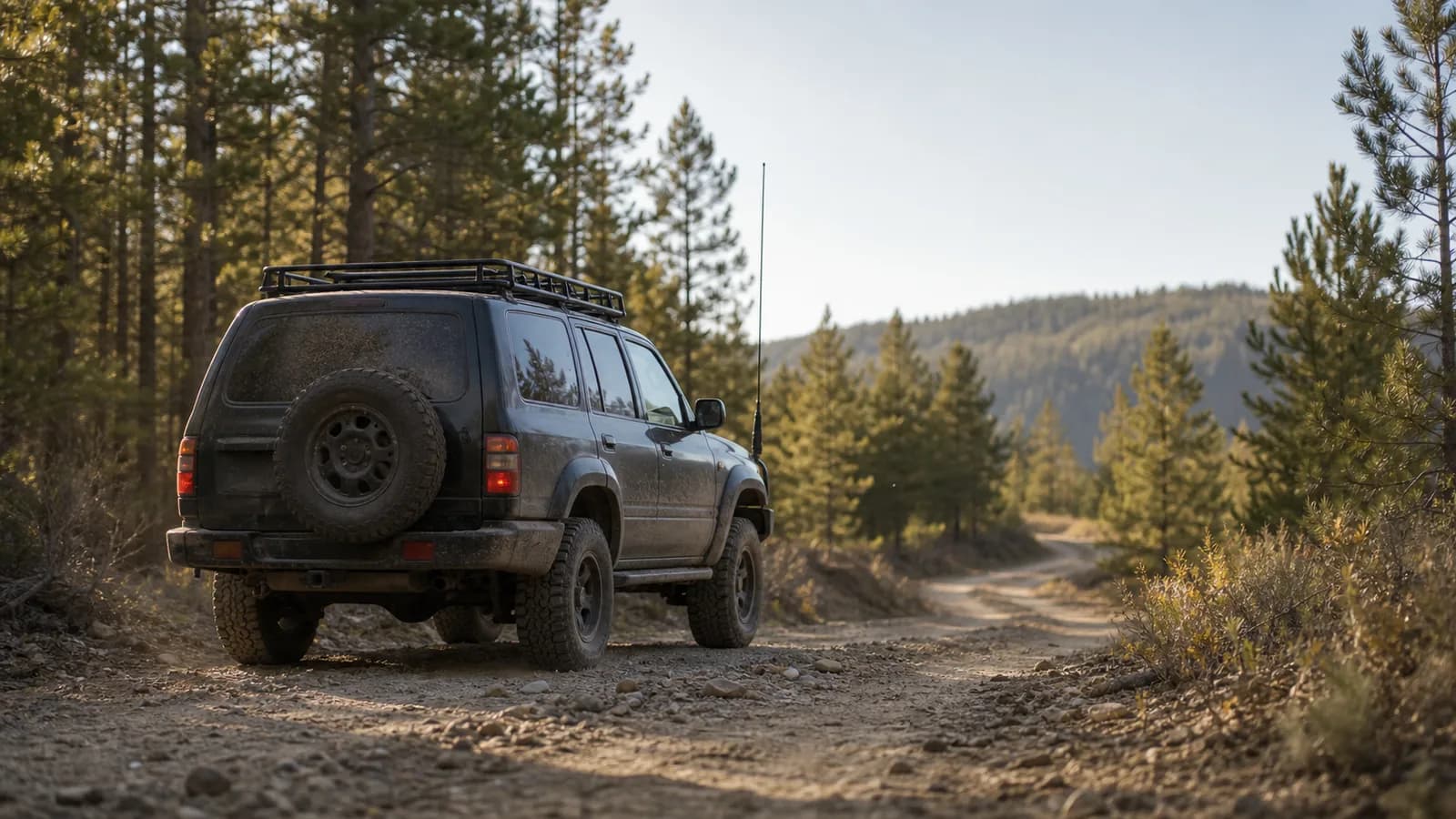
The most repeated wisdom in every thread we read: watts do not beat physics. GMRS lives on UHF, where range is dominated by line of sight, and line of sight is determined by antenna height and placement, not transmit power. A 15-watt radio with a properly mounted quarter-wave antenna on the roof will outperform a 50-watt radio feeding a poorly placed magnetic mount on a trunk lid.
Where the extra watts help: punching through vegetation, marginal repeater access at the edge of coverage, and terrain that puts you in shadows. Where they do not: flat open ground, where every radio here hits the same horizon. Run your own numbers with our ham radio range calculator, and spend antenna money before wattage money.
Repeaters and Split Tone: the Fault Line
The recurring divide in the community sources is not brand loyalty, it is repeater capability. Entry Midlands (MXT115, MXT275) support 8 repeater channels with standard tone setups only. That covers most public repeaters. Wouxun and Radioddity radios, and Midland's own MXT575, add split-tone support, meaning the radio can transmit and receive with different tone configurations, which some repeater networks require.
If you do not know whether your local repeaters need split tones, look them up before buying, and if you have not sorted your license yet, our GMRS license guide covers the $35, ten-year, whole-family license and how repeater access works.
The FCC Certification Table
Every radio in this guide holds a Part 95E equipment authorization, the certification GMRS transmitters are legally required to carry. We pulled each grant from the FCC registry on July 11, 2026:
| Radio | FCC ID | Granted | Rule parts |
|---|---|---|---|
| Radioddity DB20-G | 2AN62-DB20G | 2021-04-26 | 95E + 15B |
| Midland MXT275 | MMAMXT275 | 2021-06-21 | 95E + 95A |
| Midland MXT115 | MMAMXT115 | 2016 / mod. 2021 | 95E + 95A |
| Radioddity DB35-G | 2AN62-DB35G | 2026-03-27 | 95E + 15B |
| Midland MXT575 | MMAMXT575 | 2021-04-20 | 95E + 15B |
| Wouxun KG-1000G | WVTWOUXUN20 | 2020-11-17 | 95E + 15B |
Two registry footnotes worth knowing. The Radioddity DB25-G, which you will see marketed as a 25-watt step up, sells on the same certification as the DB20-G (FCC ID 2AN62-DB20G); the grant's measured power is about 19.5 watts either way, so treat the two as the same radio in different clothes. And the Midland 95A entries are a legacy artifact: their grants predate the FCC's 2017 reorganization of Part 95 and were modified to add 95E, which is what matters.
What About Used Commercial Radios?
One of the top-ranking threads for this search is not about consumer GMRS radios at all: it is about converted commercial Kenwood mobiles (TK-8180s, TK-890s) picked up used for $100 to $300. The appeal is real: commercial build quality, loud audio, and cheap hardware. The problem is equally real: those radios carry no Part 95E certification, and the thread's own participants acknowledge it ("Is that legal? F no. But it's fun").
Our position is boring and honest: transmitting on GMRS requires certified equipment, full stop. If tinkering with commercial gear appeals to you, that is a road into ham radio, where Part 97 has no such certification requirement and the used-commercial game is legitimate.
What We Skipped, and Why
BTECH GMRS-50V2. Zero endorsements in any source we read, and one owner described random lockups requiring a power cycle, concluding "junk." BTECH makes gear we recommend elsewhere; this model did not earn a slot.
AnyTone AT-778UV. Genuinely polarizing: one group runs five units flawlessly and calls it unbeatable per dollar, another owner returned two consecutive units with white-screen boot failures. Too coin-flip to recommend for a radio you hardwire into a vehicle.
Wouxun KG-XS20G. Worth knowing about: it is the rare GMRS mobile with a real IP rating, which made it the pick of two side-by-side owners for open-cab vehicles. It is not reliably available on Amazon, so we could not track it here; if you run a SxS in the dust, seek it out at GMRS retailers.
The Bottom Line
Start with the Radioddity DB20-G if you are new to mobile GMRS: $84.99, no permanent install, and the community's own default pick. Buy the Midland MXT575 if you want maximum power with the cleanest possible install, or the Wouxun KG-1000G if repeater flexibility is the point. Whatever you choose, verify the Part 95E grant (we did, table above), get your license, and spend your remaining budget on the antenna. Handheld more your style? See our best GMRS radios guide for the certified handhelds, or go straight to our ranked handheld GMRS picks if you already know that is the format you want.