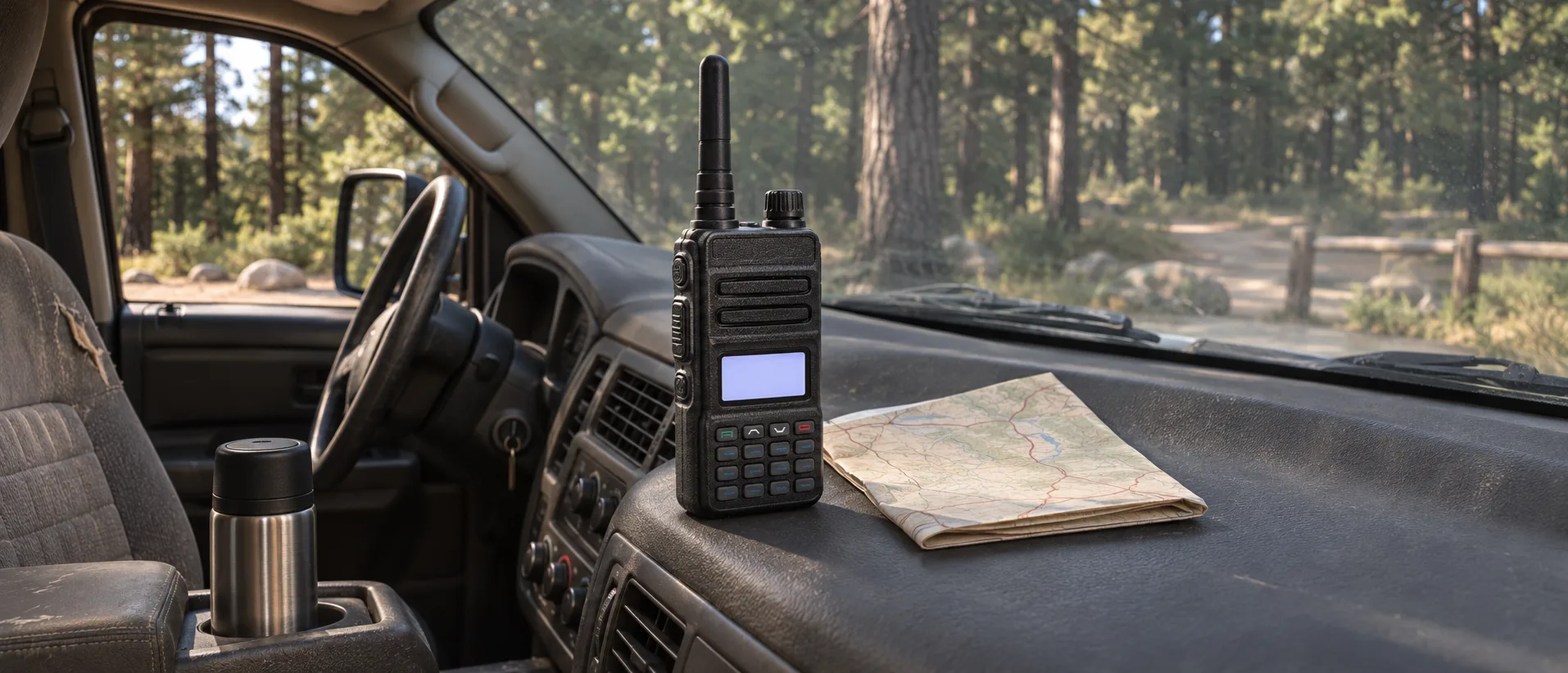

The Radioddity GM-30 is one of the cheapest handhelds you can buy that holds a real GMRS certification, and at $31.99 it is the radio we point families to when the budget is tight. It is also a radio surrounded by small untruths: a manual that gets the license rule wrong, a "5 watt" label the paperwork does not quite support, and two newer models that share its name and almost nothing else.
This review is built from documents, not a test bench. We read the FCC grant, the official manual, the CHIRP source code, the one published review with a power meter behind it, and what owners say after two to five years. We have not measured this radio ourselves, and where a number comes from someone else we say who.
The Snapshot
| Price | $31.99 for one radio |
| Owner rating | 4.5 stars across 1,722 Amazon ratings |
| Service | GMRS, license required on every channel |
| Transmit channels | 22 GMRS channels plus 8 repeater pairs, and 24 extra repeater slots |
| Granted power | 4.91 W ERP on the main channels, 0.49 W on channels 8 to 14 |
| Battery | 1,500 mAh, charged through a USB-C port on the battery |
| Weather sealing | None stated |
| Programming | Keypad, Radioddity's Windows software, or CHIRP |
| FCC grant on file | 2AN62-GM30, Part 95E, granted 19 April 2021 |
What the FCC Filing Shows
The GM-30 holds FCC ID 2AN62-GM30, certified under Part 95 Subpart E, the GMRS rule part. That is the thing you want to see on a GMRS radio, and plenty of cheap radios sold for GMRS do not have it. You can pull the record yourself with our FCC ID lookup.
The interesting part is the line that says how the grant was obtained. The GM-30's grant is not for a new design. Its stated purpose is a "change in identification of presently authorized equipment", and it names the original: FCC ID 2AJGM-P15UV, granted six days earlier to Po Fung Electronic, the company behind the Baofeng brand. There is no test report filed under the GM-30's own ID. The measurements live under the Pofung P15UV, and the GM-30 inherits them.
It is not the only radio to do that. The TIDRADIO TD-H5's grant is a change in identification from the same P15UV filing, dated two months later, with the same four power lines to the hundredth of a watt.
| FCC ID | Sold as | Grant date | How it was granted |
|---|---|---|---|
| 2AJGM-P15UV | Pofung P15UV | 13 April 2021 | Original equipment, with the test report |
| 2AN62-GM30 | Radioddity GM-30 | 19 April 2021 | Change in identification from the P15UV |
| 2AWL3TD-H5 | TIDRADIO TD-H5 | 11 June 2021 | Change in identification from the P15UV |
None of this is a problem. A change in identification is a normal, legal way to sell an authorized design under another name, and it means the GM-30 is exactly as certified as the radio it came from. What it tells you is what you are buying: a 2021 Pofung design with a Radioddity label, and Radioddity's support and software wrapped around it.
Is It Really 5 Watts?
Close, and the gap does not matter much. But there are three different numbers in circulation and they are not measuring the same thing.
| Source | High power | Low power | What was measured |
|---|---|---|---|
| The box and the manual | 5 W | 0.5 W | A rating, not a measurement |
| FCC grant | 4.91 W | See below | ERP, the power actually radiated |
| Miklor's 2021 review | 4.2 W | 1.2 W | Power at the antenna connector, one unit |
The grant's figure is effective radiated power, which includes the antenna. Miklor's is conducted power on a meter, from one review unit, five years ago. Both land under 5 watts, and the difference between 4.2 and 5 watts is under one decibel, which nobody can hear at the other end. Buy this radio because it is certified and cheap, not because of the wattage on the box.
The grant has one more line worth knowing. On channels 8 to 14 the GM-30 is granted 0.49 watts. That is not a weakness of this radio. FCC rules hold every GMRS handheld to half a watt on those seven channels, so if range matters, stay on channels 1 to 7 or 15 to 22. Our GMRS frequency chart shows the limit for every channel.
The Manual Gets the License Rule Wrong
The frequency chart in the official manual carries this footnote: "Channels 8~14 are low-power FRS license free channels."
On this radio, they are not. License-free operation belongs to radios certified under the FRS rules. The GM-30 is certified under the GMRS rules only, and its own FCC grant says the manual must tell buyers that GMRS operation requires a license. So the license applies on all 22 channels, including 8 to 14, where the only thing that changes is the half-watt power limit.
The practical cost of getting this right is small: a GMRS license is $35, lasts ten years, needs no exam and covers your immediate family. Our GMRS license guide walks through the application, and FRS vs GMRS explains why the same frequency can be license-free on one radio and not on another.
What 1,722 Owners Say
| Rating | Share of ratings |
|---|---|
| 5 star | 74% |
| 4 star | 15% |
| 3 star | 6% |
| 2 star | 2% |
| 1 star | 3% |
Eighty-nine percent of buyers gave it four or five stars, across a far larger sample than most budget GMRS handhelds have. Amazon pools ratings across the single radio and the multi-radio packs on the same listing, so this describes the GM-30 in general, not one bundle.
The long-term threads are more specific than the stars. Owners in an r/gmrs thread who have run theirs for two to five years call them reliable and good value. Owners on the myGMRS forum pick this design over a Baofeng UV-5G for two features: it can scan for the tone a repeater uses, and its display can show a channel's name and frequency together.
The recurring complaints, each from owners and not from our own testing:
- Quiet transmit audio on some units. One myGMRS owner has two GM-30s with identical settings and only one is quiet. Others in the thread have no problem. Check your transmit audio with a second radio inside the return window, and check the wide and narrow setting first.
- No water protection. Neither the listing nor the manual states an IP rating, and the manual says to keep the radio dry. One long-term owner reports theirs did not tolerate rain.
- A rigid channel plan. You cannot add your own transmit channels, which is covered in the next section.
- The antenna is awkward to change. It is held by a set screw, and owners report that the connector is the opposite gender to a UV-5R's, so the common aftermarket antennas do not fit without an adapter.
- Windows-only factory software, which several owners found clumsy. CHIRP is now the better route.
250 Channels, 54 Meant to Transmit
The listing says 250 channels. That is true as a count of memory slots and misleading as a description of what you can do with them. The manual describes 30 GMRS channels that receive and transmit, and Radioddity's product page says channels 31 to 54 are extra repeater channels. The rest are receive only. Do not expect the published counts to reconcile: the manual gives 219 receive-only channels, which makes 249 with the first 30 and 273 once the extra repeater channels are counted.
The CHIRP driver for the GM-30 shows how firmly that plan is fixed:
- Channels 1 to 30 are the GMRS plan: 22 simplex channels and 8 repeater pairs. The frequencies cannot be changed.
- Channels 31 to 54 are the extra repeater slots. Each one accepts only the eight GMRS repeater frequencies, with the 5 MHz offset fixed, so you can store the same repeater pair several times with different tones.
- Channels 55 to 250 are receive only. They are for listening to VHF and UHF frequencies outside GMRS, plus weather radio.
One disagreement between the sources is worth knowing about. The manual lists channels 8 to 14 among the 30 that transmit, and the FCC grant authorizes half a watt there. CHIRP's driver marks those seven channels as transmit-off and locks their settings. We could not establish which of the two describes a current radio, so do not plan around channels 8 to 14. At half a watt they were never the ones to use for range.
For a certified GMRS radio this is how it should work: the radio cannot be programmed to transmit where GMRS is not allowed. The limit owners actually run into is narrower. There are no spare simplex slots, so you cannot keep channel 16 twice with two different privacy tones for two different groups.
If repeaters are why you are buying, the 24 extra slots are the useful part. Our GMRS repeater guide covers how to find a repeater and what tone to enter.
CHIRP Works Now, With a Cable You May Not Have
The GM-30 was not supported by CHIRP for its first four years, and the 2021 reviews say so. That changed in May 2025, when CHIRP added a dedicated GM-30 driver. If you have read that this radio cannot be programmed with CHIRP, the claim is out of date. What Is CHIRP explains the software if it is new to you.
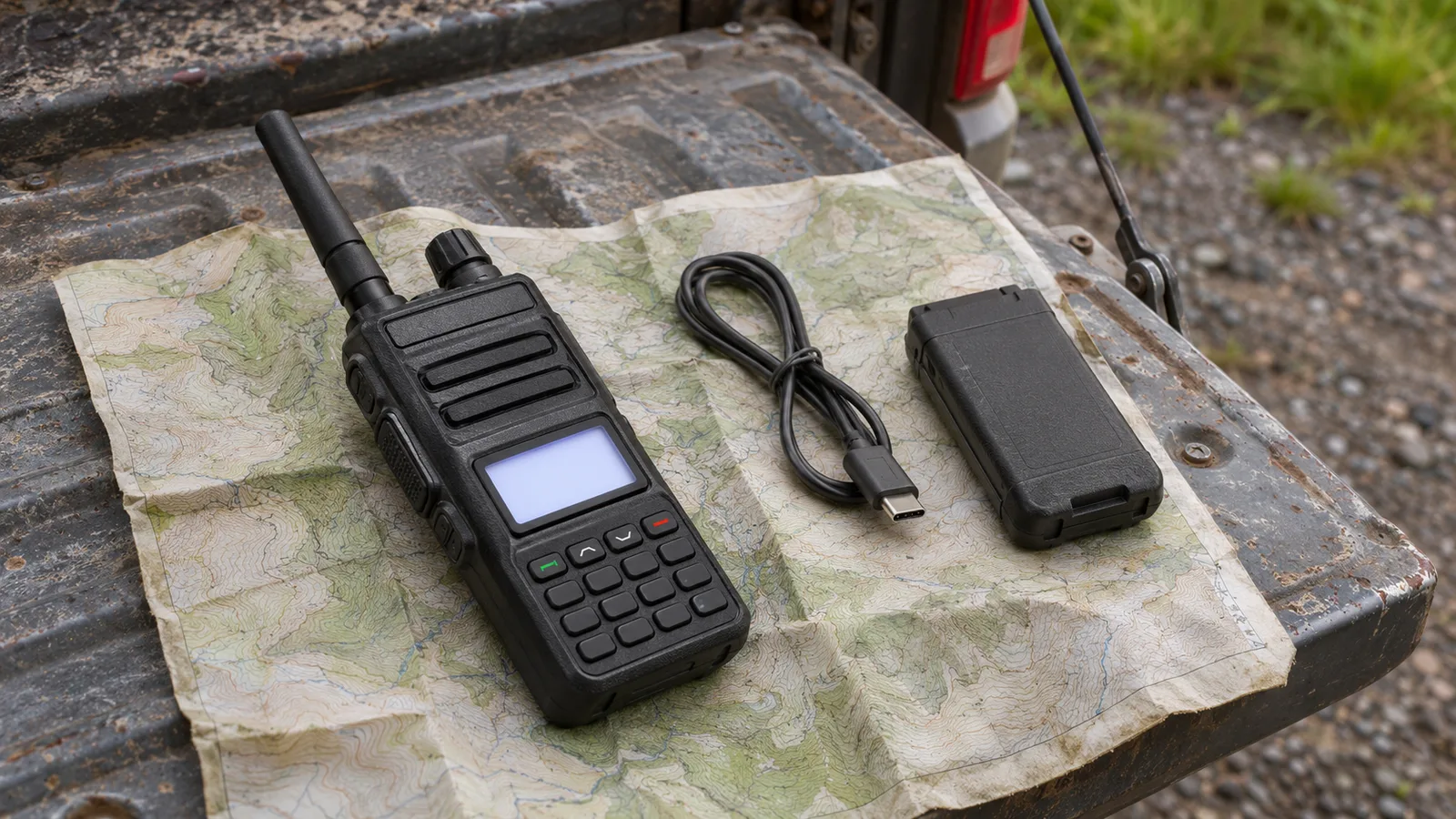
The catch is the cable. The packing list in the manual for a single GM-30 is the radio, one 1,500 mAh battery, a USB charger, a USB-C cable, an earpiece, a belt clip and a hand strap. The USB-C cable charges the battery; it does not program the radio. Programming needs a separate two-pin Kenwood-style cable, which comes with some of the multi-radio packs and not with the single.
You do not need either to get started. The 30 GMRS channels work out of the box, and a repeater tone can be entered from the keypad.
What It Costs, and Why That Keeps Changing
We record this listing's Amazon price every day. Over the last four weeks the single radio has not held one price for long:
| Dates in 2026 | Price of the single GM-30 |
|---|---|
| 16 to 18 October | $19.99 |
| 19 October to 4 November | $28.99 |
| 5 November | $22.49 |
| 7 to 13 November | $31.99 |
That is a 60% spread in a month on the same product, which is typical of listings whose price is set by a seller and not by a published list price. Two things follow. The price in this article is live and may differ from the table above by the time you read it. And if you need more than one radio, compare the two-pack on the same listing before buying singles, because the pack is the one that includes the programming cable.
If you are reading this around Black Friday, we track this radio on our Black Friday deals page. Last year its lowest price of the season arrived before Black Friday, not on it.
GM-30 vs GM-30 Plus vs GM-30 Pro
Radioddity now sells three radios under this name. The Plus and the Pro are not upgraded GM-30s. They are a different, larger radio that reuses the name, and each has its own FCC grant as original equipment.
| GM-30 | GM-30 Plus | GM-30 Pro | |
|---|---|---|---|
| FCC ID | 2AN62-GM30 | 2AN62-GM30PLUS | 2AN62-GM30PRO |
| Grant date | 19 April 2021 | 15 August 2024 | 28 July 2025 |
| How it was granted | Change in ID from Pofung P15UV | Original equipment | Original equipment |
| Granted ERP, main channels | 4.91 W | 4.0 W | 4.31 W |
| Granted ERP, channels 8 to 14 | 0.49 W | 0.42 W | 0.44 W |
| Channel memory | 250 | 1,000 in 10 zones | 1,000 in 10 zones |
| Display | Monochrome LCD | 1.77 inch color | 1.77 inch color |
| Battery | 1,500 mAh | 2,500 mAh | 2,500 mAh |
| Weight with battery | 241 g (Miklor's scale) | 298 g (Radioddity) | 298 g (Radioddity) |
| GPS | No | Yes | Not listed |
| Phone app programming | No | No | Yes |
| CHIRP driver | Its own GM-30 driver | Baofeng UV-17 Pro family | Baofeng UV-17 Pro family |
Three things stand out.
The newer models are granted less power, not more. All three are sold as 5 watt radios. The paperwork puts the original at 4.91 watts and the Plus at 4.0. Radioddity's own pages claim "up to 5 miles" for the GM-30 and a "15-mile transmission range" for the Plus. Nothing in either filing supports a threefold range difference, and the radio with the bigger claim has the smaller granted power. Terrain and antenna height set your range, as our GMRS range guide explains, and you can put numbers on your own situation with the range calculator.
The Plus and Pro buy you memory, battery and a color screen. A thousand channels in zones, a battery two thirds larger, and on the Plus a GPS readout. Owners on the myGMRS forum note the color screen is hard to read in sunlight, which the GM-30's plain LCD is not.
Accessories and programming files do not carry over. Different body, different battery, different CHIRP driver family. A GM-30 image will not load into a Plus.
We list the original GM-30 only. If you see "GM-30" on a listing with a color screen, it is one of the other two.
How It Compares to the Alternatives
| Radio | Price | Sealing | FCC grant | Why pick it |
|---|---|---|---|---|
| Radioddity GM-30 | $31.99 | None stated | 2AN62-GM30, 95E | Largest owner sample at the low end, tone scanning |
| Baofeng GM-15 Pro | unavailable | None stated | 2AJGM-GM15PRO, 95E | CHIRP builds its driver on the GM-30's |
| Baofeng UV-5G Plus | unavailable | None stated | 2AJGM-5GPLUS, 95E | Newer 2024 grant; the most popular budget alternative |
| Retevis HA1G | $80.99 | IP67 | 2A3OO-HA1G, 95E | The cheap option that can get wet |
| Rocky Talkie 5 Watt | $195.00 | IP67 | 2ATSN-RT5WV1, 95E | Built for cold and multi-day backcountry use |
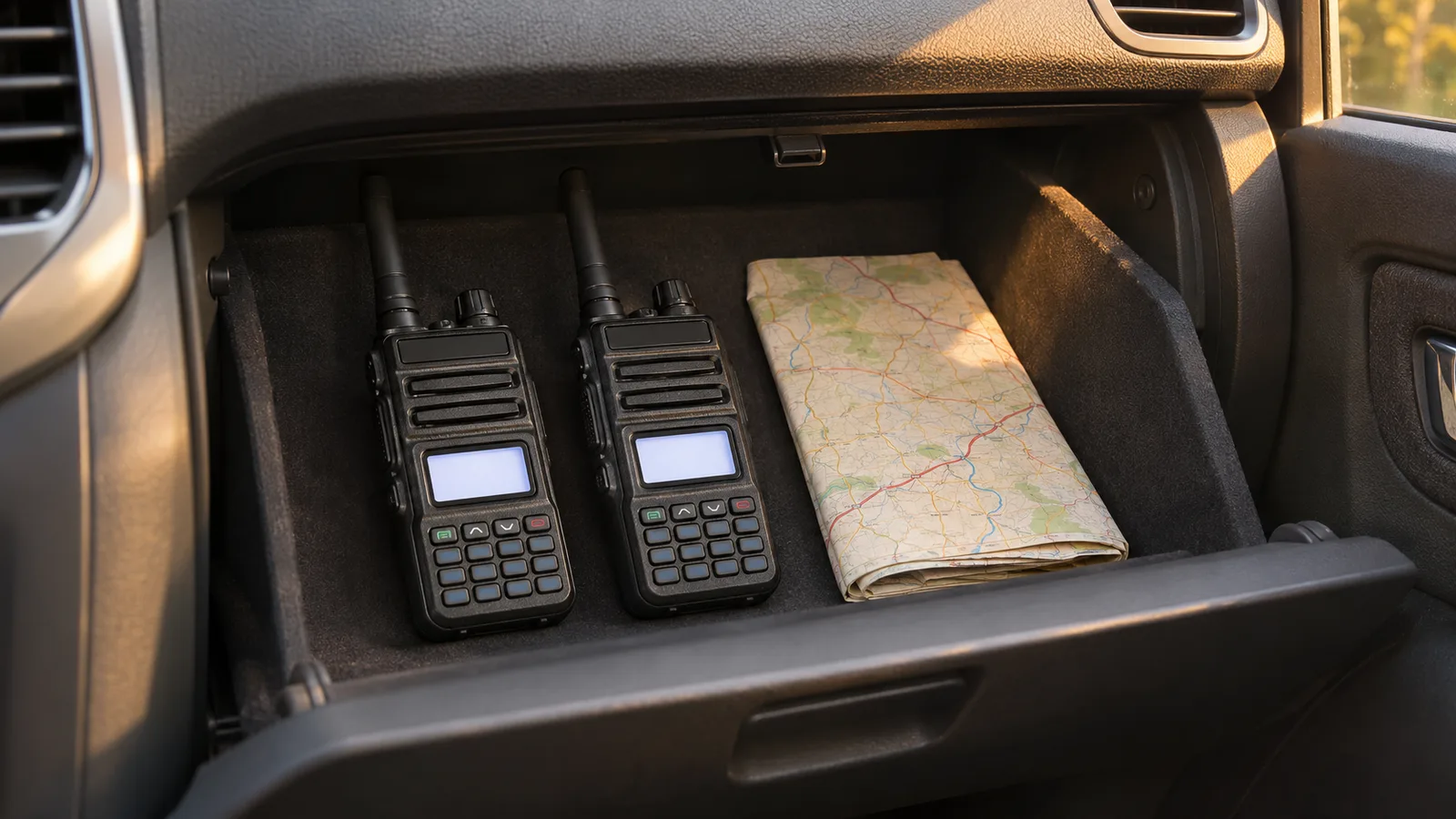
All five are certified under Part 95E. The choice is about where the radio will live. In a glovebox, a kitchen drawer or a daypack on a dry day, the GM-30 does the job for the least money. On a boat, a ski hill or a wet trail, spend more on a sealed radio. Our best GMRS radios guide covers the full field, including the mid-priced radios between these extremes.
Who Should Buy It
Buy it if you want certified GMRS radios for a family or a small group at the lowest sensible price, you will use them in dry conditions, and you want access to local repeaters without learning a complicated radio.
Do not buy it if the radio will get rained on, if you need several simplex channels with different tones, or if you want to swap antennas freely. Those are the three limits owners hit.
Consider a mobile instead if the radio will mostly sit in a vehicle. A mobile with a roof antenna beats any handheld on range, because antenna height matters more than power. Our GMRS mobile roundup covers the options.
If GMRS itself is new to you, start with what GMRS is.