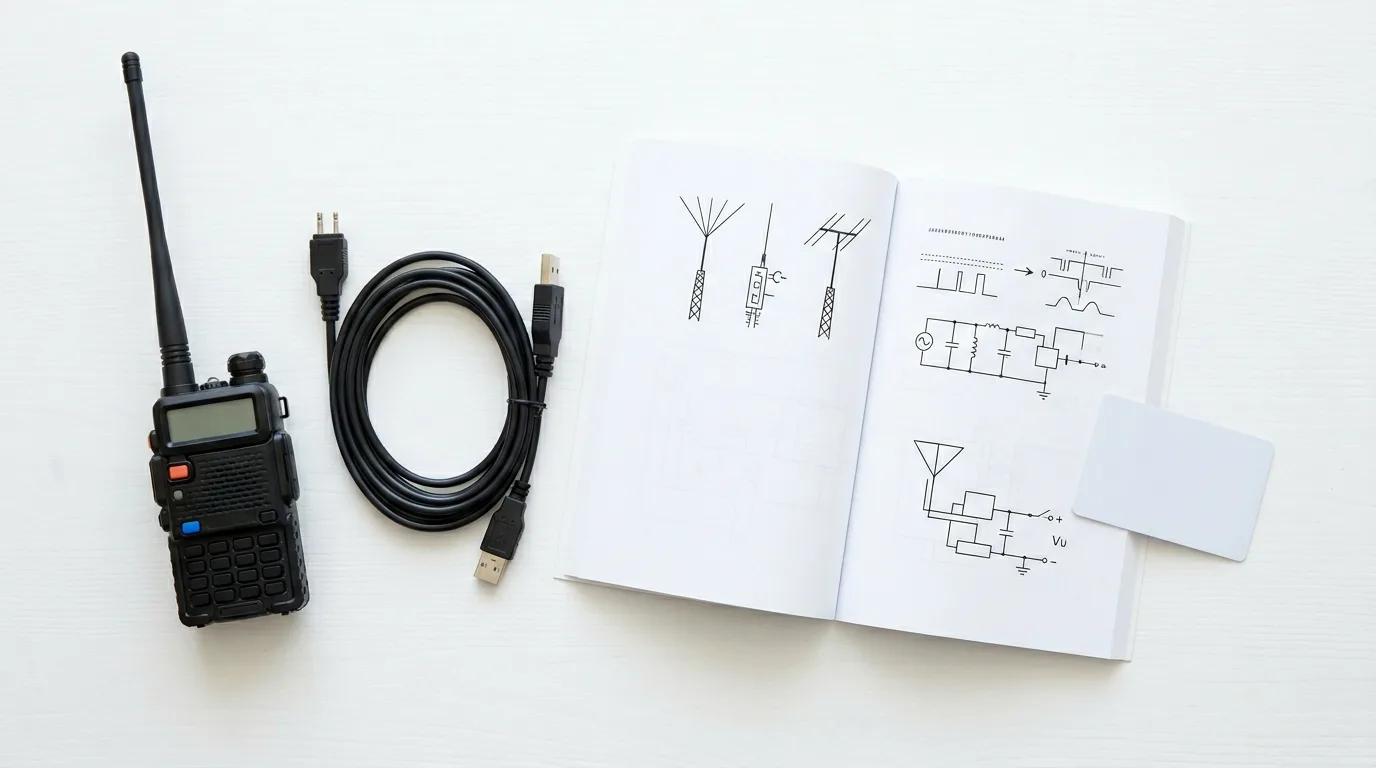

Quick answer: The Baofeng BF-5RH PRO ($70) is our top overall pick, scoring 87 out of 100 with a 94 beginner score, 10 watts, GPS with APRS, and IP54 weather resistance. If you want the single easiest radio to start with, the Baofeng 5RM ($27) scores 95 on our beginner index, the highest of any radio in this guide. The cheapest credible starting point is still the Baofeng UV-5R ($16), the most-reviewed handheld in ham radio history. Every price and score below comes from our live product database and refreshes daily.
Ham radio is one of the few hobbies where your first equipment purchase can be under $20 and still teach you everything you need to know. My first radio was a $25 Baofeng, bought used from a club member; it's still in my go-bag a decade later. That cheap radio removed the biggest barrier to entry: the feeling that I needed expensive equipment to participate.
This guide is for people studying for their license, who just passed their exam, or who are trying to figure out if ham radio is worth the time. You don't need to spend $300 on day one. You need the right $16 to $80 handheld, a community to talk to, and the confidence to key up.
Two honest notes before the rankings. If raw range is your priority, a 50-watt mobile radio bolted into a car with a roof-mounted antenna will out-perform any handheld here; see our best mobile ham radios roundup if that's what you need. And if you're still deciding between ham radio, CB, or GMRS, our ham radio vs CB and FRS vs GMRS guides cover the tradeoffs. This guide assumes you want a handheld, which is how most new operators start.
Quick Picks
| Radio | Price | Beginner Score | Best For |
|---|---|---|---|
| Baofeng 5RM | $26.99 | 95 | Highest ease-of-use score in this guide |
| Baofeng BF-5RH PRO | $71.69 | 94 | Best overall beginner radio |
| Baofeng UV-5R | $17.16 | 88 | Cheapest way to start, biggest community |
| Baofeng UV-21R | $26.99 | 87 | Weatherproof budget triband |
| TIDRADIO TD-H3 | $31.99 | 87 | USB-C charging, app-based programming |
| Quansheng UV-K5 | $25.64 | 86 | Open firmware for tinkerers |
| Baofeng GT-5R | $19.99 | 85 | Best budget battery life |
| Baofeng UV-25 | $63.99 | 84 | Longest battery life in this guide |
| Baofeng UV-82 | $24.99 | 82 | Best ergonomics |
| TIDRADIO TD-H9 | $69.99 | 72 | APRS step-up with app programming |
| Baofeng DM32 | $49.99 | 67 | Best if you want DMR later |
| AnyTone AT-D878UVII Plus | $249.99 | 52 | Best premium starter |
How We Ranked These
Every radio in our database gets a beginner score from 0 to 100 that measures ease of programming, community support, CHIRP compatibility, affordability, and how forgiving the radio is for a newcomer. Few beginner buying guides publish a measured, numeric ease-of-use score; most give you an opinion and a list of names. We recalculate the whole catalog and refresh every price daily against live Amazon data, so these picks won't go stale like a "best of 2026" roundup frozen back in March. Full details on our scoring methodology.
Do You Need a Radio Yet?
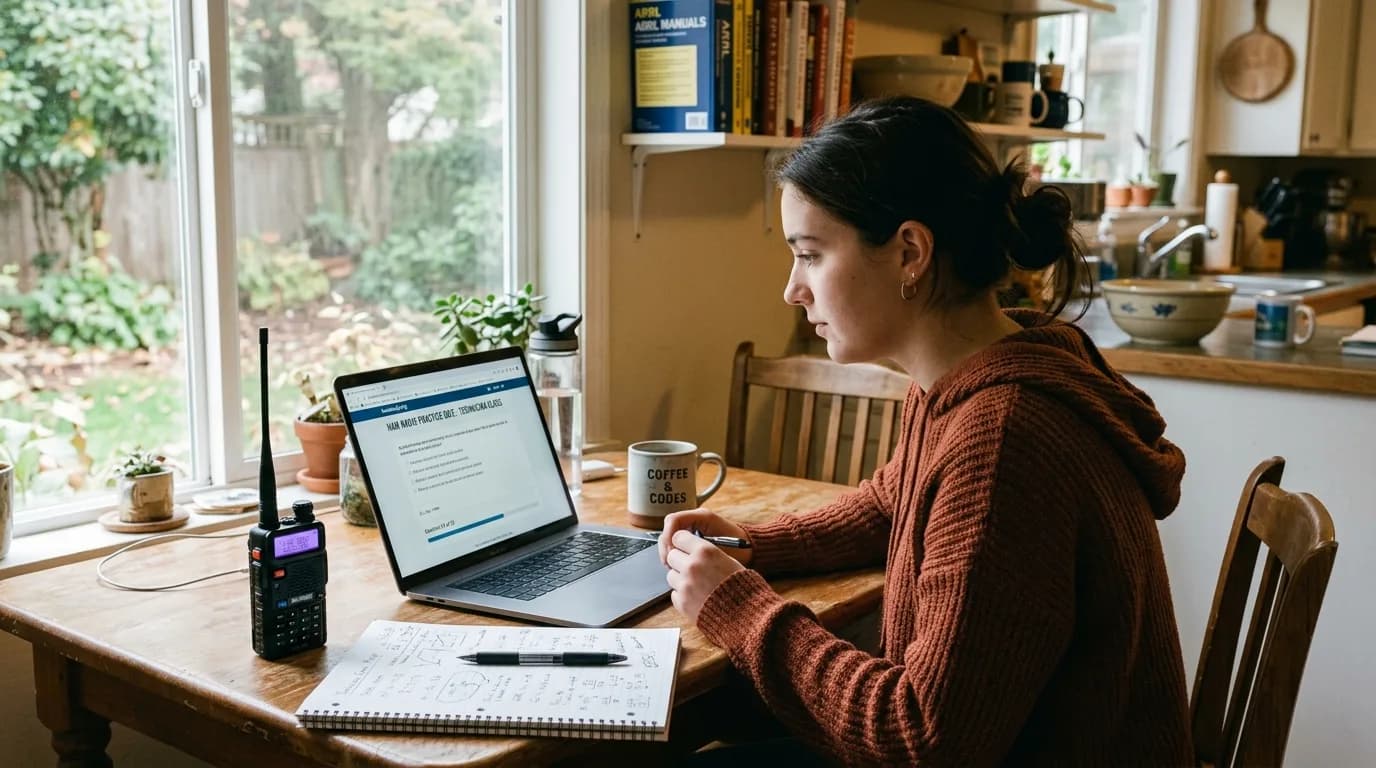
Quick reality check: you can't legally transmit on ham frequencies without a license. The Technician exam is 35 multiple-choice questions, and most people pass after 2 to 4 weeks of casual study. Total cost is $35 to $50. Our licensing guide covers the process, and our practice quiz lets you test yourself with real exam questions.
That said, you can buy a radio before you're licensed. Receiving is legal for anyone, and listening to local repeaters while you study is genuinely useful; you'll hear the etiquette and be less nervous when it's your turn to transmit.
Entry Tier: Under $35
These radios cost less than a nice dinner out. They're not the fanciest, but they get you on the air and teach you the fundamentals. If ham radio isn't for you, you've lost the price of a couple of pizzas.
Best Value: Baofeng 5RM (Beginner Score: 95)
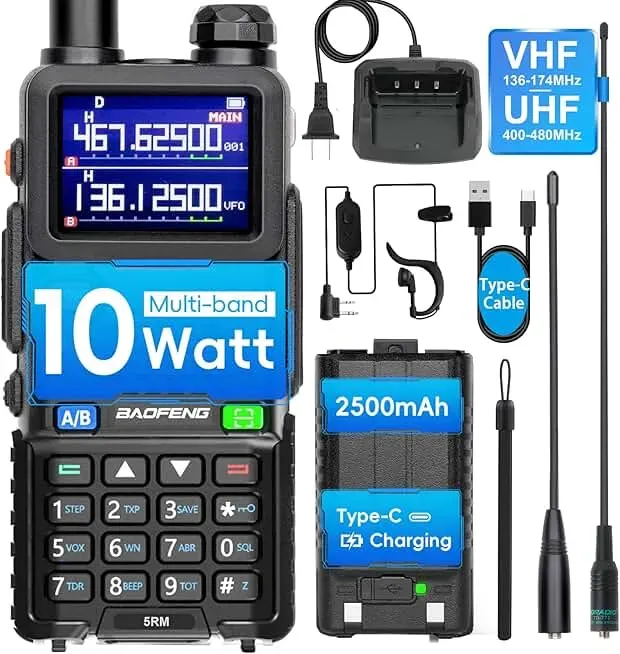
The 5RM ties for the highest beginner score in our database, and at $26.99 it's our pick for the best value in this guide: triband coverage (VHF, 220 MHz, UHF), 10 watts, NOAA weather alerts, AM airband receive for listening to air traffic control, USB-C charging, and CHIRP compatibility. What earns the score is more power and more features than a UV-5R, at a price that barely counts as a purchase. Compare it to the UV-5R to see what the extra spend buys.
Cheapest Way In: Baofeng UV-5R (Beginner Score: 88)
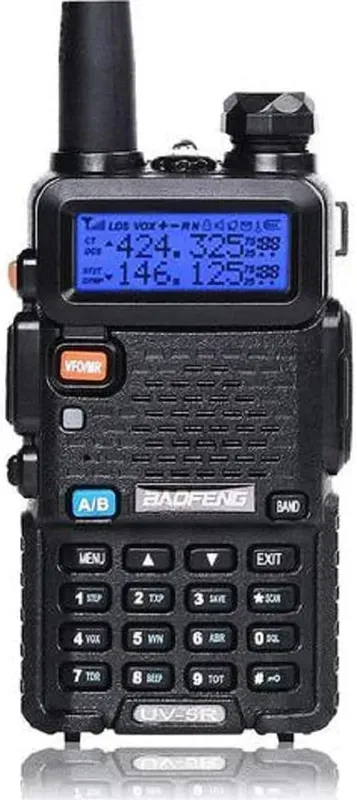
The UV-5R is the most iconic beginner ham radio ever made, cheaper at $17.16 than the programming cable you'll use to set it up. Dual-band VHF/UHF, 5 watts, CHIRP-compatible, and backed by 10,207 Amazon reviews at 4.5 stars, the largest sample size in our database: if you hit a problem, someone already solved it and posted the answer on YouTube. It has no airband receive and the stock antenna is weak, but CHIRP eliminates the confusing menu system entirely. Is it legal? Yes, with a ham license.
Weatherproof Budget: Baofeng UV-21R (Beginner Score: 87)
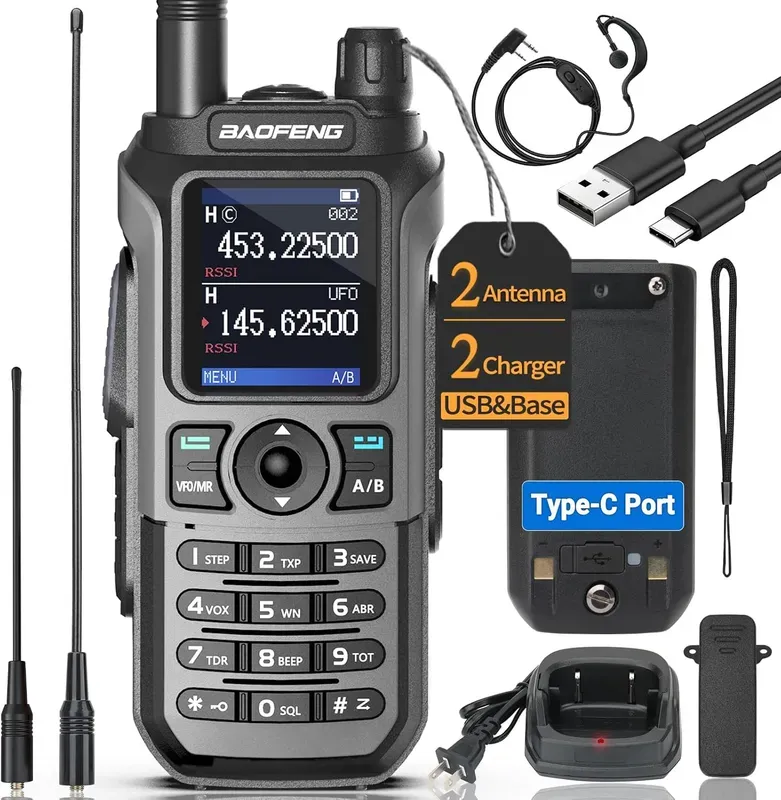
The UV-21R sits in a rare spot: genuinely cheap and genuinely weather-resistant. For $26.99 you get triband coverage (VHF, 220 MHz, UHF), IP54 dust and splash resistance, 6 watts, and CHIRP compatibility. The 220 MHz band is less crowded than 2 meters in most areas, a real perk once you're comfortable with the basics. Compare it to the UV-5R to see what IP54 and triband add.
App-Based Programming: TIDRADIO TD-H3 (Beginner Score: 87)
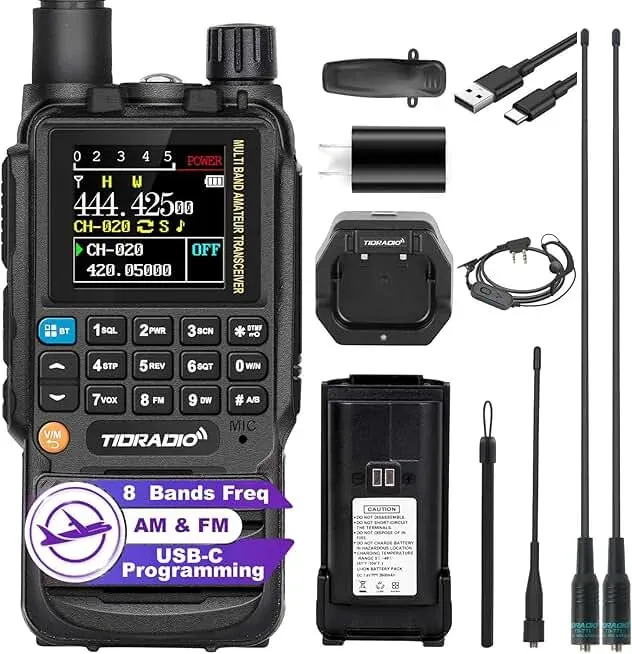
The TD-H3 is the radio Reddit's beginner threads name most often as the modern alternative to a UV-5R: dual-band VHF/UHF, USB-C charging, app-based programming over Bluetooth, and AM airband receive for ATC. Our full TD-H3 review covers two months of testing against a UV-5R. The tradeoff is CHIRP maturity: a community driver works, but isn't as polished as the UV-5R's plug-and-play support, and TIDRADIO's own Odmaster app is the smoother path for most buyers. Compare it to the UV-5R.
The Tinkerer's Pick: Quansheng UV-K5 (Beginner Score: 86)
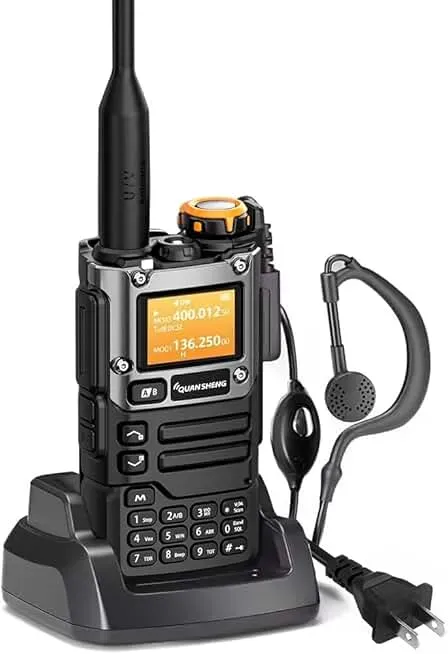
The UV-K5(8) is a middling $25.64 radio stock and the most interesting radio in this price range once you flash it. Open, unlocked firmware means free community software adds a spectrum analyzer and wide-band receive, features you'd normally pay hundreds for; it also receives AM airband out of the box. Our full review is candid about the catch: the stock receiver has a wide-open front end that can overload near strong signals, and AM airband audio has a garbling bug that custom firmware fixes. It's still CHIRP-compatible and legal on 2m and 70cm the day it arrives. Compare it to the UV-5R.
Best Budget Battery: Baofeng GT-5R (Beginner Score: 85)
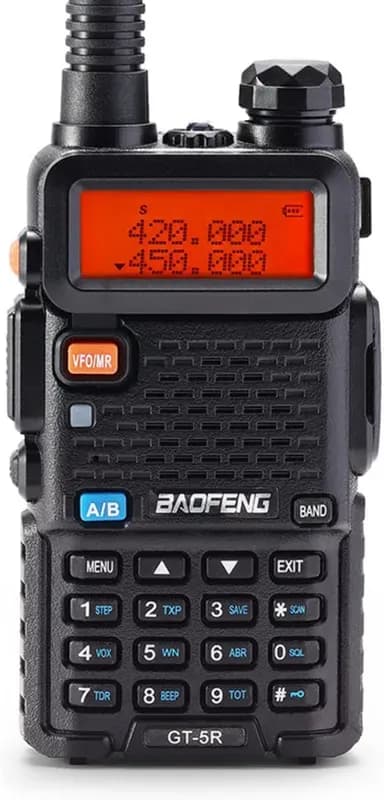
The GT-5R is the UV-5R's battery-conscious sibling: a 3,800 mAh battery, more than double the UV-5R's 1,800 mAh, with everything else comparable (dual-band, 6 watts, CHIRP). If you hate charging constantly, especially for emergency preparedness or all-day outdoor use, this solves it for a little more than the UV-5R.
How Much Power Do You Actually Need? (5W vs 8W)
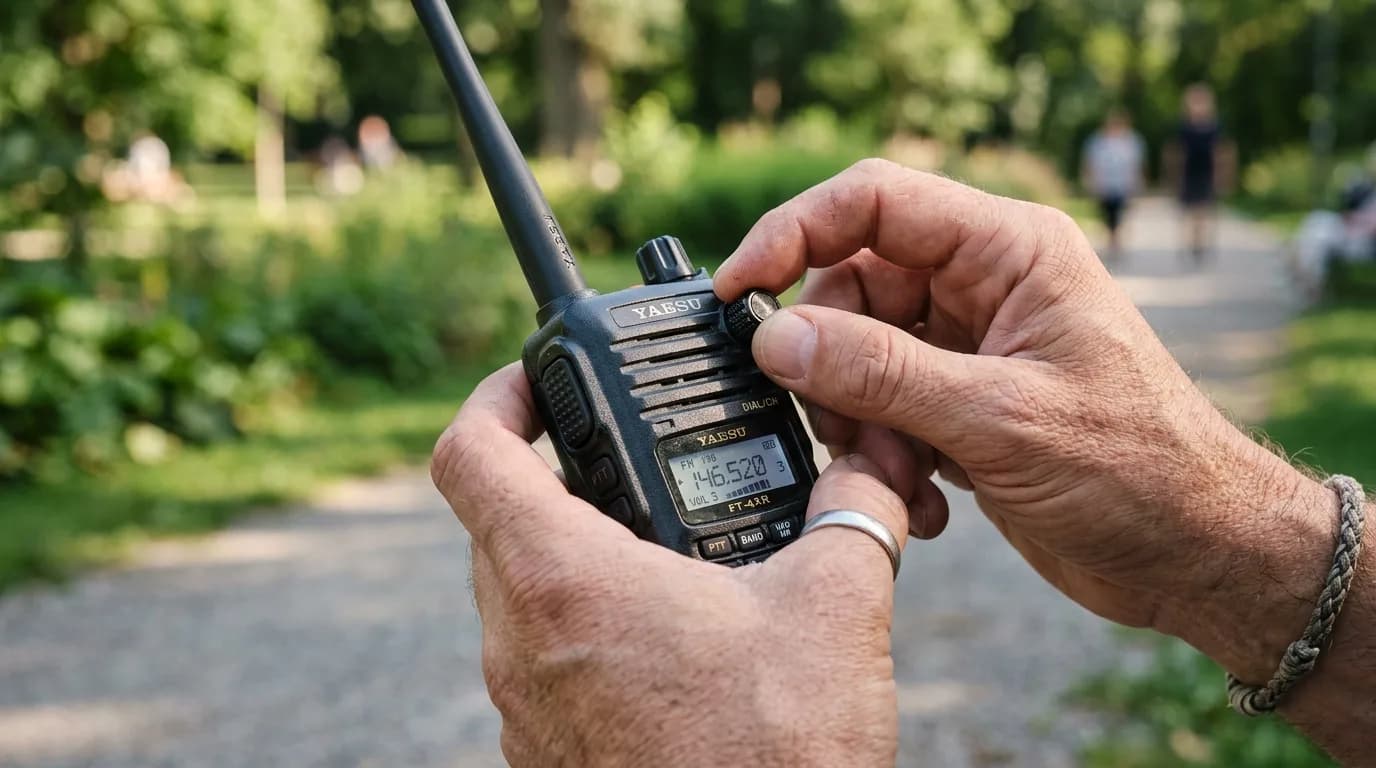
It's tempting to treat wattage as the main thing that decides your range. It isn't. On VHF and UHF, range is governed almost entirely by line-of-sight: how high your antenna sits and what's between you and the other station. Doubling your transmit power adds only 3 dB, which nudges your range up modestly at best; raising or upgrading your antenna does far more, and a better antenna on a 5-watt radio will out-perform a stock rubber duck on a 10-watt radio.
That's why we don't weight raw wattage heavily in the beginner score, and why we'd rather see you spend $15 to $20 on an aftermarket whip antenna than chase an extra couple of watts. A 5-watt UV-5R and a 10-watt 5RM will hit roughly the same repeaters from the same spot with the same antenna. For the full breakdown, see our ham radio range guide.
Mid Tier
If you can spend $50 to $120, this tier delivers meaningfully better features: higher power, APRS, better build quality, and larger displays. These are radios you'll keep using for years, not just months.
Best Overall: Baofeng BF-5RH PRO (Beginner Score: 94)
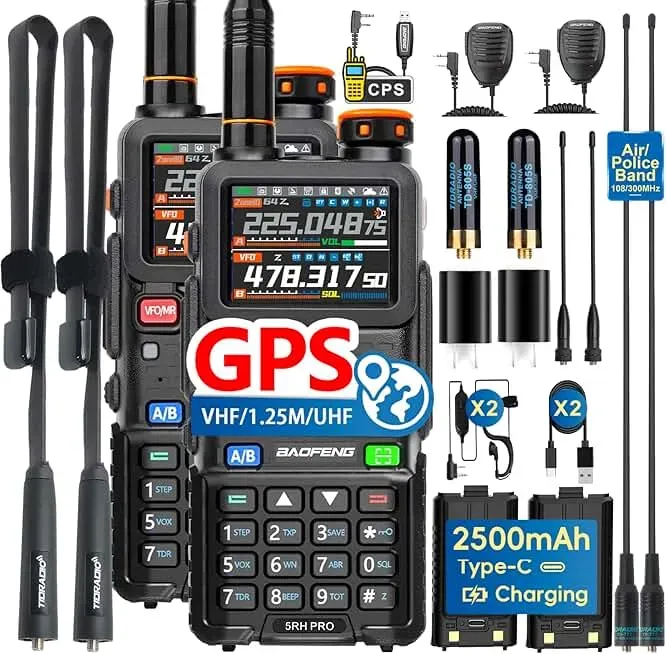
The BF-5RH PRO is our top recommendation for most beginners and the highest-scoring handheld in our database at 87 overall. For $71.69: triband (VHF/UHF/1.25m), 10 watts, GPS with APRS, IP54 weather resistance, CHIRP, and it ships as a two-radio kit, rated 4.5 stars across 293 reviews. Two radios means you and a friend can practice together, which speeds up learning; APRS broadcasts your GPS position, useful for POTA activations and emergencies. Compare it to the UV-5R to see why the extra $54 matters.
Longest Battery Life: Baofeng UV-25 (Beginner Score: 84)
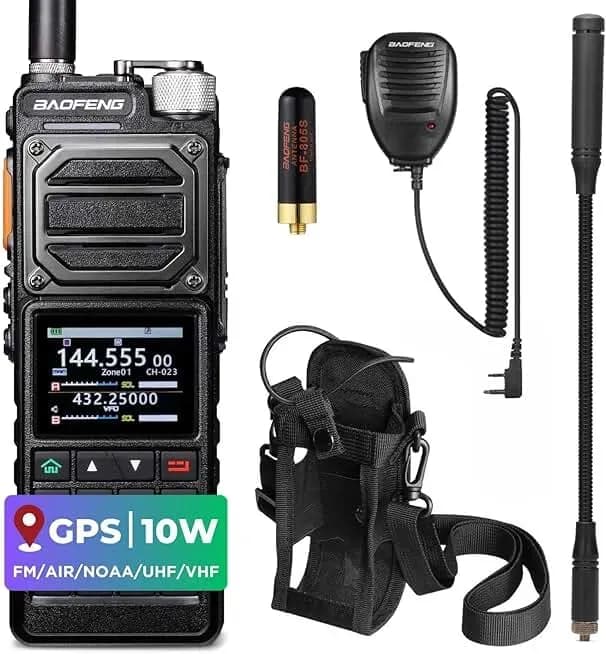
The UV-25 solves the problem every new ham discovers in their first month: forgetting to charge the radio. Its 5,200 mAh battery is the largest in our handheld database, double what the BF-5RH PRO carries and nearly triple a UV-5R. In practice that means days of monitoring between charges instead of hours, which is exactly the kind of forgiving a first radio should be. Beyond the battery you get triband coverage (VHF, 220 MHz, UHF), 10 watts, GPS, and full CHIRP support for painless programming.
One more data point worth sharing: of every radio we link to across this site, the UV-25 has the highest rate of readers who click through and actually buy one. Compare it to the UV-5R to see what the extra $38 buys, or check it against the GT-5R, the budget battery pick above.
Best Ergonomics: Baofeng UV-82 (Beginner Score: 82)
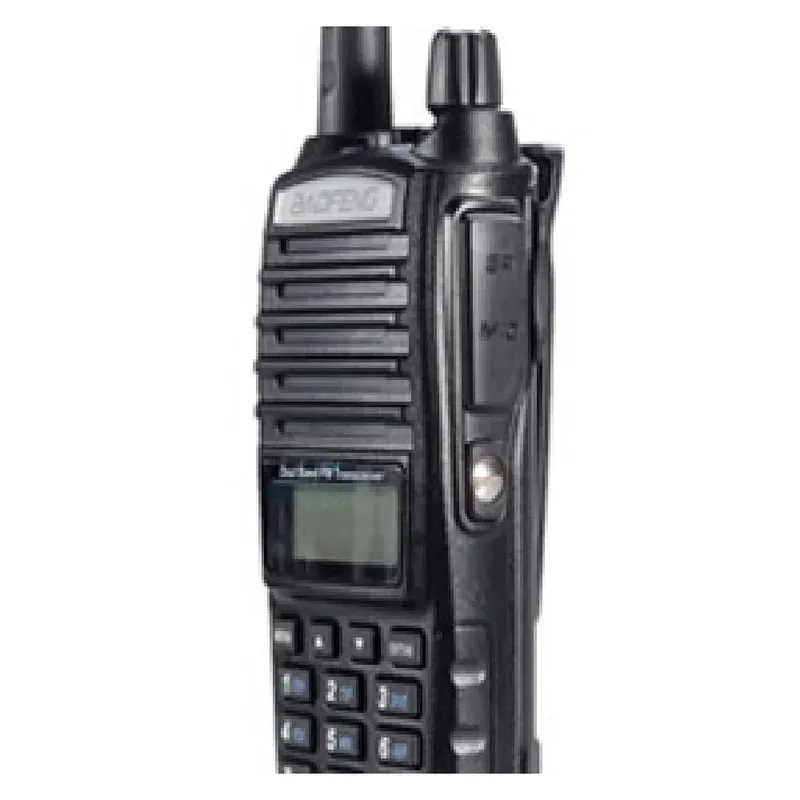
The UV-82 is the radio to buy if the UV-5R feels too small or cramped: a taller body, larger buttons, and dual PTT design suit bigger hands or dexterity concerns. Dual-band, 8 watts, 2,800 mAh battery, CHIRP-compatible.
APRS Step-Up: TIDRADIO TD-H9 (Beginner Score: 72)
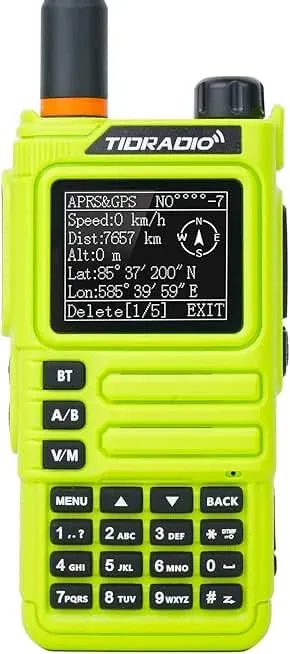
The TD-H9 is TIDRADIO's bigger sibling to the TD-H3: 10 watts, built-in GPS with APRS, and app-based programming through the same Odmaster ecosystem. It's the radio to reach for if you want APRS without jumping straight to the AnyTone.
Its beginner score is the lowest in this guide for two concrete reasons: it has no CHIRP support (programming runs through TIDRADIO's own app and desktop tools), and APRS setup happens entirely through the keypad menus. At 4.2 stars across 450 reviews its rating also trails everything else here, with the one-star reports clustered on display failures. It earns its slot on capability, not hand-holding; read our full TD-H9 review for the firmware history and whether the tradeoffs fit you.
Should You Buy a Yaesu Instead? (The Baofeng Debate)
If you spend any time in r/amateurradio or a club meeting, you'll eventually hear a variation of the same warning: don't learn on a Baofeng, buy a real radio. The concern behind that advice is real and worth taking seriously, not dismissing as brand snobbery.
The technical worry is receiver front-end overload, sometimes called desense: a cheap receiver's filtering can be loose enough that a strong nearby signal, a broadcast tower, a repeater, even another handheld, washes out the weak signal you're trying to hear. Some budget radios have also measured with spurious transmit emissions outside their intended band in bench tests published by other reviewers. We haven't run our own bench tests on transmitter spectral purity, and we won't cite numbers we don't have. What we can offer is our beginner score, which weighs affordability and ease of use rather than receiver dynamic range, and our Amazon rating and review-count data, the closest thing we have to a large-sample reputation signal. Every radio in this guide sits at 4.2 stars or higher across hundreds of reviews, which doesn't prove a clean receiver, but it does mean a lot of owners aren't reporting these radios as unusable.
If a clean receiver and a chassis built to survive a decade matter more than price, the Yaesu FT-65R is the name-brand answer: Japanese manufacturing, a reflective LCD that's easier to read in direct sun than most budget color screens, and IP54 weather resistance. The FT-4XR and FT-60R are the other two radios experienced hams point new buyers toward for the same reason: proven build quality over feature count. None will out-program a UV-5R's CHIRP support or match a 5RM's feature list dollar for dollar.
Our honest take: for most beginners, a well-reviewed budget radio is genuinely fine to learn on. The receiver-quality gap matters most in RF-dense environments: a dense city, an apartment packed with Wi-Fi routers and cordless phones, a neighborhood full of other transmitters. If that's where you'll operate, or you already know you're staying in this hobby for a decade, spend the extra money on a Yaesu. If you're still figuring out whether ham radio is for you, receiver quality shouldn't be why you spend many times as much on your first radio.
Future-Proof Tier: For When You Know You're Staying
These radios cost more and have steeper learning curves. Don't buy them as your first radio unless you're already certain ham radio is for you. They make excellent second radios after 3 to 6 months with a budget model.
Best DMR Gateway: Baofeng DM32 (Beginner Score: 67)
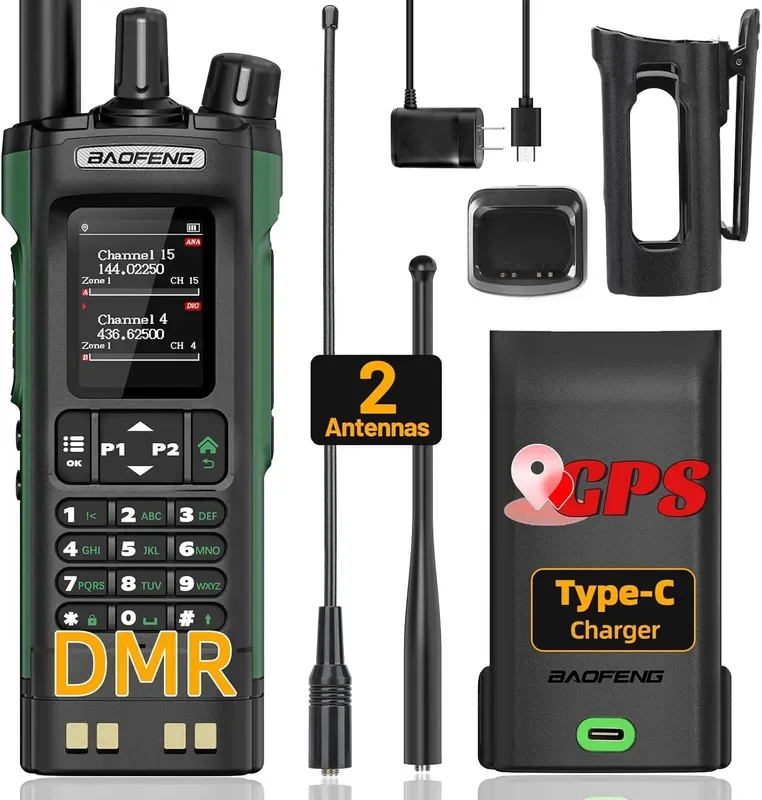
The DM32 adds DMR digital voice to the Baofeng formula: DMR Tier II, APRS, GPS, 8 watts, and CHIRP for $49.99. Buying DMR-capable from the start saves you a second radio later if you know you want digital modes eventually. The beginner score of 67 trails the analog picks above because DMR adds real complexity: codeplugs, talkgroups, and time slots before your first digital QSO. Start with analog FM, then explore DMR when comfortable. Compare DM32 vs UV-5R.
Best Premium Starter: AnyTone AT-D878UVII Plus (Beginner Score: 52)
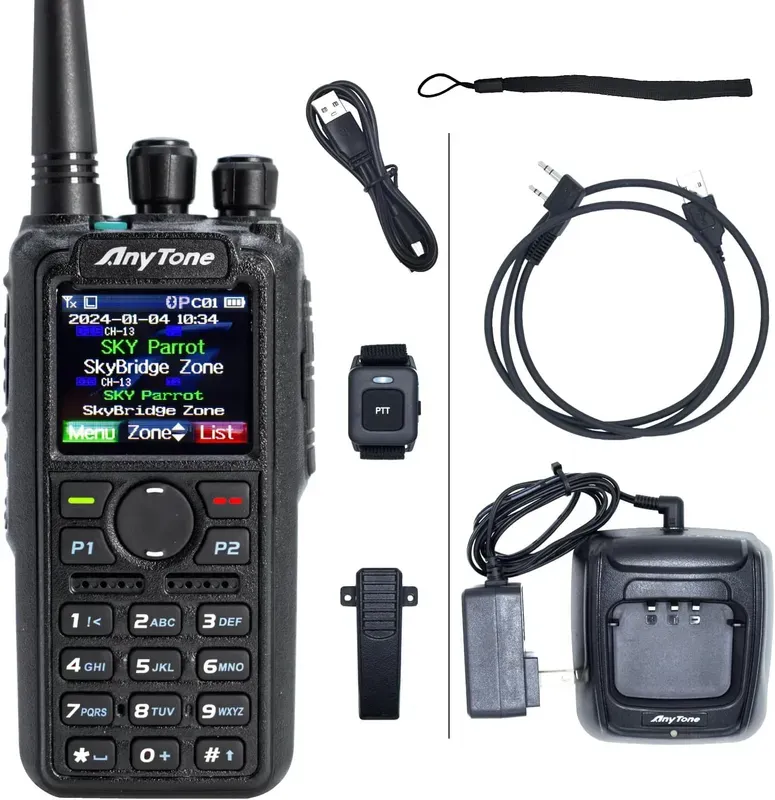
The AT-D878UVII Plus is the radio experienced hams point you to when you ask for the "best" DMR handheld: DMR Tier I and II, APRS, GPS, Bluetooth, color display, and 7 watts. The CPS software (not CHIRP) is the best in the DMR world, and the AnyTone community is large and helpful.
The beginner score of 52 is the lowest in this guide, and for good reason: this is not a first radio. At $249.99, the feature set will overwhelm someone who hasn't yet programmed a basic repeater. Buy this after 6 months with a budget radio, once you know what you want. Compare it to the UV-5R to see the gap.

Full Comparison Table
| Radio | Price | Beginner | Overall | Power | Bands | DMR | CHIRP | Battery |
|---|---|---|---|---|---|---|---|---|
| 5RM | $26.99 | 95 | 76 | 10W | VHF/220/UHF | No | Yes | - |
| BF-5RH PRO | $71.69 | 94 | 87 | 10W | VHF/UHF/1.25m | No | Yes | 2,500 mAh |
| UV-5R | $17.16 | 88 | 69 | 5W | VHF/UHF | No | Yes | 1,800 mAh |
| UV-21R | $26.99 | 87 | 81 | 6W | VHF/220/UHF | No | Yes | - |
| TD-H3 | $31.99 | 87 | 68 | 5W | VHF/UHF | No | Yes | - |
| UV-K5 | $25.64 | 86 | 69 | 5W | VHF/UHF | No | Yes | - |
| GT-5R | $19.99 | 85 | 69 | 6W | VHF/UHF | No | Yes | 3,800 mAh |
| UV-25 | $63.99 | 84 | 76 | 10W | VHF/220/UHF | No | Yes | 5,200 mAh |
| UV-82 | $24.99 | 82 | 67 | 8W | VHF/UHF | No | Yes | 2,800 mAh |
| TD-H9 | $69.99 | 72 | 81 | 10W | VHF/220/UHF | No | No | 2,400 mAh |
| DM32 | $49.99 | 67 | 83 | 8W | VHF/UHF | Yes | Yes | 2,500 mAh |
| AT-D878UVII Plus | $249.99 | 52 | 83 | 7W | VHF/UHF | Yes | No | 3,100 mAh |
VHF/220/UHF and VHF/UHF/1.25m are the same triband layout; 220 MHz and 1.25 meters are two names for the same amateur band. A dash in the Battery column means we don't have a verified capacity for that model; we won't guess a number we can't stand behind.
Programming Your First Radio
The single best thing you can do after buying any radio here is program it with CHIRP, free software that loads repeater frequencies, tones, and channels from a spreadsheet over USB instead of a tiny keypad. Our step-by-step guide to programming a Baofeng walks through the process, and most of it applies to the other brands here too.
Ten of the twelve radios above are CHIRP-compatible. The AnyTone AT-D878UVII Plus uses its own CPS software instead, which is also good, just not CHIRP, and the TIDRADIO TD-H9 programs only through TIDRADIO's app and desktop tools (details in our TD-H9 review). Buy a programming cable ($10 to $15, often included), connect your radio to your laptop, import your local repeaters from RepeaterBook, and upload. Five minutes, and you're ready to listen.
Your First 6 Months: A Realistic Path
Before your license: Study with our practice quiz. Buy a radio and listen to local repeaters. Learn the rhythm of a net.
Month 1: Pass your exam, get your call sign. Program your radio with CHIRP. Listen more than you talk. Find a friendly net and check in.
Month 2 to 3: Make your first 5 QSOs. Upgrade your stock antenna for $15 to $20 (this makes a bigger difference than upgrading the radio, as covered above). Learn about VHF vs UHF propagation from experience.
Month 4 to 6: If you're hooked, consider a BF-5RH PRO, a TD-H9, or a Yaesu if build quality matters more than price. Explore simplex (no repeater) contacts, join a local club, and look into POTA or emergency volunteering.
After 6 months: You'll know what you want. The best handheld ham radios roundup and our Baofeng guide can help you pick your next radio based on where the hobby has taken you. Check our band chart to understand what frequencies your license class grants.
Bottom Line
Start with the Baofeng BF-5RH PRO at $71.69 if you can; it's the best combination of beginner-friendliness, features, and value in our database. If that is too much, the Baofeng 5RM at $26.99 or the UV-5R at $17.16 will teach you everything you need for the price of a cable.
Community matters more than gear. A $16 radio and a friendly repeater net beats a $250 rig used alone. Get your license, buy a radio, program it with CHIRP, and key up.
Browse all our beginner-ranked radios or filter by budget: under $50, under $100.