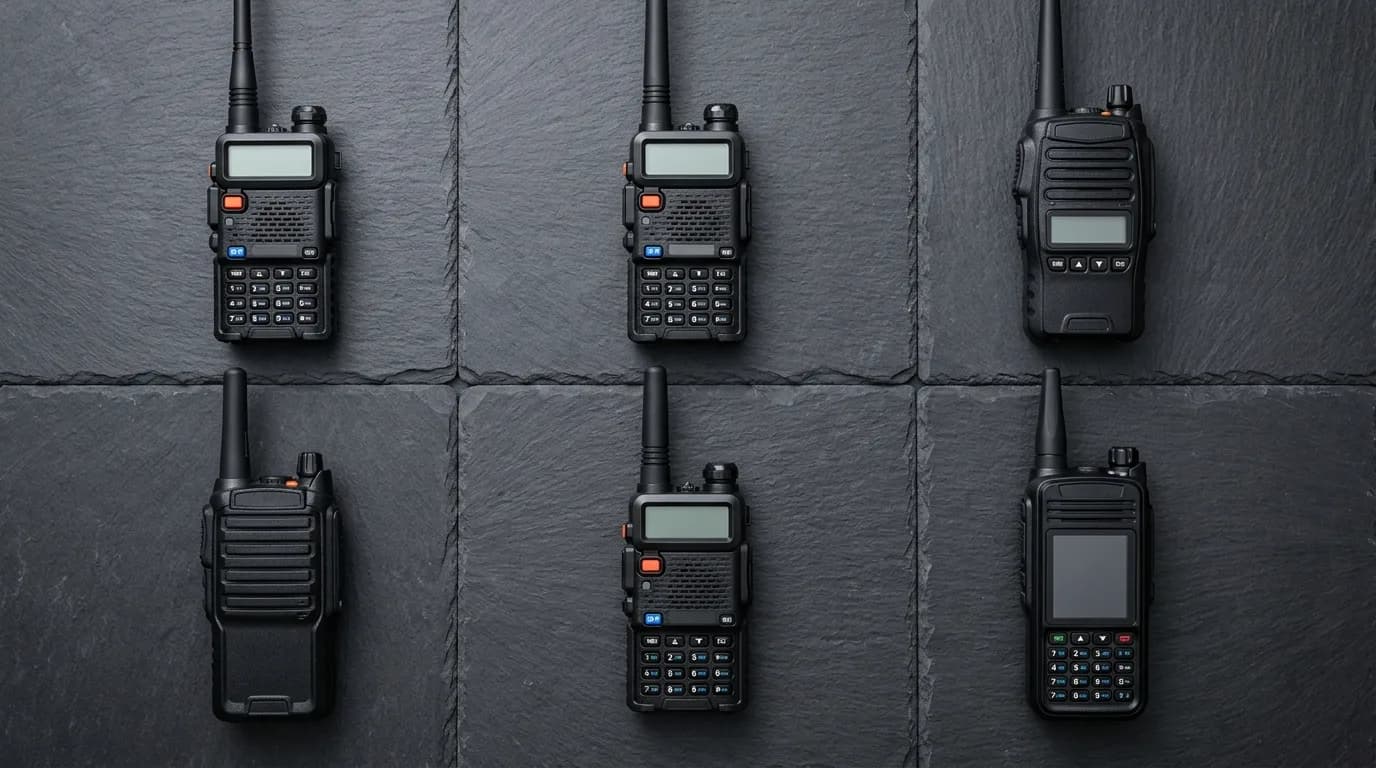

Baofeng has sold millions of handheld radios for good reason: they work, they're cheap, and the community around them is massive. My first radio was a UV-5R. It cost less than lunch. I programmed it wrong, keyed up on the wrong repeater, and learned more in a week than a month of studying could have taught me. That said, not all Baofengs are created equal, and the lineup has grown far beyond the UV-5R.
This is every Baofeng handheld worth buying in 2026, ranked by RadioRanked's scoring algorithm. Not hype. Not brand loyalty. Data.
One finding shapes the whole guide: some of these models are the same electronics under different names, and the FCC filings say which. They name fewer shared models than the listings claim, and most of the grants involved cover the digital electronics, not the transmitter. Here is which ones.
Quick Picks
| Radio | Price | Score | Best For |
|---|---|---|---|
| BF-5RH PRO | $71.69 | 86 | Best overall Baofeng |
| BTECH DMR-6X2 PRO | $249.89 | 85 | Best DMR Baofeng |
| DM-32UV Pro | $63.99 | 83 | Only IP67 DMR Baofeng |
| DM32 | $49.99 | 83 | Best budget DMR |
| UV-5RM Pro | an unlisted price | 77 | Best modern analog |
| UV-28 | $43.99 | 77 | Most radio under $45 |
| 5RM | $26.99 | 76 | Best cheap triband |
| UV-21R | $26.99 | 74 | Best ultra-budget triband |
| BF-F8HP | $45.00 | 73 | Most proven upgrade |
| UV-82 | $24.99 | 70 | Best ergonomics |
| UV-5R | $17.16 | 69 | Cheapest way to start |
| GT-5R | $19.99 | 69 | Best battery on a budget |
| UV-25 | Check listing | 61 | Best battery life (reader favorite) |
Prices refresh daily from Amazon and move a lot on this lineup, so treat them as of today rather than fixed. The BF-F8HP in particular swings between roughly $30 and $60 depending on the week.
How We Ranked These
Every radio gets an overall score from 0 to 100 based on value (price vs. capabilities), features (digital modes, APRS, IP rating, power), beginner-friendliness (ease of use, community size, CHIRP support), and portability (weight, battery, form factor). We pull from manufacturer specs, Amazon reviews, and FCC records. Full details on our scoring methodology.
Why Baofeng Dominates (And Where It Doesn't)
Baofeng radios own the entry-level ham market because nothing else comes close on price. A dual-band VHF/UHF handheld for $15 to $70 is an entry barrier so low that it barely exists. The ecosystem is equally valuable: thousands of YouTube tutorials, a dedicated subreddit, universal CHIRP compatibility, and the knowledge that whatever problem you hit, someone else already solved it.
That accessibility comes with real tradeoffs. Quality control varies between batches. Customer support is effectively nonexistent. The stock rubber duck antennas are weak (an upgrade helps your range). Audio quality is tinny. Menu systems feel like they were designed by engineers who have never used a menu. And counterfeits exist on Amazon and AliExpress, so buy from sellers with established review history.
None of that makes Baofeng a bad choice. It makes them a transparent choice. You're buying price and community, not build quality or polish. That's a perfectly rational decision for most operators.
Which Baofengs Are Actually the Same Radio
The most common question about this lineup, and the one nobody answers, is whether the models are genuinely different radios or the same radio in different shells. Go read any Baofeng thread and you will find someone saying they were "under the impression that most of them are UV-5Rs that are different shapes."
There is a way to check that does not rely on anyone's opinion: the FCC filing. Most Baofeng handhelds sold in the US carry an FCC equipment authorization, and when a manufacturer puts several model numbers on one grant, the filing names them. The listing's word is not enough. Sellers print whatever grant ID they like, and several of the IDs attached to these models name a different radio or no radio at all.
Going only by what the filings name, 7 of the models we track share three grants:
| FCC grant | Models the filing names | What the grant covers |
|---|---|---|
| 2AJGM-5RM | 5RM, UV-5RM Plus, AR-5RM | Part 15B only |
| 2AJGM-UV5R | UV-5R, UV-5R Plus | Part 15B only |
| 2AJGM-UV82 | UV-82, UV-82HP | Part 15B and Part 95E (GMRS) |
The 5RM filing is unusually blunt. It carries a declaration that the AR-5RM, the UV-5RM Plus and more than a dozen other model numbers "are electrically identical with the model: 5RM". Today the UV-5RM Plus sells at $59.99 and the AR-5RM at $24.98.
Be precise about what this does and does not prove. The 5RM and UV-5R grants are Part 15B, which covers the radio's digital electronics as an unintentional emitter. They certify nothing about transmitting, because an amateur transmitter needs no FCC certification at all. So a shared grant tells you nothing about whether a transmitter was certified, because none was. What the 5RM filing adds is the manufacturer's own statement, filed with the FCC, that those models are electrically identical. The UV-5R filing makes no such declaration; its test report simply names the UV-5R and UV-5R Plus together. The UV-82 grant is the exception: its 2021 filing adds Part 95E, the GMRS rule, and names both the UV-82 and the UV-82HP, so there a transmitter really was certified, for GMRS. Case, battery, display, keypad and firmware can still differ, and they do: the AR-5RM has a bigger body and USB-C charging that the older UV-5RM does not.
The practical rule: when a filing declares two models electrically identical, as the 5RM filing does, buy on price, ergonomics and battery, because a claim that one has better range or cleaner output than the other contradicts the manufacturer's own declaration. When a filing only names two models together, that is a strong hint they share a design, not proof. When a listing prints a shared grant ID that the filing does not name, the listing is the only evidence, and it is not good evidence. The UV-5RM Pro, the UV-5R Mini, the DM-32UV Pro and the K5 Plus Tri-Band all fall in that group.
Our full handheld rankings cover the same ground across every brand, and most of the handhelds we track are analog only, which is the same story at catalog scale.
The Classics
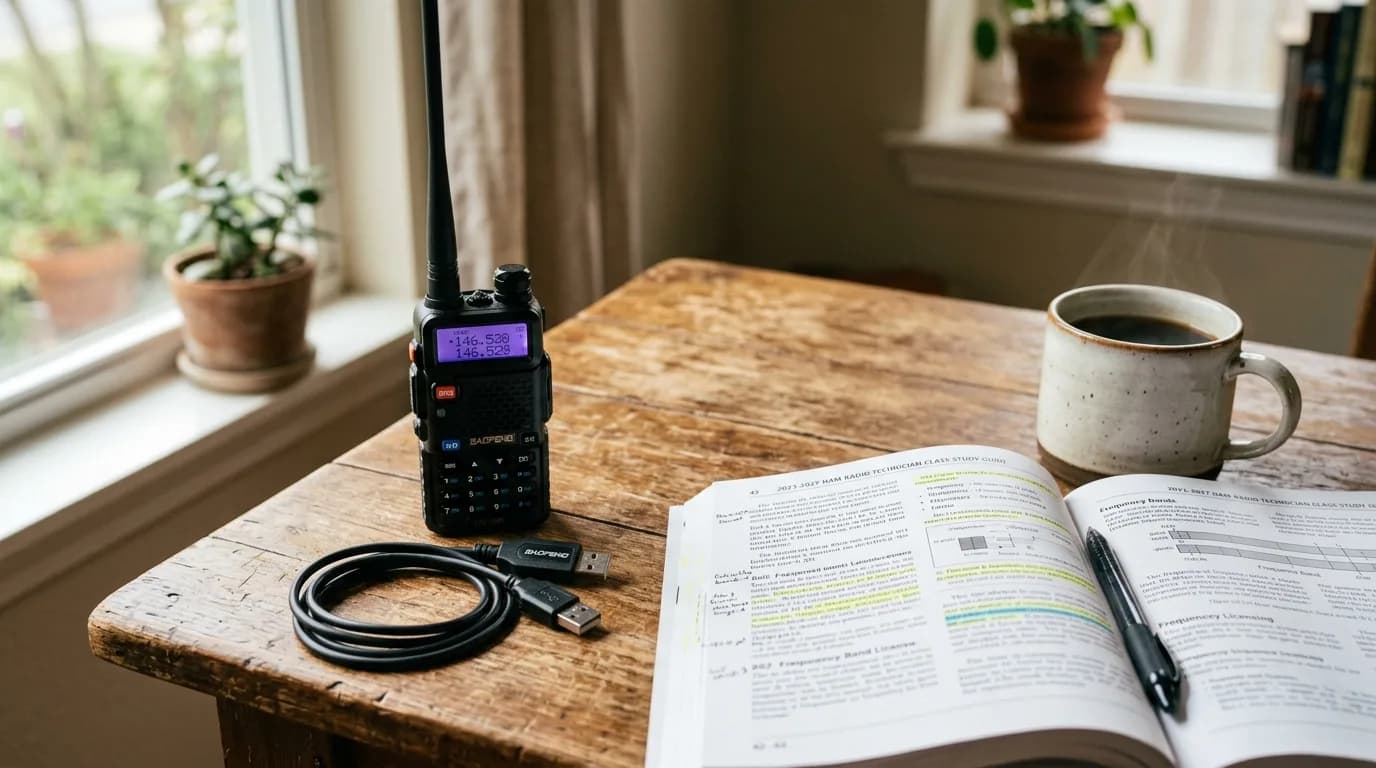
These are the models that built Baofeng's reputation. They've been on the market for years, have tens of thousands of reviews, and are the radios you'll find recommended in every beginner thread on Reddit.
Baofeng UV-5R (Score: 69)
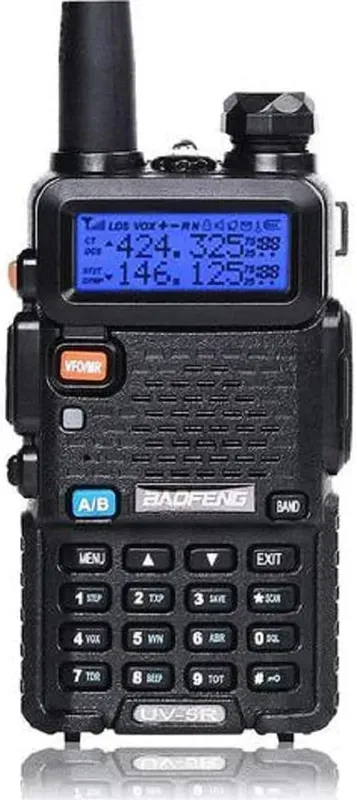
The radio that started it all for millions of hams, including me. At $17.16, the UV-5R is cheaper than the programming cable you'll use to set it up. Dual-band VHF/UHF, 5 watts, CHIRP-compatible, and backed by over 10,000 Amazon reviews at a 4.5-star average. The community around this radio is unmatched; if you have a question, it's been answered.
The overall score of 69 reflects genuine limitations. The feature score of 18 is the lowest on this list because it has no DMR, no APRS, no GPS, no waterproofing, and modest power output. The 1,800 mAh battery is small. But the value score is 95 and the beginner score is 89, because nothing else gets you on the air for this price with this much support.
If you're wondering about legality: Is the Baofeng UV-5R Legal? Yes, with a ham license.
Best for: Absolute beginners, emergency kits, beater radios you won't cry over losing. Anyone studying for their license with our practice quiz should start here.
Baofeng BF-F8HP (Score: 73)
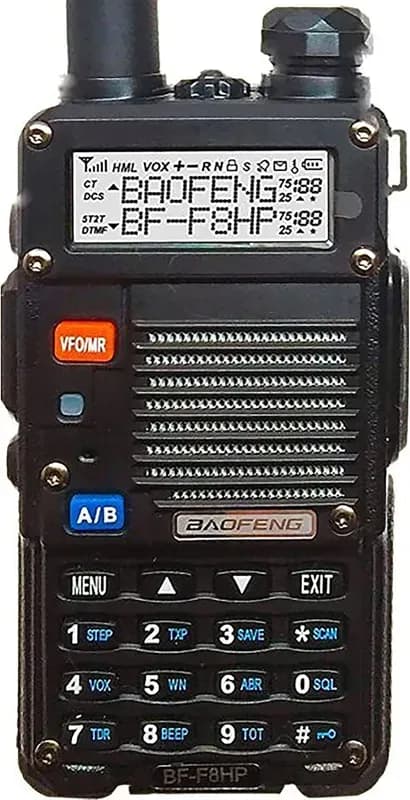
The BF-F8HP is the UV-5R's more capable sibling. Same form factor, same Baofeng ecosystem, but with a claimed 8 watts of output, a 2,100 mAh battery, and better documentation. It has 15,354 Amazon reviews, making it one of the most reviewed radios on the planet. When people say "buy a Baofeng," this is often the one they actually mean.
No digital modes, no APRS. Just clean dual-band analog FM with more power. That simplicity is a feature if you want fewer things to configure and troubleshoot.
Best for: The definitive UV-5R upgrade. Preppers who want more range. Operators who want a proven, simple radio with massive community backing. Compare it to the UV-5R.
Baofeng UV-82 (Score: 70)
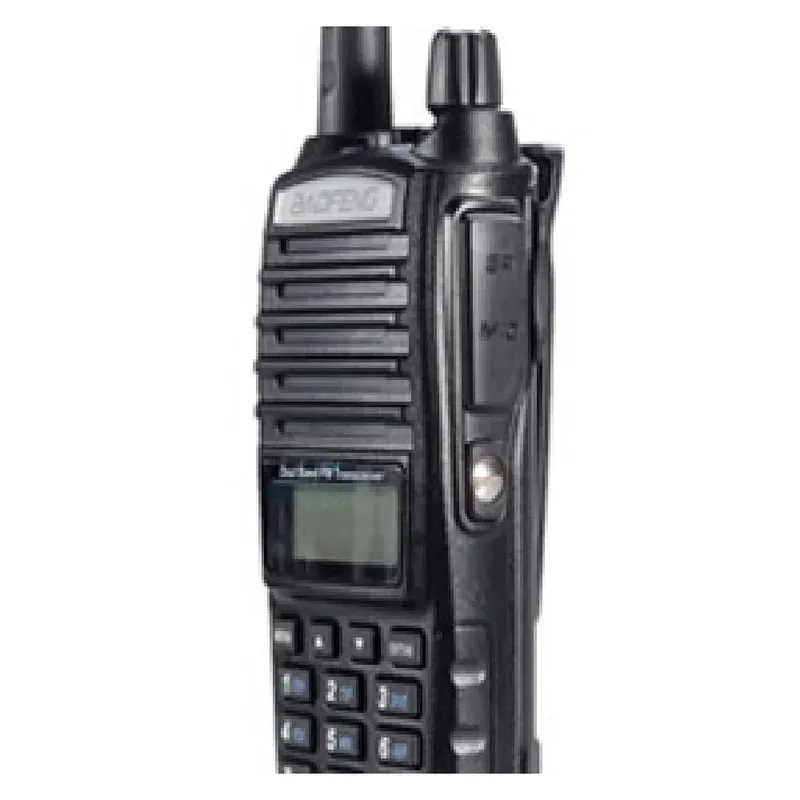
The UV-82 trades the UV-5R's compact body for a taller, easier-to-grip form factor with a dual PTT button design. If the UV-5R feels cramped in your hand, or if you have larger hands or dexterity concerns, the UV-82 is the answer. 8 watts, 2,800 mAh battery, and CHIRP-compatible.
The score of 70 is close to the UV-5R because the feature set is nearly identical; you're paying more for better ergonomics, not more technology. With 830 Amazon reviews at 4.4 stars, it's well-proven.
Best for: Anyone who finds the UV-5R uncomfortable. Outdoor use where grip matters. UV-5R vs UV-82 comparison.

The Modern Generation
Baofeng hasn't stood still. These newer models add triband coverage, APRS, GPS, bigger batteries, and higher power output while staying under $75. If you're buying a Baofeng today, this is the tier to look at.
Baofeng BF-5RH PRO (Score: 86)
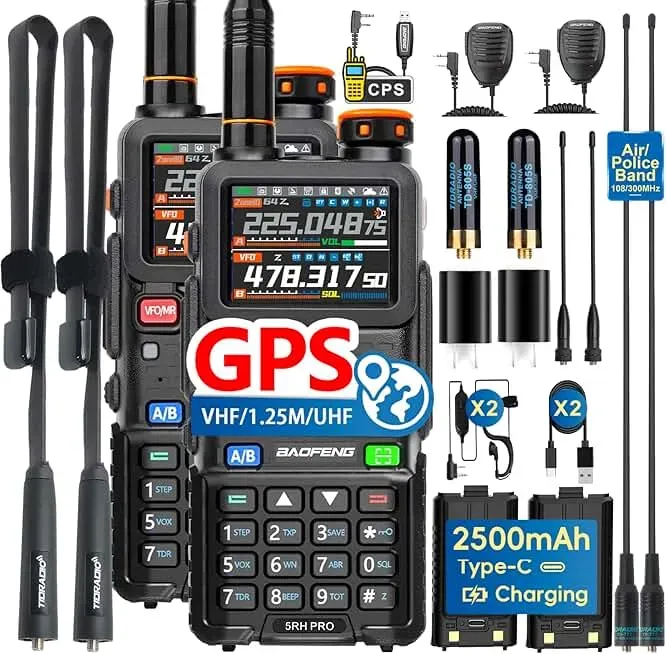
Our number one Baofeng and the highest-scoring handheld in the entire RadioRanked database. For $71.69 you get triband coverage (VHF, UHF, and 1.25m), 10 watts, built-in GPS with APRS, IP54 weather resistance, and CHIRP compatibility. It ships as a two-radio kit, which makes the per-unit cost even more ridiculous.
Its beginner score of 94 is among the highest we've measured across all brands, behind only the UV-21R at 97 and the 5RM at 95. The 1.25-meter band gives you access to 220 MHz repeaters that are less crowded. APRS lets you broadcast your position, which matters for POTA activations and emergency use.
Tradeoffs: Still a Baofeng; build quality won't match a Yaesu. But at $71.69 for two radios with this feature set, it's hard to argue with the data.
Best for: The best overall Baofeng for anyone, period. New hams, experienced operators wanting a backup, POTA activators, preppers. Compare it to the UV-5R to see how far the lineup has evolved.
Baofeng UV-5RM Pro (Score: 77)
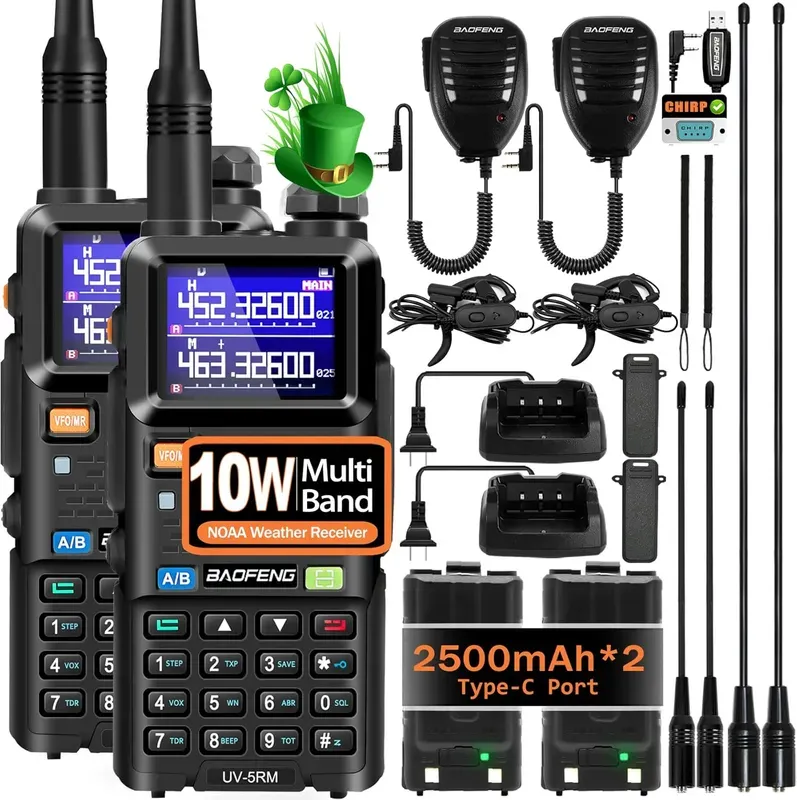
The UV-5RM Pro is the modern UV-5R evolution. It adds 10 watts of power, APRS with GPS, and 640 channels, all for an unlisted price. With 394 Amazon reviews at 4.5 stars, it's well-established. Think of it as what the UV-5R would be if it were designed in 2025 instead of 2012.
No DMR, no waterproofing, but it fills the gap between the basic UV-5R and the feature-packed BF-5RH PRO. If you want APRS but don't need triband or IP54, this saves you a few bucks. Compare it to the UV-5R.
Best for: Operators who want a modern analog radio with APRS and GPS at a reasonable price.
Baofeng UV-25 (Check listing, Score: 61)
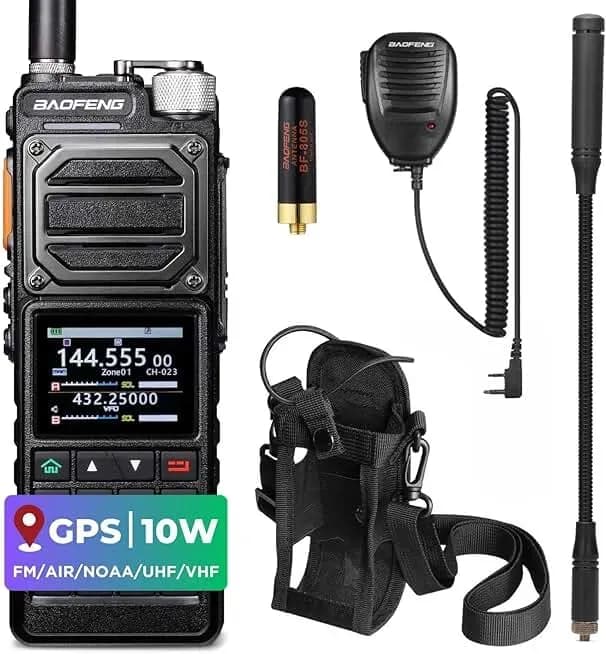
The UV-25 is the battery life champion. Its 5,200 mAh battery is more than double what the UV-5R carries, and it's the largest in our entire Baofeng roundup. Triband (VHF/UHF/1.25m), 10 watts, GPS, and CHIRP-compatible. The beginner score of 84 reflects its approachable design.
It's also quietly the reader favorite. Of every radio we link to across the site, the UV-25 has the highest rate of readers who click through and actually buy one. When a radio converts window shoppers into owners at that rate, the spec sheet is telling the truth.
Its Amazon listing currently shows no price, which is also why the score above is lower than in past updates: we do not score value on a price we cannot verify.
No DMR or APRS, but a triband radio with a massive battery is a strong deal at its usual price. If you're doing long field days, multi-day hikes, or want a radio that simply won't die on you, check the listing and grab this one if a priced offer returns. Torn between the two 10-watt triband Baofengs? Compare it to the BF-5RH PRO, or browse more long battery life options.
Best for: Extended field use, emergency preparedness, anyone tired of swapping batteries.
Baofeng UV-21R (Score: 74)
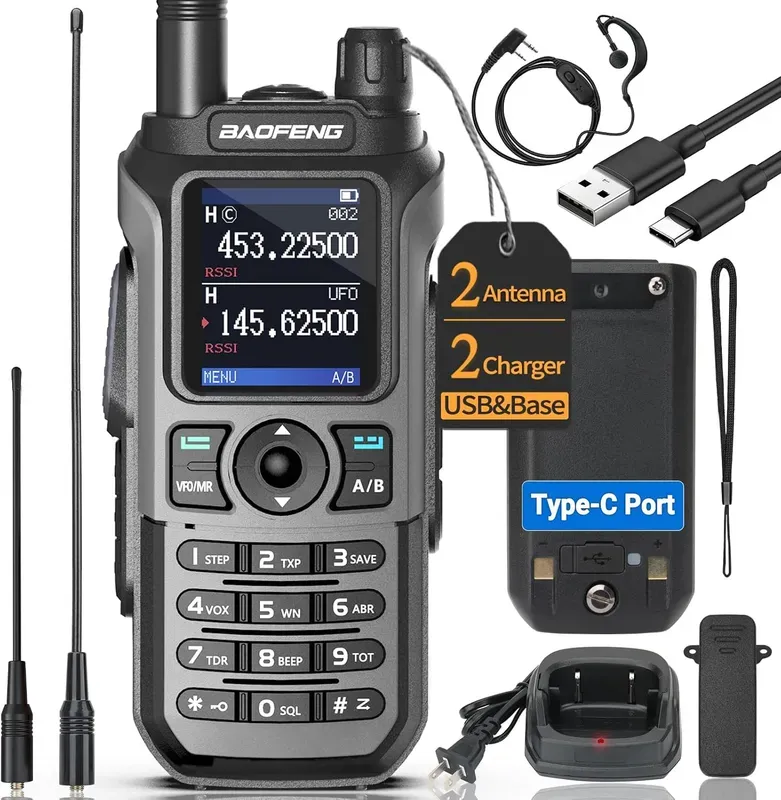
The UV-21R might be the best value in the entire lineup relative to what you get. For under $30, it delivers triband coverage (VHF, 220 MHz, UHF), IP54 weather resistance, 6 watts, and CHIRP compatibility. Its beginner score of 97 is the highest of any handheld we score, in any brand. With 775 Amazon reviews at 4.5 stars, it's well-validated.
The 1,800 mAh battery is small, and 6 watts is less than the 10W models above it. But for under $30, you're getting triband and IP54 that used to cost $70+. Compare it to the UV-5R to see the generational leap.
Best for: Budget buyers who want weather resistance and triband without paying $70. A strong candidate for best radios under $50.
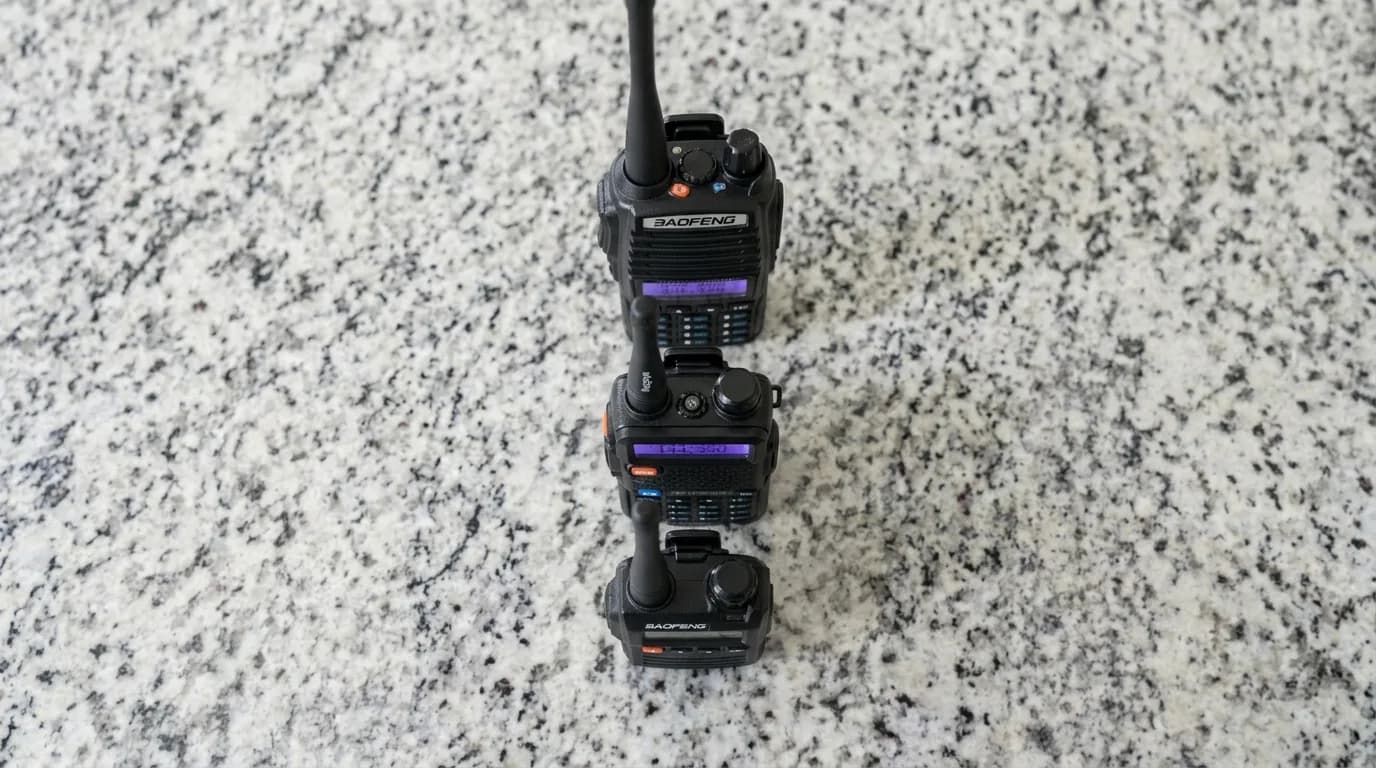
The DMR Tier
If you want digital voice on a Baofeng budget, these models open the door to DMR without the $250 price tag that most DMR radios carry. If you're new to digital, our What is DMR guide covers the basics. Our best DMR radios roundup ranks the full lineup beyond Baofeng.
Baofeng DM32 (Score: 83)
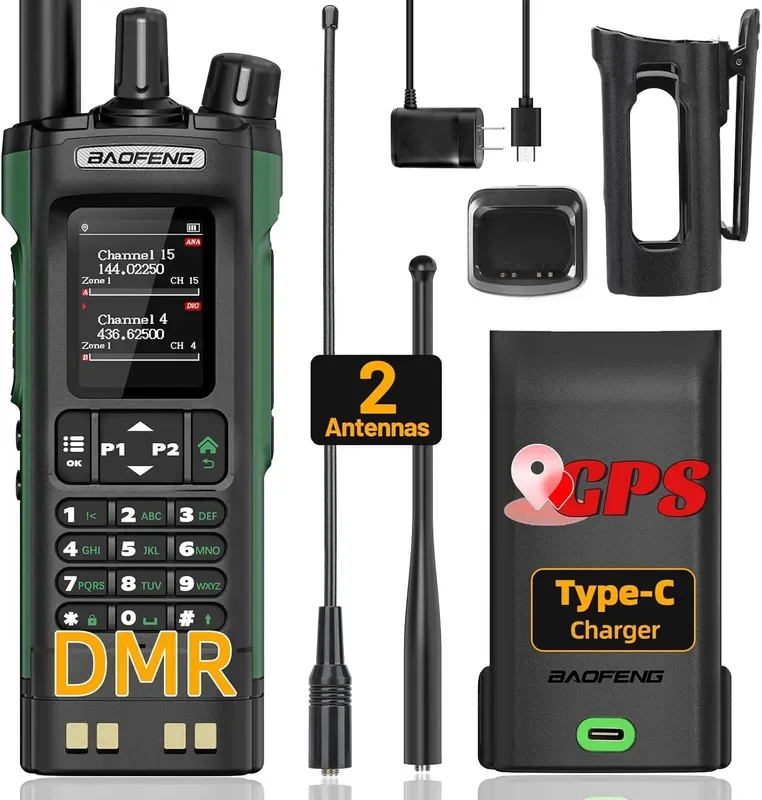
The DM32 is the cheapest credible DMR radio we've tested. DMR Tier II, APRS, GPS, 8 watts, and CHIRP compatibility, all for $49.99. The feature score of 71 is among the highest in the Baofeng lineup because digital modes, APRS, and GPS are exactly what the algorithm rewards.
196 Amazon reviews at 4.5 stars show it's proven. The beginner score of 67 is lower than the analog models because DMR programming adds complexity; you'll need to learn codeplugs, talkgroups, and time slots.
Best for: Operators who want to explore DMR without a big investment. A natural upgrade path from any analog Baofeng. Compare DM32 vs UV-5R to see what digital adds.
Baofeng DM-32UV Pro (Score: 83)
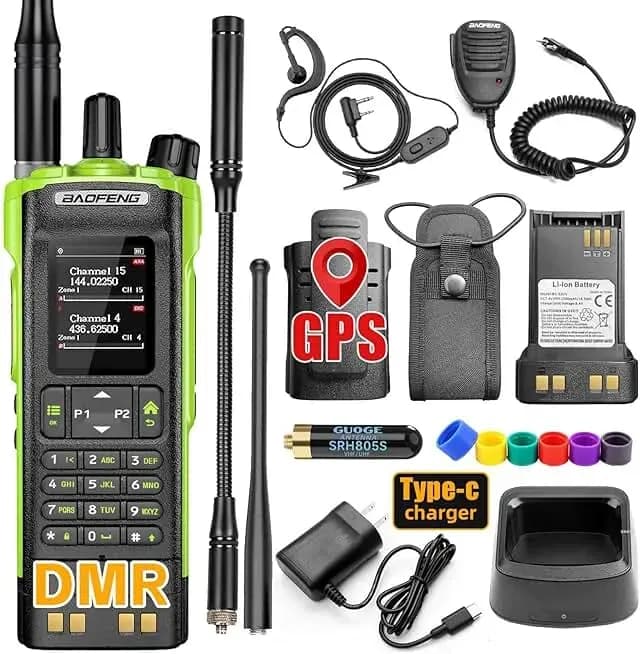
The DM-32UV Pro ties the DM32 and DM-32UV GPS APRS for the highest score among DMR Baofengs under $100, and it's the only one of the three with IP67, meaning submersible rather than splash-resistant. It raises advertised output from the DM32's 8 watts to 10, keeps DMR with APRS and GPS, and lands at $63.99. Its feature score of 80 is the highest of any Baofeng-branded model, second in the wider lineup only to the BTECH DMR-6X2 PRO at $249.89.
Two caveats worth knowing before you pick it over the DM32. It is not CHIRP-compatible, so you are using the manufacturer's software, and its beginner score of 55 against the DM32's 67 reflects that. Its listing gives the DM32's grant, 2AJGM-DM32UV, but that filing names the DM-32UV and DM-32 and not the Pro, so the listing's ID proves nothing about the Pro. On the specs, what you pay extra for over the DM32 is the IP67 shell, Bluetooth and the extra advertised watts, not GPS, which the DM32 also has.
Best for: Anyone who wants DMR and actually gets their radio wet. Search and rescue, marine, foul-weather field work. If you would rather have CHIRP and pay less, take the DM32.
BTECH DMR-6X2 PRO (Score: 85)
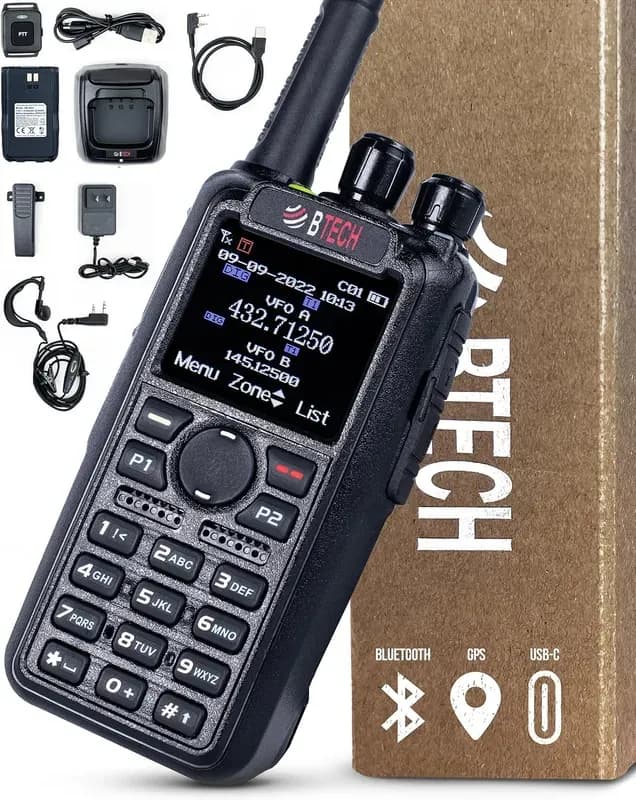
The DMR-6X2 PRO is the premium Baofeng (sold under the BTECH brand, which is Baofeng's US arm). DMR Tier I and II, APRS, GPS, Bluetooth, color display, 7 watts, 3,100 mAh battery, and dual-band simultaneous monitoring. At $249.89, it's in a different league from the rest of this list.
With 658 Amazon reviews at 4.5 stars, it's well-established. Its feature score of 84 is the highest in the lineup and ties the AnyTone AT-D878UVII Plus. The beginner score of 55 reflects the reality that this is an advanced radio with a significant learning curve.
Best for: Experienced operators who want a full-featured DMR/APRS handheld and prefer to stay in the Baofeng ecosystem. Net controllers, EMCOM volunteers. Compare it to the BF-5RH PRO to decide if DMR is worth the price jump.
Honorable Mention: Baofeng GT-5R (Score: 69)
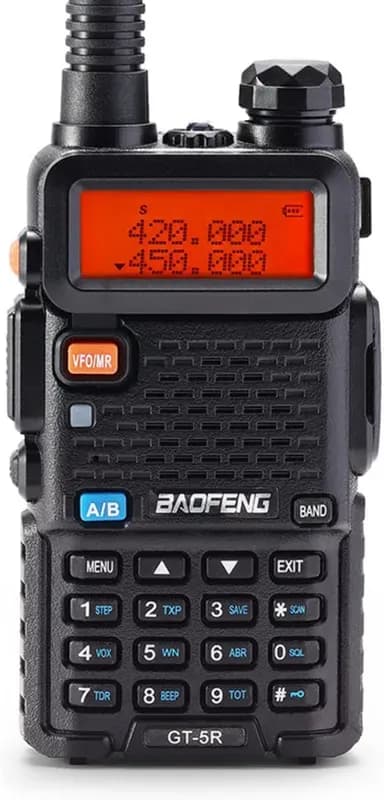
The GT-5R ties the UV-5R on score, but it brings one standout spec: a 3,800 mAh battery for $19.99. That's more than double the UV-5R's battery for a few dollars more. With 1,145 Amazon reviews, it's proven, and CHIRP compatibility keeps programming simple.
Best for: Budget buyers who want better battery life than the UV-5R without spending $50.
Best Baofeng for GMRS
Everything above is a ham radio. Apart from UV-82 and UV-82HP units built and sold as the GMRS version that their shared grant's Part 95E certification covers (see the FAQ), none of those handhelds are legal for casual family or off-road walkie-talkie use, because those are different services. FRS requires Part 95B-certified equipment; GMRS requires Part 95E-certified equipment and a GMRS license. Getting licensed for GMRS costs $35, covers your whole family, and needs no test; see our GMRS license guide for the walkthrough.
Baofeng also sells three radios built and certified for that service, and because GMRS radios are unscored on RadioRanked, the picks below come down to price, certification, and features rather than a number.
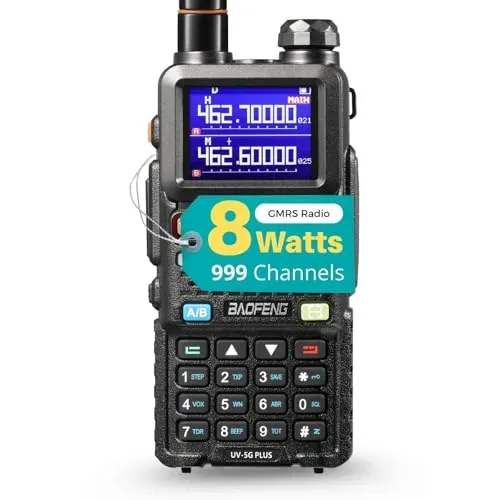
$32.99 · 5.00W
The UV-5G Plus ($32.99, Amazon 4.6 stars, 432 reviews) is the pick. It's Part 95E certified, ships pre-programmed with GMRS channels, and undercuts the other two on price without giving up features.
The GM-15 Pro ($47.98, Amazon 4.5 stars, 754 reviews) is also Part 95E certified and the alternative if you want the deepest review base of the three.
The UV-5G Mini ($46.99, Amazon 4.6 stars, 201 reviews) is Part 95E certified too, in a noticeably smaller body, if pocketability matters more than price.
All three run 5 watts, the practical ceiling for a GMRS handheld. For the category-wide ranking by transmit power and owner ratings, see best GMRS handhelds or browse the complete GMRS catalog.
Full Comparison Table
Scores, specs and prices come from our database. The FCC grant column is the one no other spec table carries: it is the grant on record for each model, and "unconfirmed" marks a model whose listing prints a grant ID that the filing itself does not name.
| Model | Price | Score | Power | Bands | DMR | APRS | IP | Battery | CHIRP | FCC grant |
|---|---|---|---|---|---|---|---|---|---|---|
| BF-5RH PRO | $71.69 | 86 | 10W | VHF/UHF/1.25m | No | Yes | IP54 | 2,500 mAh | Yes | 2AJGM-5RHPRO |
| DMR-6X2 PRO | $249.89 | 85 | 7W | VHF/UHF | Yes | Yes | IP54 | 3,100 mAh | No | 2AGND6X2PRO |
| DM-32UV Pro | $63.99 | 83 | 10W | VHF/UHF | Yes | Yes | IP67 | -- | No | unconfirmed |
| DM-32UV GPS APRS | $59.99 | 83 | 10W | VHF/UHF | Yes | Yes | -- | 2,500 mAh | No | unconfirmed |
| DM32 | $49.99 | 83 | 8W | VHF/UHF | Yes | Yes | -- | 2,500 mAh | Yes | 2AJGM-DM32UV |
| UV-5RM Pro | an unlisted price | 77 | 10W | VHF/UHF | No | Yes | -- | 2,500 mAh | No | unconfirmed |
| UV-28 | $43.99 | 77 | 10W | VHF/UHF | No | No | -- | 2,200 mAh | Yes | 2AJGM-UV28PRO |
| 5RM | $26.99 | 76 | 10W | VHF/UHF/1.25m | No | No | IP65 | 2,500 mAh | Yes | 2AJGM-5RM |
| UV-21R | $26.99 | 74 | 6W | VHF/220/UHF | No | No | IP54 | 1,800 mAh | Yes | 2AJGM-UV21R |
| BF-F8HP | $45.00 | 73 | 8W | VHF/UHF | No | No | -- | 2,100 mAh | Yes | 2AGNDF8HP |
| UV-26 | an unlisted price | 71 | 10W | VHF/UHF/1.25m | No | No | -- | 2,500 mAh | Yes | 2AJGM-UV26 |
| UV-5RM Plus | $59.99 | 71 | 10W | VHF/UHF | No | No | -- | 1,800 mAh | Yes | 2AJGM-5RM |
| UV-82 | $24.99 | 70 | 8W | VHF/UHF | No | No | IP54 | 2,800 mAh | Yes | 2AJGM-UV82 |
| UV-5R | $17.16 | 69 | 5W | VHF/UHF | No | No | -- | 1,800 mAh | Yes | 2AJGM-UV5R |
| GT-5R | $19.99 | 69 | 6W | VHF/UHF | No | No | -- | 3,800 mAh | Yes | none found |
| K5 Plus Tri-Band | $33.99 | 68 | 10W | VHF/UHF/1.25m | No | No | -- | 2,500 mAh | Yes | unconfirmed |
| UV-5R Mini | $32.47 | 66 | 2W | VHF/UHF | No | No | -- | 1,800 mAh | Yes | unconfirmed |
| UV-82HP | $50.00 | 66 | 7W | VHF/UHF | No | No | -- | 1,800 mAh | Yes | 2AJGM-UV82 |
| AR-5RM | $24.98 | 65 | -- | VHF/UHF | No | No | -- | -- | Yes | 2AJGM-5RM |
| UV-25 | Check listing | 61 | 10W | VHF/UHF/1.25m | No | No | -- | 5,200 mAh | Yes | 2AJGM-UV25 |
Which Baofeng Should You Buy?
Start with your budget and use case:
Under $25? The UV-5R at $17.16, the UV-82 at $24.99 for better ergonomics, or the GT-5R at $19.99 for better battery life.
$25 to $45? The 5RM at $26.99 is the value pick of the whole lineup: 10 watts, triband, IP65, and a 95 beginner score. The UV-21R at $26.99 gets you triband with IP54, the BF-F8HP at $45.00 is the most proven UV-5R upgrade, and the UV-28 at $43.99 scores 77.
$45 to $75? The BF-5RH PRO at $71.69 is the clear winner. Triband, APRS, GPS, IP54, and it ships as a two-pack. If you want DMR instead, the DM32 at $49.99 gets you there.
Want DMR? The DM32 at $49.99 for budget DMR, the DM-32UV Pro at $63.99 if you need IP67, or the DMR-6X2 PRO at $249.89 for the full package. Note all three DM-32 variants share one FCC grant.
Need long battery life? The UV-25 with its 5,200 mAh battery (check the listing; its price is currently unavailable), or the GT-5R with 3,800 mAh at $19.99.
Bigger hands or want better grip? The UV-82 is the ergonomic pick.
Reality check: if you're buying your first radio, get the BF-5RH PRO. It does everything the UV-5R does and more, and $70 is still less than a decent dinner. Check our beginner buying guide or the beginner rankings for options beyond Baofeng.
When to Look Beyond Baofeng
Baofeng is the best value in ham radio. That doesn't make it the best radio. Here's when to consider alternatives:
Build quality matters to you. A Yaesu FT-65R at $194.96 feels like a different class of tool. The knobs are precise, the audio is cleaner, the chassis is more solid. If you plan to keep a radio for a decade, the premium might be worth it.
You're serious about DMR. The AnyTone AT-D878UVII Plus at $249.99 has the best CPS software in the DMR world and the largest community of DMR-focused users. If DMR is your primary mode, the AnyTone ecosystem is stronger.
You need real waterproofing. The Ailunce HD1 (currently unavailable) offers IP67 (submersible) with DMR and APRS. Baofeng's own best on this front is now the DM-32UV Pro at IP67, so you no longer have to leave the brand for it.
You want to tinker. The most-repeated recommendation in Baofeng communities is not a Baofeng at all: the Quansheng UV-K5 at $25.64. Its appeal is third-party firmware that adds a bandscope and far wider receive coverage than any stock Baofeng offers. As a plain radio it scores 69, about the same as a UV-5R. As a toy for someone who enjoys flashing firmware, nothing here competes.
For more options beyond Baofeng, see our best handheld ham radios roundup.
Bottom Line
The BF-5RH PRO is the best Baofeng you can buy right now. Score of 86, triband, APRS, GPS, IP54, CHIRP-compatible, and it ships as a two-pack for $71.69. If that's too much, the 5RM at $26.99 is the value pick, and the UV-21R at $26.99 gives you triband and IP54 for pocket change. If you want DMR, the DM32 at $49.99 is the cheapest way in.
And before you pay up for a model name, check the FCC grant table. On this lineup it is the difference between buying a better radio and buying a different sticker.
I own three Baofengs. They're not the fanciest radios in my shack. They are the ones I reach for when I'm heading outside and don't want to worry about dropping something expensive. They work, they're cheap, and when you need to learn, that's all that matters.
Browse all our Baofeng models or check out radios under $50 and radios under $100.