

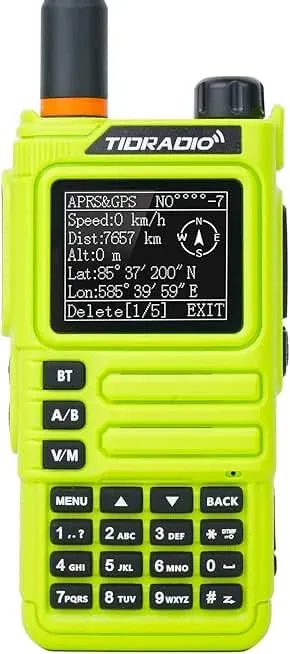
On paper, the TIDRADIO TD-H9 is the most feature-dense budget handheld you can buy: 10 watts, triband transmit, built-in GPS and APRS, Bluetooth 5.1, a spectrum analyzer, and radio-to-radio text messaging for around $80. On launch day in late 2025, it was also one of the buggiest. Six months and four firmware releases later, most of the promise is real, and the remaining caveats are specific enough to list.
Our scoring engine gives the TD-H9 an overall 81/100, with a value score of 95/100 at its current $79.99 Amazon price. Buyers rate it 4.2 stars across 450 reviews. If you want GPS-sourced APRS beaconing without spending Yaesu money, it is the cheapest legitimate way to get there. If you want CHIRP support or a radio that was polished on day one, the Baofeng BF-5RH PRO runs the same formula with fewer asterisks.
The Snapshot
A note on method: we have not bench-tested this radio ourselves. This review synthesizes the manufacturer's published specs, our scoring engine's spec-driven analysis, the FCC equipment authorization registry, 450 Amazon owner ratings, and detailed owner reports from the QRZ and myGMRS forums, including one of the radio's original beta testers. Where a claim is owner-reported rather than verified, we say so. Our scoring methodology is public.
What You Actually Get
The spec sheet reads like a radio two price brackets up. Transmit covers 144-148 MHz (2m), 222-225 MHz (1.25m), and 420-450 MHz (70cm) in the ham version, with the unlocked version opening wider ranges. Receive adds FM broadcast, AM airband (108-136 MHz), and NOAA weather. You get 199 memory channels, a 2400 mAh USB-C battery, a 1.77 inch color screen, dual PTT buttons, and a claimed 10 watts on high power.
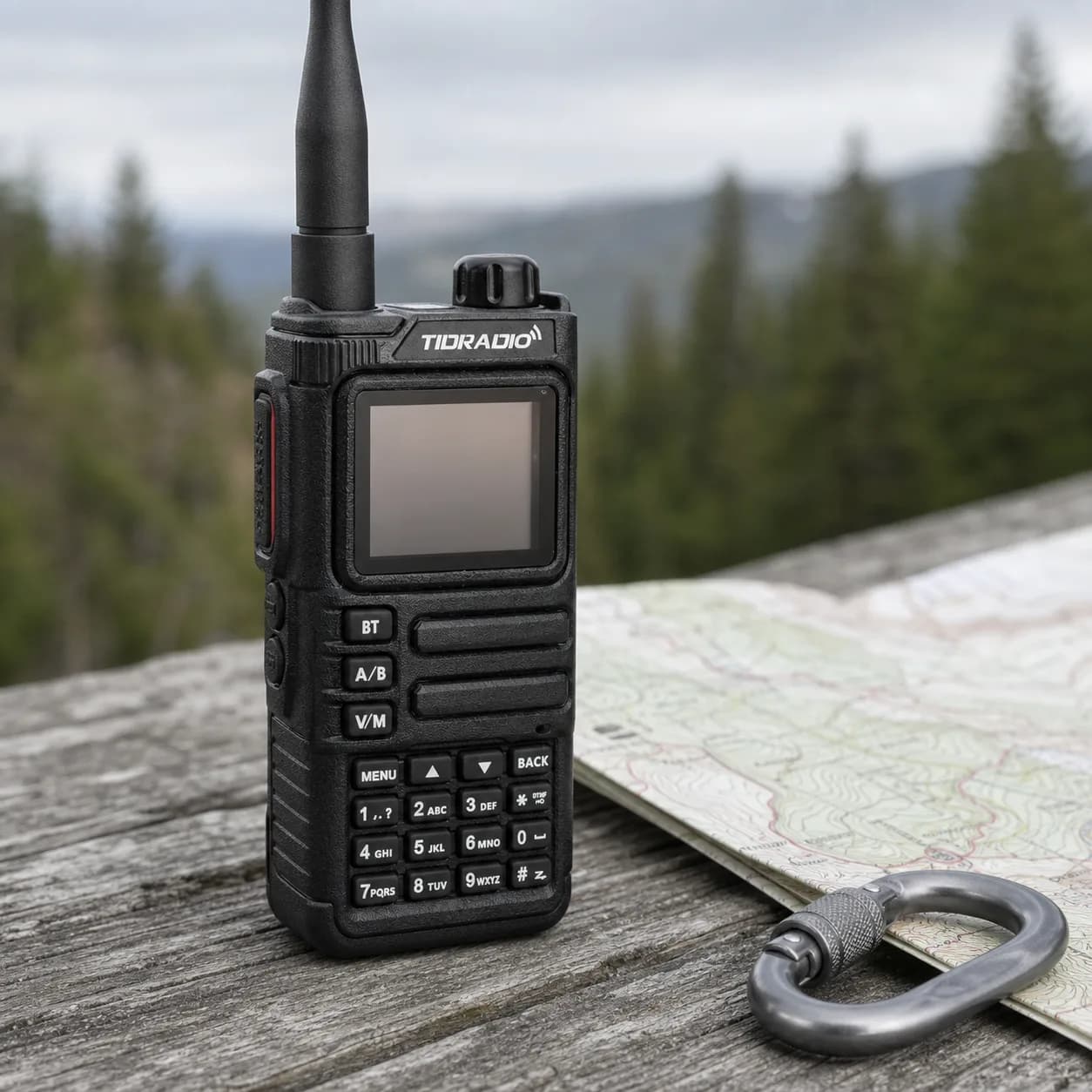
Then there is the party-trick list: onboard GPS feeding APRS position beacons, Bluetooth for both audio accessories and wireless programming, a spectrum analyzer, SMS-style text messaging between compatible TidRadio units, and a Morse emergency beacon mode. TidRadio sells it for $69.99 direct (list $99.99) and the Amazon listing we track sits at $79.99, refreshed daily on our product page.
Two spec-sheet footnotes worth knowing before you order. First, the Amazon listing claims IP54 splash resistance, but TidRadio's own spec sheet publishes no IP rating at all; treat this radio as splash-resistant, not weatherproof. Second, the 10 watt figure is a manufacturer claim that, as far as we can find, nobody in the community has put on a wattmeter yet. Ten watts from a 2400 mAh pack would also be a heat and battery-life tradeoff even if it delivers.
The Launch Was a Mess. Is It Fixed?
If you read TD-H9 opinions from December 2025 or January 2026, you will find carnage, and it was mostly earned. The radio shipped before its software was ready.
The most detailed early account comes from a QRZ reviewer writing in February 2026 on firmware 1.0.23. The hardware itself was fine: solid chassis, working GPS, APRS beacons landing on aprs.fi. The software was not. The Windows CPS could silently erase all 199 channels when writing a settings change. The browser-based OdMaster tool renamed the radio model on save. CSV imports scrambled the language setting and dropped channels below 136 MHz. The APRS implementation generated some malformed packets and would fire a beacon mid-conversation. His summary line: "a $70 radio with $70 worth of software bugs."
One of the radio's five original beta testers, posting in the same thread, confirmed the picture and pushed TidRadio for fixes, reporting that "most (NOT ALL)" of the launch issues had been resolved as updates rolled out.
The arc since then is genuinely positive. By firmware 1.0.29 in April 2026, an owner on the myGMRS forums who had held off buying at launch reported the radio "pretty stable now," with spare batteries finally in stock (TD-H8 packs fit, a nice bit of parts commonality) and text messaging working reliably between a TD-H9 and a TD-H3 Plus. As of July 2026 the current firmware is 1.0.32, and the radio updates over USB or via TidRadio's web updater without drama.
What still is not fixed, per owner reports on the current firmware: switching the radio between ham and GMRS modes wipes all programming, there is no smart beaconing (position updates fire on a fixed timer, not on movement), APRS configuration lives entirely in the keypad menus, and some owners report an intermittent CTCSS decode failure on receive that can make multi-tone repeater setups frustrating.
The honest takeaway: do not judge this radio by its launch reviews, in either direction. The December version deserved its one-star ratings. The July version is a different radio running on the same hardware.
APRS on a Budget: What Works
APRS is the reason to buy this radio, so here is where it stands. The GPS acquires and holds a fix, position beacons transmit on schedule, and packets show up on aprs.fi with valid coordinates. For a hiker, hunter, or POTA activator who wants their position visible to the APRS network without carrying a phone-paired tracker or a $400 handheld, that is the core function, and owners confirm it works.
The rough edges are real, though. Beacon timing is fixed-interval only, so you will beacon just as often standing still as moving. All APRS setup happens through the radio's keypad, which owners describe as tedious. And the modem audio is not fully mutable, so you will hear packet noise during busy APRS traffic. None of these are dealbreakers for casual position reporting; all of them would annoy someone coming from a Kenwood TH-D75 or Yaesu FT-5DR, which cost four to five times as much.
Programming: No CHIRP, and the Tools Are the Weak Spot
Here is the correction this review exists partly to make: the TD-H9 is not CHIRP-compatible. Not "check before you buy," not "support coming soon." As of July 2026, CHIRP does not support it, TidRadio's own FAQ says so, and a new-model request sits open in the CHIRP queue. Plenty of buyers assume every Chinese handheld works with CHIRP; this one does not, and given that TidRadio's TD-H3 and TD-H8 are supported, the gap surprises people.
That leaves three programming paths: the TIDRADIO phone app over Bluetooth (genuinely convenient for adding a channel in the field), the Windows CPS, and the OdMaster browser tool. The app is the good one. The desktop tools carry the launch-era reputation described above, and while updates have tamed the worst behavior, owners still recommend a defensive workflow: export a backup before every write.
If CHIRP support is a hard requirement for you, and for club programming sessions or multi-radio fleets it reasonably is, browse our CHIRP-compatible radios instead. The TD-H3 is the obvious in-family alternative.
Unlocked, Ham, or GMRS? The Version Decoder
TidRadio sells the TD-H9 in three versions, and Amazon's listing sprawl makes it easy to buy the wrong one.
| Version | Who it is for | Notes |
|---|---|---|
| Ham | Licensed amateurs | TX locked to ham bands; the version we track and score |
| Unlocked | Amateurs who know what they are doing | Wide TX ranges; you are responsible for staying legal |
| GMRS | GMRS licensees | See the certification problem below |
Two traps here. The first is practical: the radio can be toggled between modes, and doing so wipes all programming. Pick your version and stay there.
The second is regulatory, and we have not seen anyone else report it. We pulled the FCC equipment authorization for this radio. The only grant we could locate is FCC ID 2A4FB-H9, issued April 2, 2026 to Guangzhou TID Electronic Technology, and it is a Part 95B authorization, meaning FRS, covering 462 and 467 MHz at under half a watt effective radiated power. We could not find a Part 95E grant, which is the certification GMRS transmitters are legally required to have. In plain terms: TidRadio markets a "5W GMRS version" of this radio, and the federal registry shows an FRS-class grant at 0.48 watts, with no GMRS certification we can locate.
For ham use this changes nothing; Part 97 does not require transmitter certification, so the Ham and Unlocked versions are fine for licensed amateurs, which is also why so much amateur gear carries no grant at all. But if you are shopping for a radio to use on GMRS specifically, where certified equipment is the rule, we would point you at our Best GMRS Radios picks, which we verified against the FCC registry, and our guide to getting a GMRS license. Buyers of the TD-H9 GMRS version should check the FCC ID printed on their unit's label before transmitting.
Build Quality and the One-Star Stories
The 4.2 star average across 450 reviews hides a lopsided distribution: 70 percent five-star, but a full 8 percent one-star. For context, popular budget handhelds like the UV-5R family run 3 to 5 percent one-star, so the TD-H9's lemon rate is elevated but nowhere near the disaster its launch-window reviews suggested.
Read the one-star reports and two clusters emerge: display failures (units arriving with dead or failing screens) and fulfillment problems from TidRadio's own store during the launch rush. The recurring long-term gripe from owners who kept the radio is cosmetic: the key-coating wears off with pocket carry, a trait inherited from the TD-H8. On the plus side of ownership, the 2400 mAh battery draws consistent praise, USB-C charging means one less cable in the bag, and TD-H8 battery packs fit if you want spares.
Our advice is the standard one for budget Chinese handhelds, just more so: buy from a seller with painless returns, test the screen, GPS, and transmit within the return window, and treat the first week as an extended QC check.
TD-H9 vs TD-H3 vs Baofeng BF-5RH PRO
The TD-H9's real competition is not the $400 APRS handhelds; it is these two.
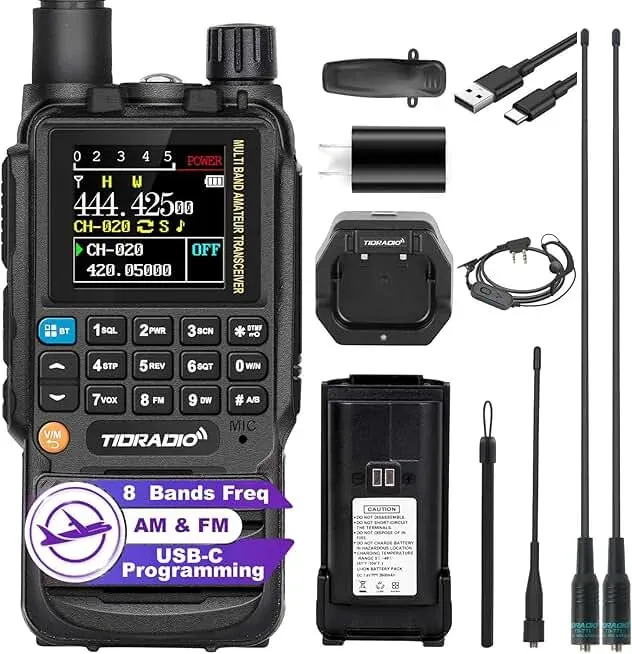
The TD-H3 (our score: 68/100) is the safe pick in the family. At $31.99 it has no GPS, no APRS, no 1.25m transmit, and it is rated 4.4 stars across 534 reviews with CHIRP support and a mature firmware. If APRS is not the mission, it is less than half the price for the parts of the TD-H9 most people actually use daily. We compared them head-to-head in our TD-H3 vs TD-H9 comparison, and there is a full TD-H3 review as well.
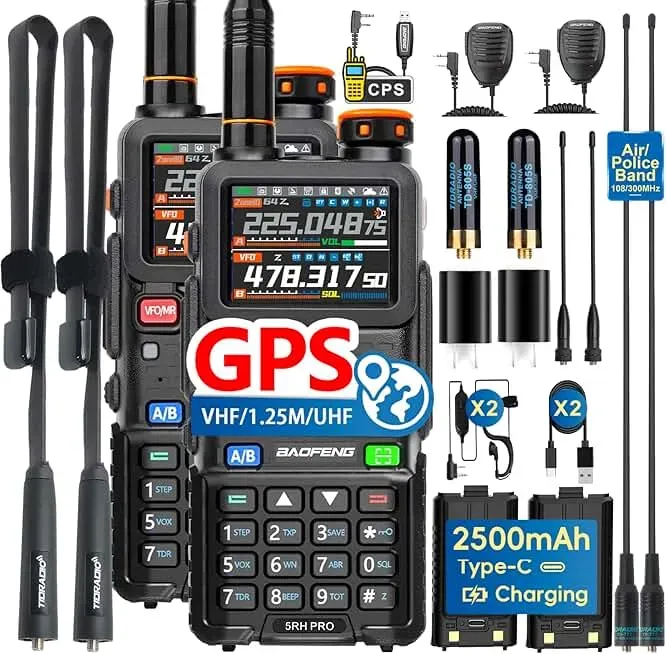
The Baofeng BF-5RH PRO (our score: 87/100) is the uncomfortable one for TidRadio. Same claimed 10 watts, same triband coverage, same GPS-fed APRS, same Bluetooth, for $71.69, and it adds 640 memory channels, CHIRP support, and a 4.5 star average across 293 reviews. It ships as a two-radio kit at that price, and it outscores the TD-H9 in our engine primarily on beginner-friendliness and channel capacity. The TD-H9 answers back with radio-to-radio texting, the spectrum analyzer, and TidRadio's genuinely slick Bluetooth app programming. See the BF-5RH PRO vs TD-H9 comparison for the line-by-line.
If you asked us to pick one today for a first APRS radio, the BF-5RH PRO wins on score and polish. The TD-H9 is the pick if texting between units or app-based programming matters to you.
Who Should Buy It, and Who Should Not
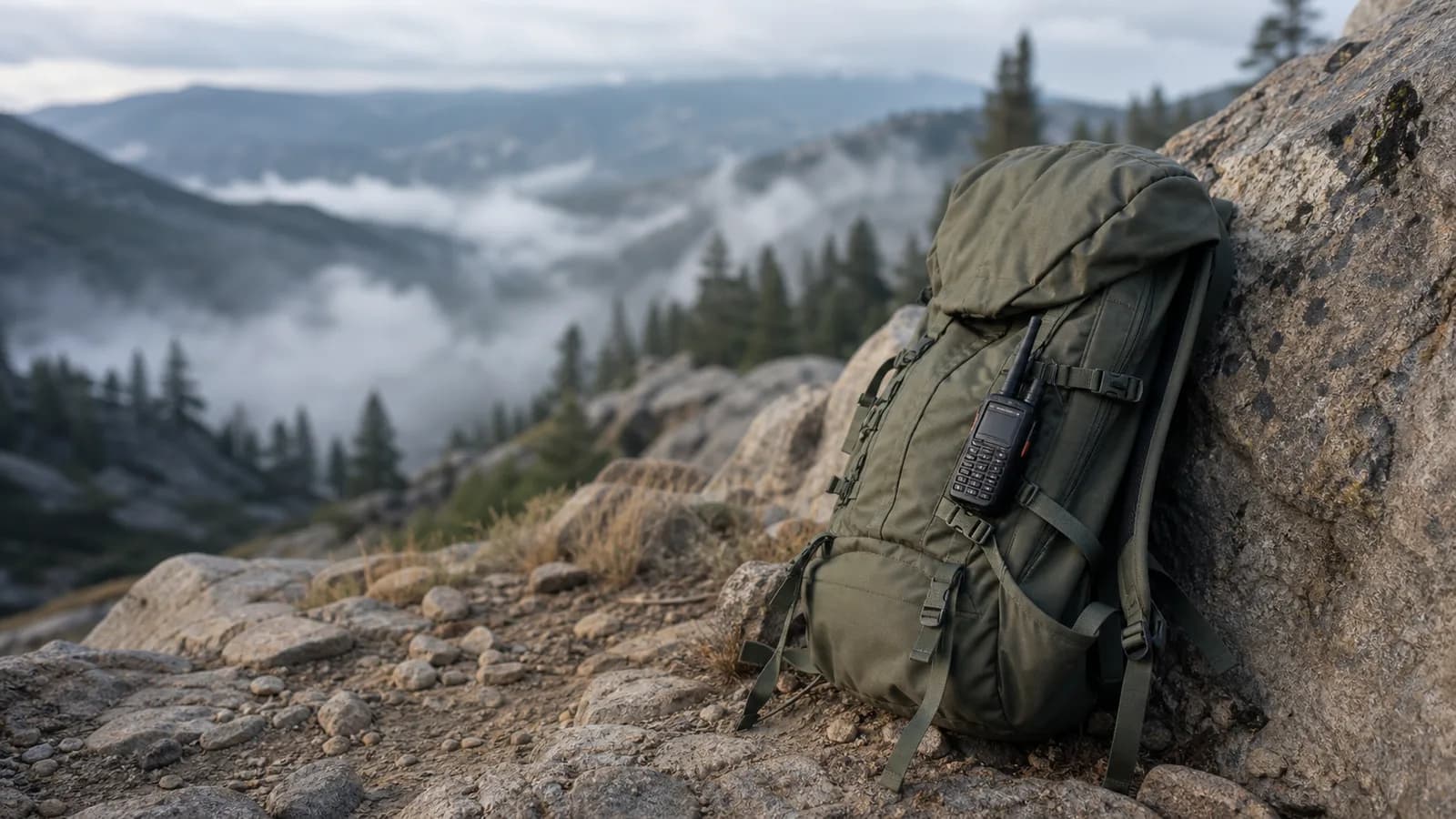
Buy the TD-H9 if: you are a licensed ham who wants GPS-sourced APRS beaconing at the lowest real price, you value radio-to-radio texting for a hiking or hunting group running multiple TidRadio units, or you want triband transmit with app-based programming and can live without CHIRP.
Skip it if: you need CHIRP (get the TD-H3 or BF-5RH PRO), you were shopping for the GMRS version (the certification math does not check out; see our GMRS picks), you need documented weatherproofing, or this is your very first radio and you want the gentlest on-ramp (see our beginner picks, where the TD-H9's stablemates appear).
The Verdict
The TD-H9 earns its 81/100. It delivers a genuinely uncommon feature stack, triband transmit plus onboard GPS, APRS, and Bluetooth, at a price nothing name-brand approaches, and six months of firmware work has moved it from "wait" to "buyable." The remaining caveats are concrete: no CHIRP, keypad-only APRS setup, a mode switch that eats your codeplug, an elevated (if improving) lemon rate, and GMRS marketing its FCC paperwork does not back up.
Buy it for what it is: the cheapest working ticket into GPS-linked APRS, from a company that has demonstrably kept shipping fixes. Check the current price on the product page, and if you want the same formula with more polish and CHIRP, the BF-5RH PRO is sitting right there at 87/100.