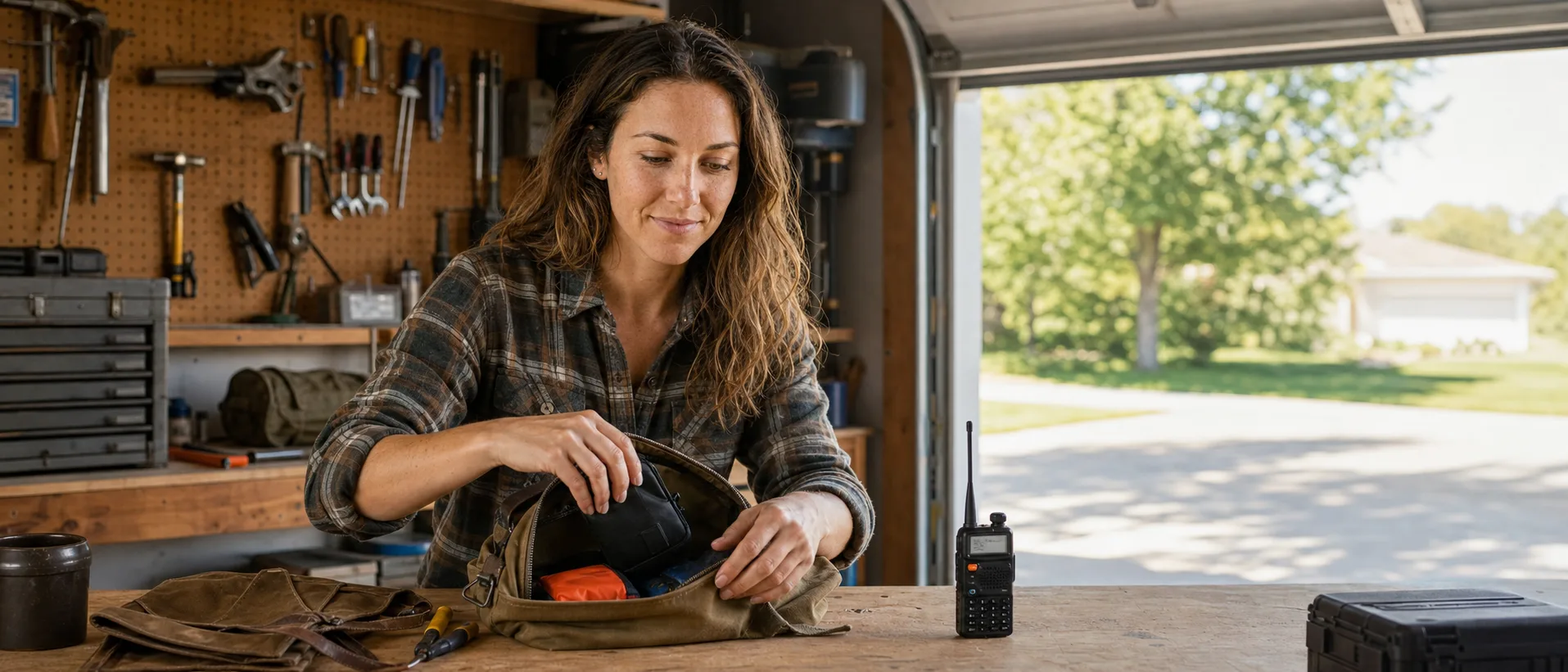

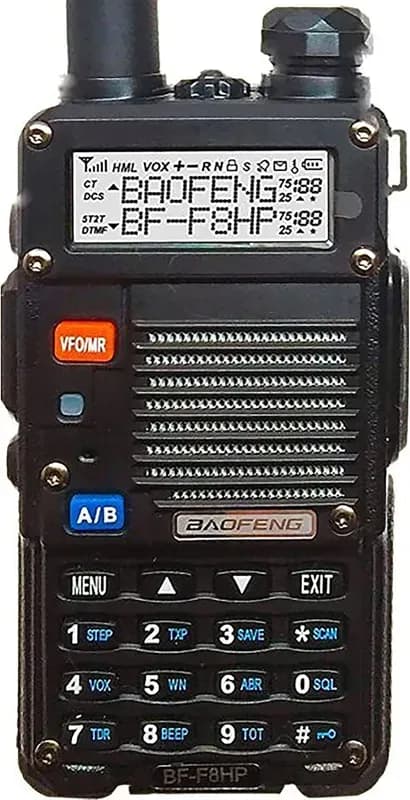
The Baofeng BF-F8HP has been the default answer to "which Baofeng should I get instead of the UV-5R" for over a decade: same radio, more power, bigger battery, better antenna, $45. Most of that pitch is true, some of it is generous, and a surprising amount of what people currently say about this radio online is actually about a completely different model wearing almost the same name.
Our scoring engine gives the BF-F8HP an overall 74/100, with a value score of 95/100 at its current $45.00 Amazon price and a beginner score of 90/100. Buyers rate it 4.5 stars across 15,354 ratings, which makes it one of the most-reviewed handheld radios in existence. It is a good first radio and an honest piece of hardware. Whether it is worth roughly three times the price of a UV-5R is a different question, and we will get to it.
The Snapshot
A note on method: we have not bench-tested this radio ourselves. This review synthesizes the manufacturer's published specs, our scoring engine's spec-driven analysis, the FCC equipment authorization registry, 15,354 Amazon owner ratings, and community power measurements published by independent reviewers and forum users since 2015. Where a number is a manufacturer claim rather than a measurement, we say so. Our scoring methodology is public.
First, the PRO Trap: You Might Be Shopping for Two Different Radios
Search for BF-F8HP reviews today and roughly half of what you find, including YouTube reviews, Reddit threads, and at least one page ranking on Google for this exact query, is about the BF-F8HP PRO, a 2024 release that shares almost nothing with the original except the name. People in purchase-advice threads regularly answer questions about one radio with opinions about the other. These two radios launched a decade apart.
The federal registry is the cleanest way to untangle them, so we pulled both equipment authorizations:
| BF-F8HP (the radio in this review) | BF-F8HP PRO | |
|---|---|---|
| FCC ID | 2AGNDF8HP | 2AJGM-BFF8HPPRO |
| Grant date | January 18, 2018 (BTECH) | August 9, 2024 |
| Transmit bands | VHF + UHF | VHF + 1.25m + UHF |
| Claimed power | 8W | 10W |
| Channels | 128 | 1,000 in 10 zones |
| Battery | 2,000 mAh, drop-in charger | 2,500 mAh, USB-C |
| Display | Two-line monochrome | Color LCD |
| GPS | No | Yes |
| Firmware | Fixed forever, not upgradeable | User-upgradeable |
| CHIRP | Yes, mature support | Early support, owners report quirks |
If you came here after watching a review that mentioned a color screen, GPS, USB-C charging, or airband receive, you were watching a PRO review. The PRO typically sells for $50 to $65 and is a genuinely different product. Everything below is about the original BF-F8HP, the $45 radio with a decade of track record.
What the BF-F8HP Actually Is
The honest description: a UV-5R with the volume turned up. Baofeng markets it as the UV-5R's third generation, and the family resemblance is total. Same menu system, same form factor within a millimeter, same accessory ecosystem. What the extra money buys is a claimed 8 watts on high power (versus 5 on the UV-5R, with 4W and 1W steps below it), a 2,000 mAh battery instead of 1,800, the noticeably better V-85 antenna in the box, a sturdier shell, and an actual printed manual worth reading, which sounds like a small thing until you try to learn a Baofeng menu tree from the UV-5R's pamphlet.
Transmit covers 136-174 MHz (2m) and 400-520 MHz (70cm), receive-only FM broadcast in between, 128 memory channels, and dual watch. There is no GPS, no APRS, no Bluetooth, no digital modes, no IP rating, and no USB-C; the battery charges in a drop-in cradle. Our feature score of 26/100 is blunt about this: by 2026 standards, the BF-F8HP has no features. It transmits, it receives, and it does both reliably, which is the whole product.
One 2015-era quirk still matters: the BF-F8HP's firmware is written once at the factory and can never be updated, by you or by Baofeng. What shipped is what you own forever. In practice the firmware has been stable for a decade, so this is less scary than it sounds, but it is the sharpest single contrast with the PRO generation, whose upgradeable firmware is its most-praised feature.
The 8-Watt Question
The "HP" stands for high power, and the 8-watt claim deserves scrutiny because it is the radio's entire sales pitch.
Independent measurements have been consistently unkind to it. One long-running review site put a BF-F8HP on their meter and read 4.9 watts on VHF and 2.5 watts on UHF. Owners on Reddit with better test gear typically report around 6 watts. Meanwhile, the cheap GY561 meters that many buyers use to "verify" their radio famously over-read, sometimes showing 11 watts from this radio, which is how the 8-watt legend sustains itself. The fair summary from a decade of community testing: the BF-F8HP transmits meaningfully harder than a UV-5R, and less than the box says.
Here is why we do not weight this heavily in the score. Doubling transmit power buys you 3 dB, which is half an S-unit at the receiving end, roughly the difference between "readable" and "very slightly more readable." On VHF and UHF, range is governed by line of sight and antenna quality, not wattage. The V-85 antenna included in the F8HP's box does more for your effective range than the extra watts do, and a $20 aftermarket whip on a UV-5R closes most of the remaining gap. Our range guide runs the full math.
Is It Worth Three Times a UV-5R?
For most first-radio buyers, no, and we say that as a site that scores the BF-F8HP higher than the UV-5R.
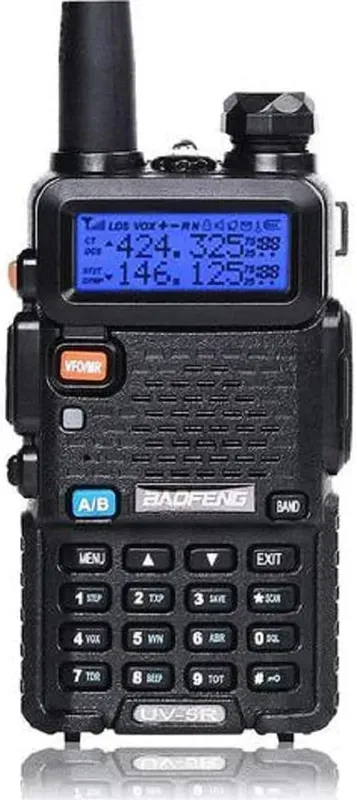
The UV-5R (our score: 69/100) is the same radio at its core: same menus, same programming workflow, same accessory compatibility. It costs about a third as much, and the community consensus after ten years of side-by-side use is that nobody on the other end of a contact can tell which one you are holding. If your goal is to get on the air, learn repeaters, and find out whether ham radio sticks, the UV-5R plus a $20 antenna upgrade is the better spend. Our UV-5R review and the head-to-head BF-F8HP vs UV-5R comparison cover the line-by-line.
The BF-F8HP earns its price in specific situations: you want the larger battery and better antenna in one box instead of as separate purchases, you value the sturdier shell and real manual, or you simply want the most proven version of the most proven budget platform. Its 15,354 ratings at 4.5 stars are the largest review sample of any radio in our database except the UV-5R itself, and a 4 percent one-star rate is low for a budget Chinese handheld. This radio's failure modes are thoroughly documented and rare.
There is also a newer wrinkle: Baofeng's own 5RM (our score: 76/100) sells for around $26.99 with 10 claimed watts, triband coverage, USB-C charging, and airband receive. It gives up the F8HP's decade of track record and BTECH's US-based support, but on raw spec-per-dollar it beats the F8HP at its own game, and it is part of why our value-conscious picks have drifted toward the newer platforms in our Baofeng rankings.
Programming and CHIRP
The BF-F8HP is fully supported by CHIRP, the free programming software that turns Baofeng's notorious menu system into a spreadsheet. Support is mature in the way only a decade-old radio's can be: the driver is stable, every guide written for the UV-5R applies nearly unchanged, and owner reviews specifically call out how painless setup is with a cable. Ease of programming is one of the four strongest themes across the radio's Amazon reviews, scoring 4.2 out of 5 in our review-theme analysis.
That CHIRP support plus the print manual plus the enormous community is what drives the radio's 90/100 beginner score. When something confuses you about this radio, the answer already exists in three formats and two YouTube generations. Program it with our Baofeng programming guide, which was written on this exact menu system.
What 15,354 Owners Say
Our review-theme analysis of the radio's Amazon feedback surfaces four dominant themes, all positive: affordability and value (4.5/5), ease of programming with CHIRP (4.2/5), general reliability (4.0/5), and the improved battery (3.8/5). The rating histogram runs 75 percent five-star against 4 percent one-star.
The recurring complaints in the low-star tail are the classic budget-handheld set: units that arrive with weak batteries, the occasional dead-on-arrival radio, and buyers discovering the wattage reality described above. One durability note that repeats across long-term reviews: the battery tested below its rated 2,000 mAh capacity for some owners, and one widely-read test measured well under spec. Treat the "roughly 18 hours" battery claim as a best case; one independent reviewer's structured protocol got 17 hours 40 minutes, which suggests the claim is honest under light duty cycles.
Who Should Buy It, and Who Should Not
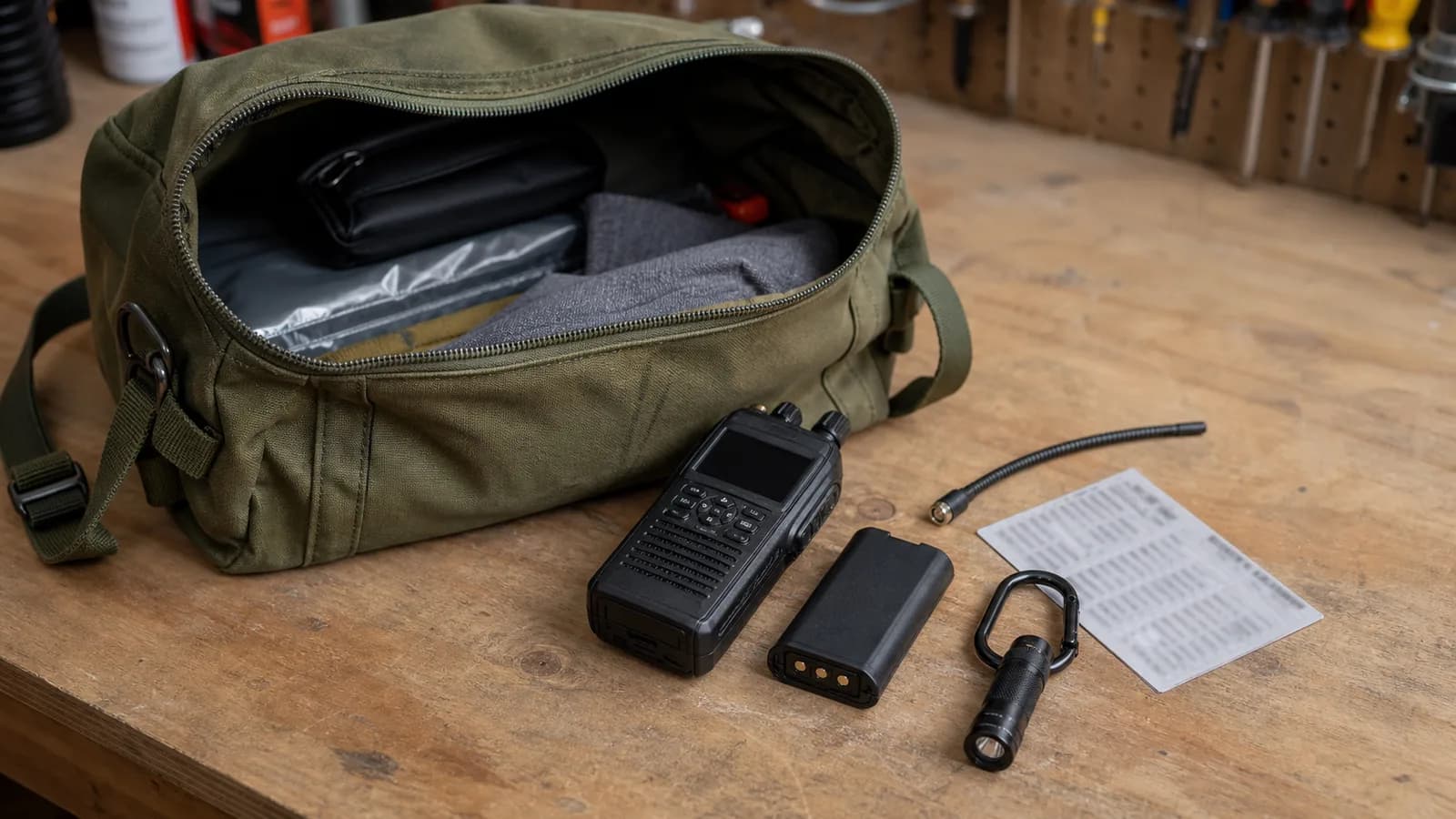
Buy the BF-F8HP if: you want the most battle-tested version of the UV-5R platform with the battery, antenna, and shell upgrades already in the box; you are building an emergency kit around a radio whose behavior is completely documented; or CHIRP support and a decade of community answers matter more to you than any modern feature.
Skip it if: you are buying your very first radio on a budget (get the UV-5R and an antenna, or the 5RM for newer hardware at a lower price); you want any modern convenience like USB-C, GPS, or a color screen (that is the PRO generation, or our top-scoring BF-5RH PRO at 87/100); or you were promised 8 watts and will feel cheated by 6.
Browse how it stacks up against the rest of the lineup in our best Baofeng radios guide, or check the beginner rankings if this would be your first handheld.