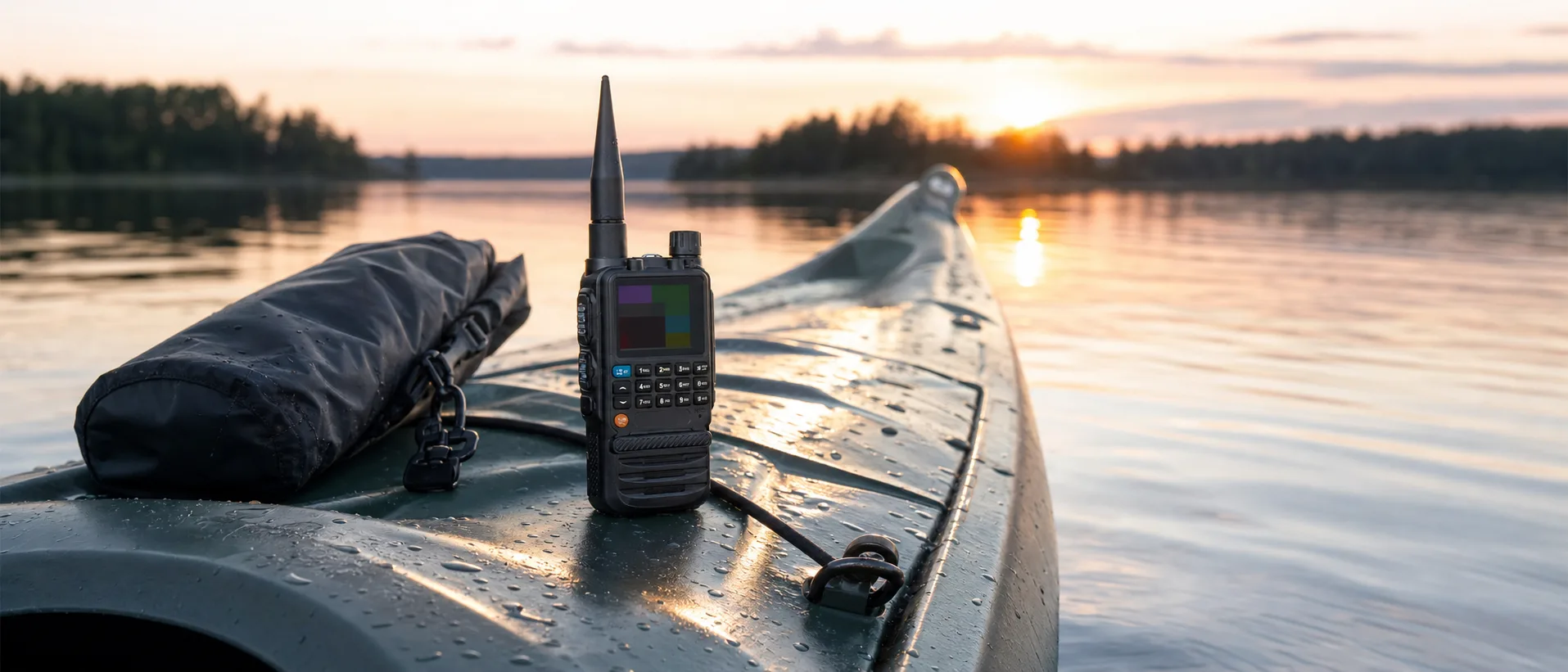

When the TIDRADIO TD-H3 started showing up in beginner threads in 2024, the pitch was simple: it's a UV-5R with the parts that age the worst replaced. USB-C for both charging and programming (no proprietary cable, no separate drop-in charger), a 2,500 mAh battery instead of the Baofeng's 1,800 mAh, a small color TFT display instead of a monochrome LCD, 199 channels instead of 128, plus odd-ball extras like AM aviation-band receive, a built-in flashlight, and over-the-air channel cloning. Same dual-band analog FM TX. Same 5W class. Same general size and weight.
The catch is the price. At $31.99 the TD-H3 isn't competing with the bare UV-5R at $17.16; it's competing with the UV-5R Plus at $20.39 and with itself a year from now, when whatever USB-C handheld TIDRADIO ships next will be even better. So the real question isn't "is this radio good." It's "is paying roughly twice the UV-5R's price worth what you get back, especially for a first ham radio?"
I've been carrying one for two months. Here's the honest answer.
The Snapshot
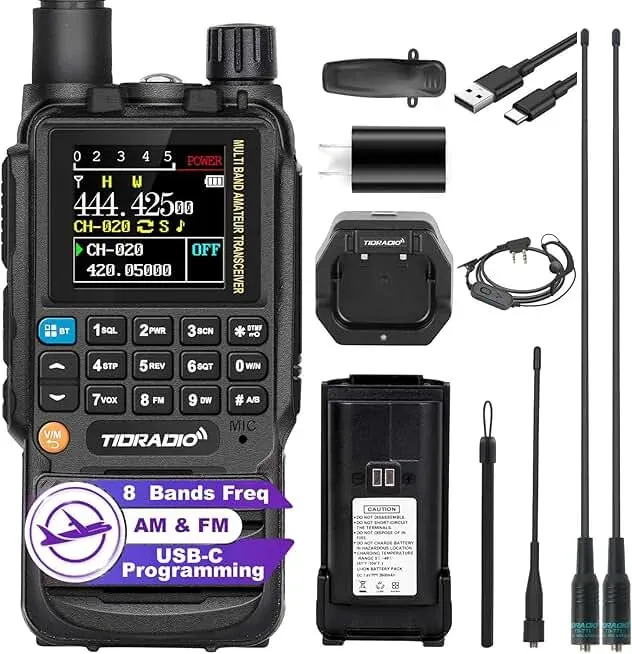
The TD-H3 is a dual-band analog FM handheld that transmits on 2-meter (144 MHz) and 70-centimeter (430 MHz) and receives across eight bands (FM broadcast, aviation AM, marine VHF, NOAA weather, 2m, 70cm, and a couple of public-service slices). 199 programmable memory channels, a 2,500 mAh battery, a small color TFT display, USB-C for both charging and programming, a built-in flashlight, and over-the-air channel cloning between paired radios. SMA-F antenna connector. No DMR, no D-STAR, no APRS, no GPS, no IP rating, no NOAA SAME alert decoding. There is Bluetooth, but TIDRADIO provides it for wireless programming only; the H3 will not pair with a Bluetooth headset.
| Dimension | Score | Why |
|---|---|---|
| Value | 92/100 | $31.99 for USB-C, color screen, and a 2,500 mAh battery is fair |
| Beginner | 62/100 | Easier in some ways than UV-5R, harder in others |
| Overall | 55/100 | Strong value, narrow feature set, smaller community than Baofeng |
| Feature | 8/100 | Analog-only on TX; our score weights digital modes that the H3 lacks |
| Portability | 56/100 | 230g, pocket-sized, similar footprint to the UV-5R |
A note on that feature score: it's low because RadioRanked weights digital modes (DMR, D-STAR, Fusion, APRS, GPS) heavily, and the H3 has none of them. The radio has plenty of convenience features the score doesn't capture (color display, USB-C, AM RX, flashlight, OTA cloning). Treat the 8 as "no digital modes," not "no features." We'll come back to this.
Short version: the H3 is the right buy over a UV-5R if USB-C, longer battery, a color display, and an app-based workflow matter more to you than the Baofeng community, first-class CHIRP support, and a $16 price tag.
What You Get in the Box
For $32, TIDRADIO packs the box reasonably well. You get the radio body, a 2,500 mAh lithium-ion battery (pre-installed), a USB-C charging and programming cable, a USB wall plug, the stock antenna, a belt clip, a lanyard, and a thin printed manual. No drop-in charger. No separate programming cable. No earpiece.
That last point matters. The UV-5R kit ships with a drop-in charger AND an earpiece/mic at a third of the price. With the TD-H3, you charge over USB-C, which is what most buyers will actually prefer, but you give up the convenience of dropping the radio into a cradle without thinking about it. If you want the cradle experience, TIDRADIO sells one separately.
The included USB-C cable is fine. It's a generic short cable; nothing special. The radio will charge at standard USB-C rates from any phone charger or laptop port, which is the real upgrade here. A dead UV-5R requires you to be near its dedicated charger; a dead TD-H3 plugs into the same cable as your phone.
The stock antenna is, like every stock handheld antenna in this price range, the part you replace first. Swap it for a Nagoya NA-771 or a Signal Stick (about $15 either way) and the radio's effective range jumps meaningfully. Don't skip this; it's the single highest-leverage upgrade you can make to any sub-$50 handheld.
The chassis feels slightly more substantial than a UV-5R. Buttons have a firmer click. The display surround sits a touch flusher with the front face. It's not premium, but it doesn't feel disposable the way a UV-5R does. That's worth noting because you're paying for it.
Display and Build
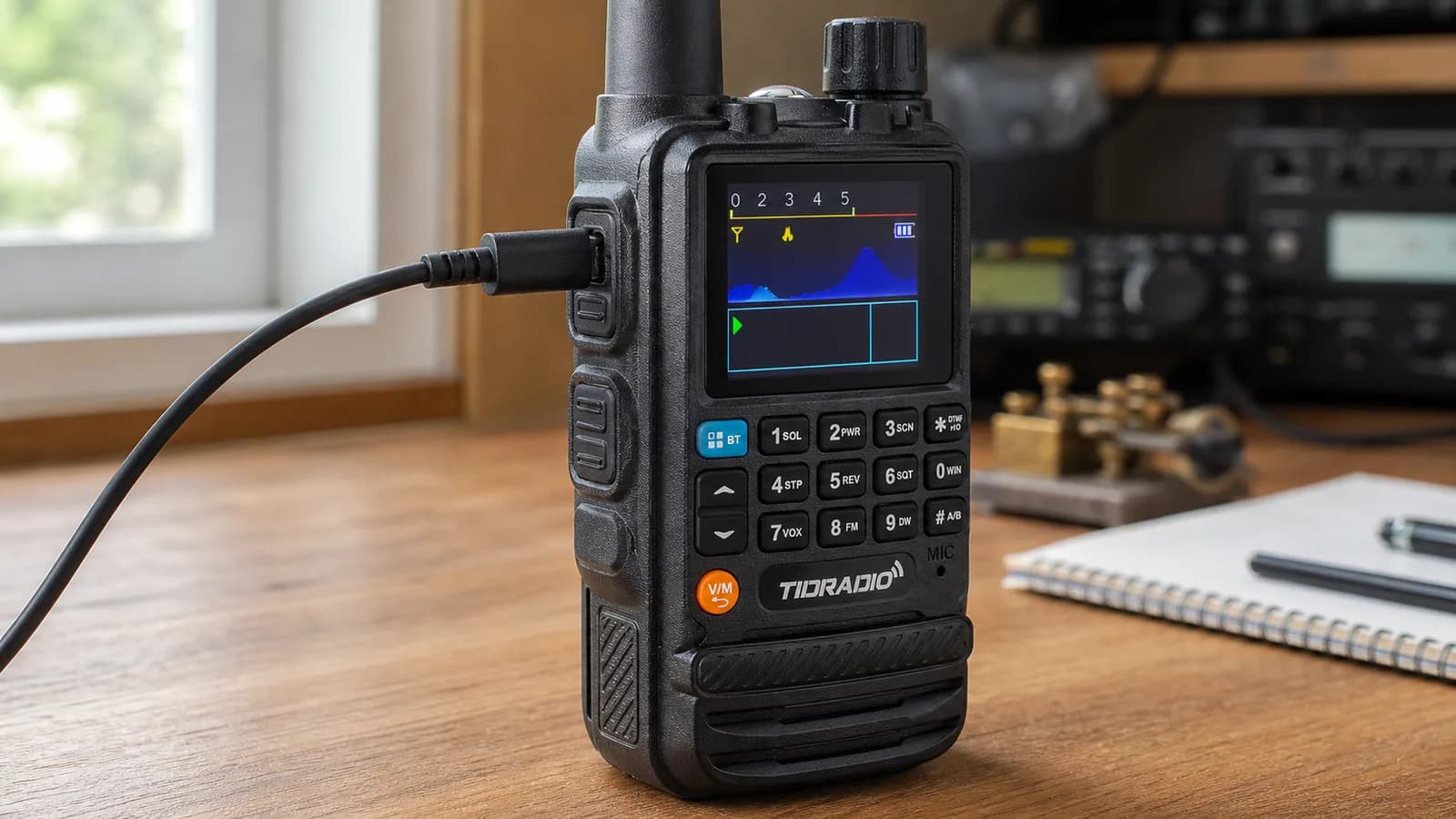
The TD-H3's display is a small color TFT, around 1.4 inches diagonal, with a multi-color graphics layout: channel number, frequency, signal-meter, mode indicators, and battery icon in distinct colors instead of the UV-5R's single-line monochrome readout. It's the most visible cosmetic difference between the two radios on a desk.
What the H3's screen does well: at-a-glance scanning. The signal meter is a row of colored bars instead of a one-character indicator. The active band ("H" for high power, "W" for wide narrow setting, etc.) is color-coded so you can tell at a glance which mode you're in. For a beginner who hasn't memorized which Baofeng character means what, this matters more than it seems.
What it doesn't do well: outdoor visibility in direct sun. The TFT is brighter than a UV-5R LCD indoors but washes out faster in noon sun because TFTs rely on backlight transmission, not reflective contrast. If you'll be operating outdoors in bright conditions a lot, this is a real tradeoff worth knowing about. The Yaesu FT-65R's reflective LCD is actually easier to read in direct sun than the H3's color TFT, despite costing four times as much and looking dowdier indoors.
Build quality lands between the UV-5R and the FT-65R. The plastics are denser. The volume knob has less wobble. The PTT button has a more positive feel. None of this is night-and-day, but if you've held a Yaesu and a Baofeng back-to-back, the TD-H3 sits closer to the Yaesu end of that line than the Baofeng end.
No IP rating. The radio is not water-resistant. Light drizzle in a pocket is fine; a downpour is not. If you need real weather sealing in this price range, the FT-65R's IP54 is the cheapest jump up.
Specs Deep Dive
RF coverage. Eight receive bands per TIDRADIO: FM broadcast, aviation AM, marine VHF, NOAA weather, and the ham 2m and 70cm bands, plus a couple of public-service slices. Transmits only on 136–174 MHz (2m) and 400–470 MHz (70cm). The wide RX coverage is the H3's real party trick versus a UV-5R: you can sit on the apron at your local airport and listen to ATC, then switch to monitor your local repeater, on the same radio. TX is still ham-only, with the same caveats about staying inside the bands your license authorizes.
Transmit power. 5 watts high, 1 watt low. Per TIDRADIO's spec sheet. Same as the UV-5R, the FT-65R, and most handhelds in this class. The TD-H3 is not a higher-output radio than its competition; if you want 7W, you're looking at the AnyTone AT-D878UVII Plus, and if you want 10W, the TD-H9.
Memory. 199 channels vs. the UV-5R's 128. In practice this doesn't matter for most users. 128 channels covers every local repeater, every common simplex frequency, all the NOAA weather channels, and a generous buffer of out-of-area repeaters for travel. 199 is more headroom, but headroom you mostly won't use.
Battery. 2,500 mAh lithium-ion, vs. the UV-5R's 1,800 mAh. This is the most useful spec-sheet difference. In real-world mixed-use (mostly monitoring with occasional TX), I get 12–16 hours from the H3 vs. 8–10 from the UV-5R. Under heavy TX it's roughly 5–6 hours vs. 3–5. That's enough delta to matter on a long POTA activation or a SAR shift.
Charging. USB-C, 5V at standard USB-C rates. Charges from any phone charger, laptop port, or power bank. From empty, full charge takes around 3 hours.
Size and weight. 230g with battery. About 8mm shorter than a UV-5R and slightly slimmer. Pocketable in a jacket; awkward in a shirt pocket.
Convenience extras. A built-in flashlight in the top of the chassis. Over-the-air channel cloning between two H3s held next to each other. A/B dual PTT for independent transmit on the two displayed frequencies. Password lock. Wide-area FM-broadcast scanning. None of these change the radio's class, but they're all things the UV-5R can't do.
What's missing. No DMR, no D-STAR, no Fusion, no APRS, no GPS, no Bluetooth audio pairing, no NOAA SAME alert decoding, no IP rating. The H3 is an analog FM handheld with a generous receiver and a few convenience extras; any expectation past that needs a different radio.
Programming the TD-H3
This is where the TD-H3 story gets complicated, and it's the single biggest reason I'm cautious about recommending it as a first radio.
TIDRADIO's official programming flow is their Odmaster mobile app. You open the app and connect the H3 either by plugging it into your phone with the USB-C cable or over Bluetooth, which TIDRADIO supports for programming even though the radio has no Bluetooth audio pairing, and you build your channel list in the app. The app pulls repeaters from a community database, supports importing CSV files, and writes the radio over USB. For someone who lives on their phone and has never touched CHIRP, this is genuinely friendlier than the CHIRP workflow.
The catch: the Odmaster app is TIDRADIO-specific. The repeater database is smaller and less actively maintained than RepeaterBook (which is what the broader ham community uses and what CHIRP imports from natively). The app has had Android/iOS feature parity issues. Channel naming conventions don't translate cleanly to CHIRP if you later want to move your codeplug to another radio.
CHIRP support exists. CHIRP-next added a TD-H3 driver based on community reverse-engineering, and it works, but it isn't the same plug-and-play experience as a Baofeng UV-5R. You'll need the right USB cable (a generic USB-C-to-USB-C, not the included one if your laptop is USB-A), the right CHIRP build, and tolerance for the occasional "Error communicating with radio" that gets fixed by a reboot. For an experienced CHIRP user, this is manageable. For a brand-new Technician on day one, it's friction.
If your plan is to live in the Odmaster app and never touch CHIRP, the TD-H3 is straightforward. If your plan is to use CHIRP because that's what your local club uses, what your repeater coordinator publishes codeplugs in, and what every YouTube tutorial demonstrates, the UV-5R is still the easier path.
Real-World Performance
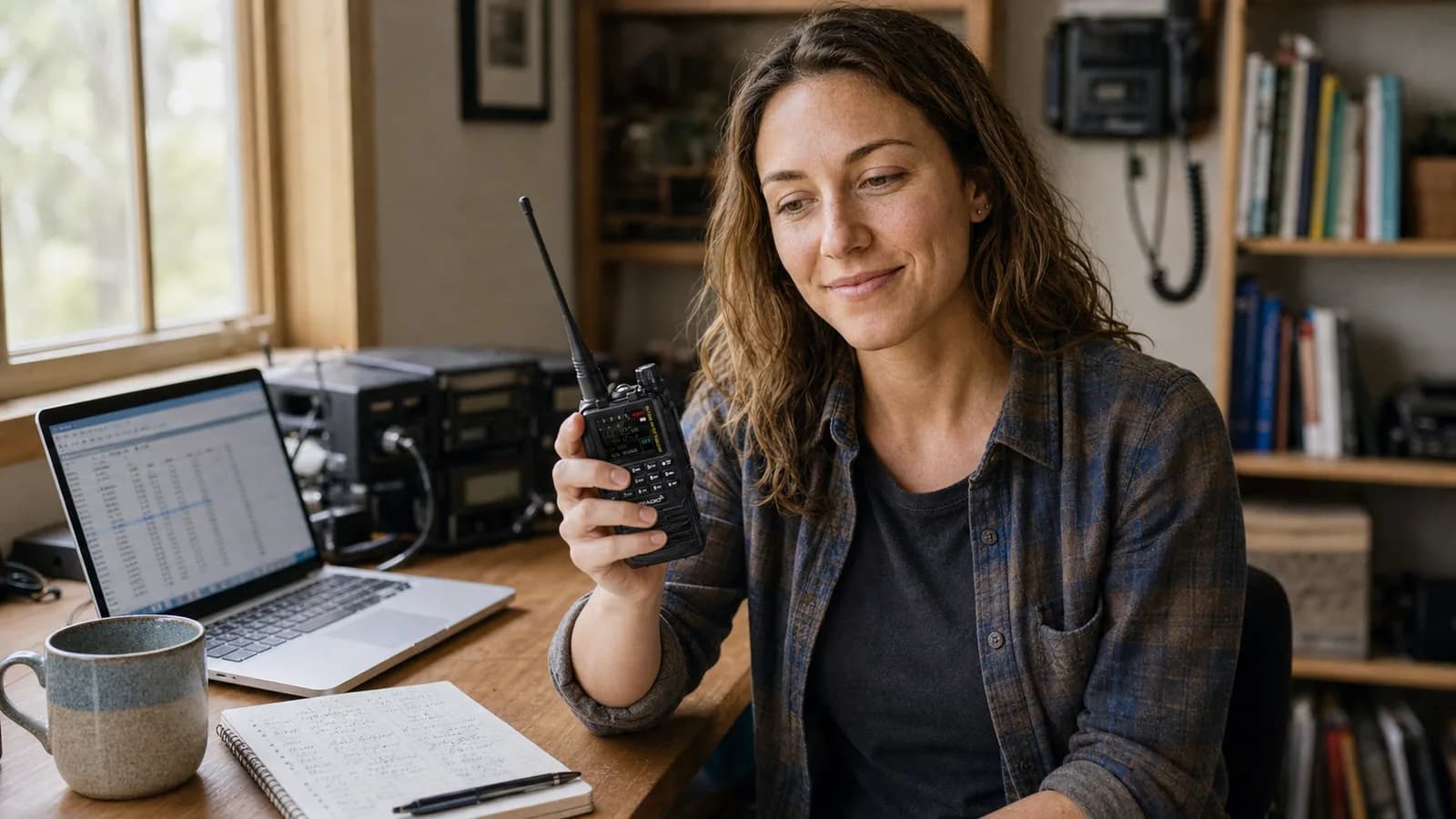
Numbers and spec sheets only get you so far. Here's how the radio behaves after two months of carrying one alongside my older UV-5R as a control.
Range. With the stock antenna in suburban Denver, the H3 hits the same 2m repeaters at the same signal reports as the UV-5R. With a Nagoya NA-771 swapped in, both radios extend out to roughly 20–25 miles to favorably-sited repeaters. There is no meaningful range difference between the H3 and the UV-5R at the same TX power and the same antenna. Anyone telling you the H3 is "stronger" is selling you something.
Audio. The H3's TX audio is slightly cleaner than the UV-5R out of the box. The mic seems less hot, so I get fewer "you're a little distorted" reports without having to consciously hold the radio farther from my face. Speaker audio is comparable; both are fine in a quiet room and rough in a noisy one. A speaker mic upgrade helps both equally.
Battery life. This is the real win. On a full day of POTA monitoring with maybe 30 minutes of cumulative TX, the H3 still has ~40% battery at the end of the day. The UV-5R in the same conditions is usually in the red. If you're doing field work where you can't easily recharge, the H3's 2,500 mAh genuinely matters.
Heat. Under sustained TX, the H3 warms up about the same as a UV-5R. Neither is a concerning amount; it's normal 5W handheld behavior.
Menu and UI. The H3's menu is organized differently than a Baofeng's. Function shortcuts use the side keys differently. If you're new, you're learning from scratch either way. If you've already memorized the UV-5R muscle memory, plan on an adjustment period. Neither menu is great. Both reward CHIRP/Odmaster over keypad programming.
Failure modes I've watched for. No early field reports of the USB-C port failing, which was my main concern on a sub-$35 radio. The plastic shell hasn't cracked. Buttons still feel firm after two months of pocket carry. The belt clip is the cheapest part on the radio and is the first thing I'd expect to break, same as on a UV-5R.
Side-by-side with the UV-5R, the H3 is a better-feeling radio at every touchpoint, with a meaningfully better battery, the same range, and a worse community programming story. Whether that trade is worth $16 extra depends on what you value.
Who Should Buy the TD-H3
The H3 is the right radio for a specific kind of buyer:
- Phone-first beginners who want app-based programming over CHIRP. If the idea of installing CHIRP-next and futzing with COM ports puts you off, the Odmaster app is genuinely nicer.
- POTA and field operators on a budget who want the longer battery. The 2,500 mAh upgrade is real on a long day out.
- Anyone who's lost a UV-5R drop-in charger. USB-C means you charge from the same cable you already own ten of.
- Buyers who want a slightly more refined feel without jumping to a $145 Yaesu.
If you fit any of those, see our best ham radios for beginners and best ham radios under $50 pages for the broader buying set.
Who Shouldn't
The H3 is the wrong radio for:
- CHIRP-first hams. If you want to live in CHIRP, sync codeplugs from RepeaterBook with one click, and use the same workflow as the rest of your club, get a UV-5R. The TD-H3's CHIRP story is workable but not first-class.
- Digital mode users. No DMR, no Fusion, no D-STAR. For DMR look at the AnyTone AT-D878UVII Plus; for Fusion the Yaesu FT-70DR.
- Anyone wanting weather sealing or NOAA SAME. The H3 has neither. For prepping use, see the best ham radios for emergency.
- Hardcore budget buyers. If $16 vs $32 matters, the UV-5R remains the cheapest working dual-band handheld in our database.
Alternatives in 2026
Baofeng UV-5R, $17.16. Half the price. Smaller battery, no USB-C, smaller screen, much larger community. Still our top-scoring first radio at 69 overall, primarily because the CHIRP ecosystem is so deep. The H3 is a better-feeling radio; the UV-5R is a better-supported one.
Baofeng UV-5R Plus, $20.39. The cosmetic refresh of the original. Same internals, same battery, same CHIRP support, slightly nicer chassis. If you want a "modern-looking UV-5R" that still uses the standard CHIRP driver, this is the pick over the H3. If you want USB-C, the H3 wins on that one axis.
TIDRADIO TD-H9, $69.99. TIDRADIO's bigger brother. 10W TX, triband (adds 1.25m), built-in GPS and APRS, color screen, the works. Scores 81 overall in our database, materially better-featured than the H3, though unlike the H3 it has no CHIRP support and its one-star rate runs higher than average (display failures, mostly). If APRS or 1.25m matter to you, this is where the TIDRADIO lineup gets interesting; we cover the whole picture, including the firmware saga, in our full TD-H9 review.
Yaesu FT-65R, about $120 street. The "buy once, cry once" Technician's radio. IP54 weather rating, full CHIRP support, Yaesu build quality, 200 channels. One warning: Amazon stock is often reseller-priced well above the ~$120 you'd pay at a ham radio retailer, so compare before you click buy. Worth considering if you're confident you're staying in the hobby and don't want to upgrade in 18 months.
AnyTone AT-D878UVII Plus, $249.99. Different class. DMR + APRS + GPS + Bluetooth, 4,000 channels, 7W output. The H3 isn't its competition; the AnyTone is what you graduate to once you decide what you actually want from the hobby.
Comparison Table
| Radio | Price | Overall Score | USB-C | Battery | CHIRP | IP Rating |
|---|---|---|---|---|---|---|
| Baofeng UV-5R | $15.90 | 69 | No | 1,800 mAh | Yes (canonical) | None |
| Baofeng UV-5R Plus | $36.98 | 62 | No | 1,800 mAh | Yes | None |
| TIDRADIO TD-H3 | $31.99 | 55 | Yes | 2,500 mAh | Limited (community) | None |
| Yaesu FT-65R | ~$120 street | 55 | No | 1,950 mAh | Yes | IP54 |
| TIDRADIO TD-H9 | $79.99 | 81 | Yes | 2,400 mAh | No (app/CPS only) | IP54 (listing claim) |
| AnyTone AT-D878UVII Plus | $249.99 | 83 | Yes (battery) | 3,100 mAh | No (CPS only) | IP54 |
The Verdict
The TIDRADIO TD-H3 is a competent sub-$35 handheld that fixes the two parts of the UV-5R experience that aged worst: a proprietary charging cradle and a small battery. In exchange you pay roughly twice the UV-5R's price and trade a fully-supported CHIRP workflow for a TIDRADIO-specific app.
For a first ham radio I still lean Baofeng. The community is bigger, CHIRP support is first-class, your local club almost certainly has a published codeplug for it, and you can buy four UV-5Rs for the price of two H3s. The $16 starting point also lowers the stakes of "is this hobby for me," which matters more than spec sheets suggest.
For a second radio, a backup handheld, or for someone who specifically wants USB-C charging and a longer battery without leaving the $30–35 range, the H3 is the right pick. Two months of carrying one has not produced any regret; it's a good radio. It's not a category-redefining one.
Where I would not buy it: as the only radio in a kit that needs to support emergency work (no IP rating, no NOAA SAME), as a digital-modes radio (it isn't one), or in a club that runs everything through CHIRP and shares codeplugs (use a UV-5R instead).
For the next step, see What Is CHIRP? for the programming context, How to Get Your Ham Radio License if you're still working on the Technician test, our Best Handheld Ham Radios roundup for the full ranked field, and Best Ham Radios for Beginners for the broader buying landscape.