Cut for 462 to 467 MHz
GMRS Antennas
Antennas tuned for GMRS rather than the 70cm ham band, measured against the frequencies they actually work on. A GMRS wavelength is 645 mm, and that single number decides which of these are worth buying.
5 tracked
Handheld GMRS Antennas
Screw-on replacements for the stock rubber duck. A handheld has no ground plane worth the name, so length does most of the work here.
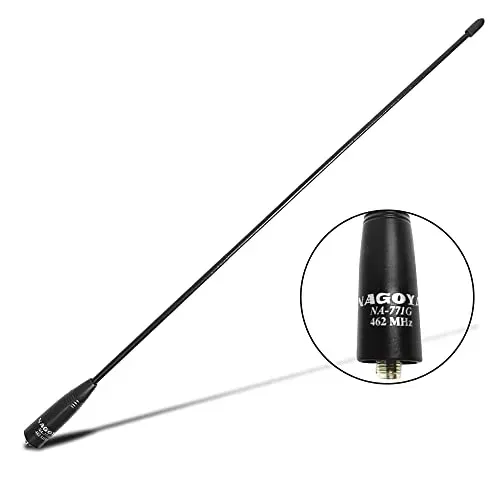
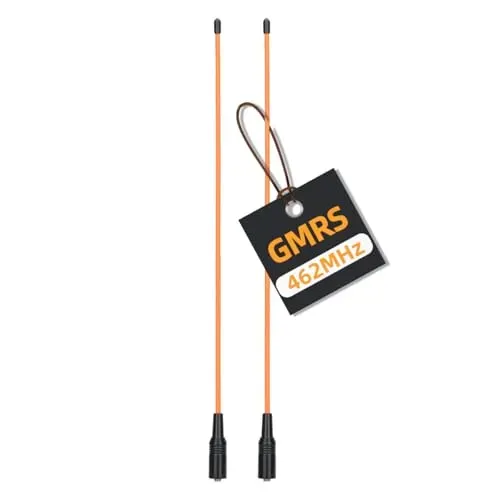
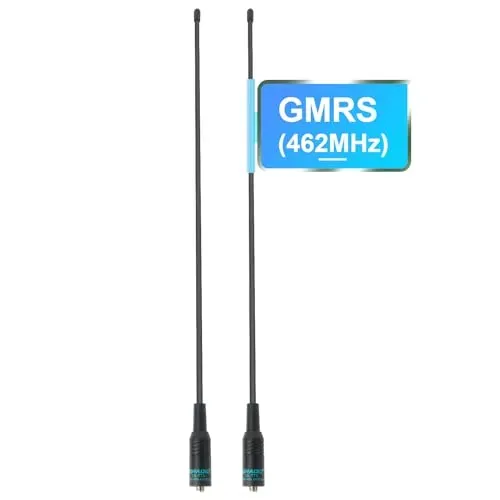
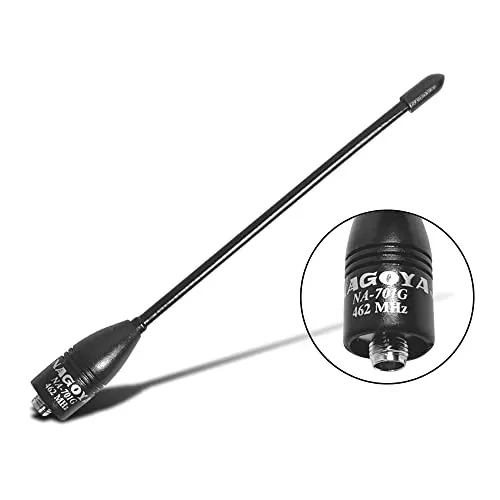
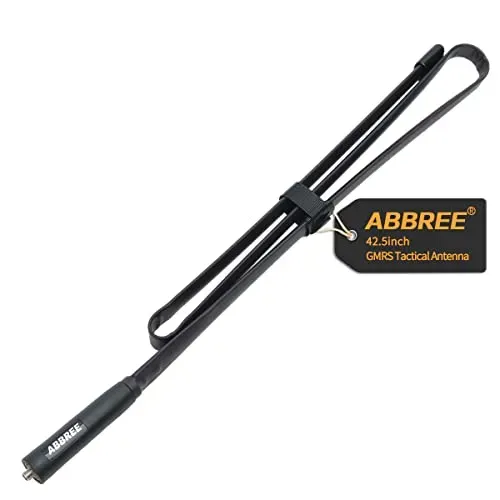
$11.99 · 5.00 dBi · SMA-Female
4 tracked
Mobile GMRS Antennas
Vehicle antennas on NMO or magnetic mounts. The roof gives them the ground plane a handheld lacks, which is most of why they outperform one.
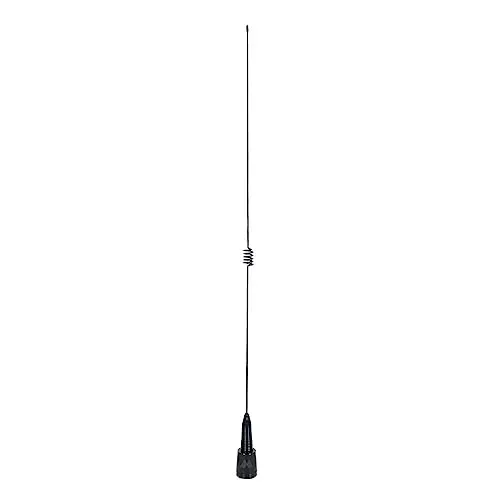
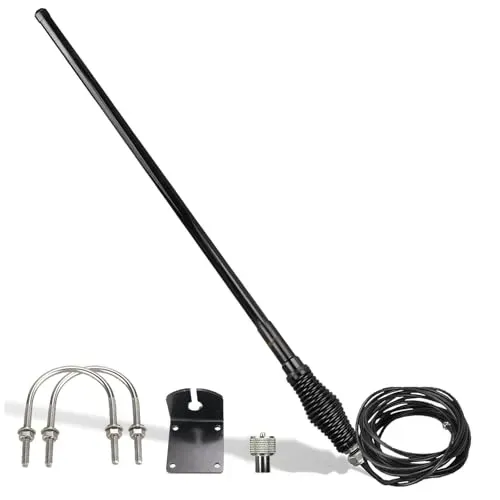
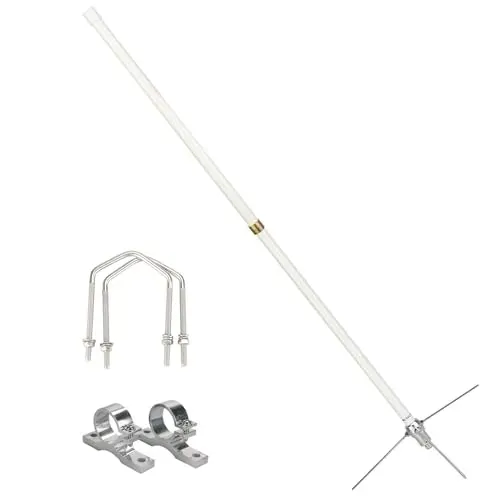
The number that decides it
Length in Wavelengths on GMRS
At 465 MHz a full wavelength is 645 mm. An antenna much shorter than about a fifth of that is electrically short and radiates at a real loss no matter what the box says. Around half a wavelength, roughly 320 mm, it stops needing a ground plane, which is exactly what a handheld cannot provide. Near five eighths, about 400 mm, a single element reaches its practical limit.
That is why the 15-inch GMRS whips are the sweet spot on a handheld, and why a 3-inch stub is a styling choice rather than a performance one.
| Antenna | Length | On GMRS | Works out as |
|---|---|---|---|
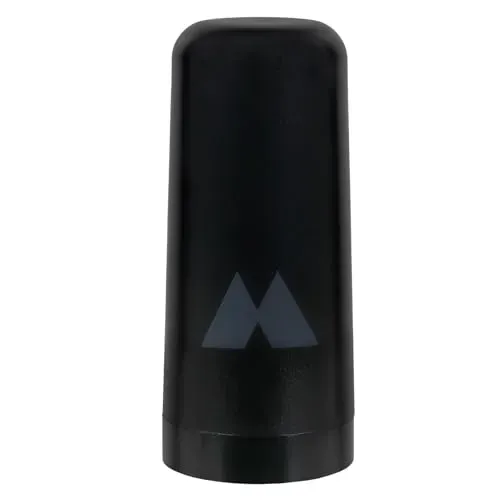
| Midland MXTA25 Ghost Antenna | 89 mm | 0.14 λ | electrically short |
| Nagoya NA-701G (GMRS) | 140 mm | 0.22 λ | quarter wave |
| TIDRADIO TD-771 GMRS (SMA-Female) | 385 mm | 0.60 λ | 5/8 wave |
| Nagoya NA-771G (GMRS) | 389 mm | 0.60 λ | 5/8 wave |
| ABBREE AR-771C GMRS (SMA-Female) | 389 mm | 0.60 λ | 5/8 wave |
| Midland MXTA26 6dB Gain Whip | 813 mm | 1.26 λ | multi-wavelength |
| ABBREE GMRS 42.5-inch Tactical (SMA-Female) | 1080 mm | 1.68 λ | multi-wavelength |
| Retevis Heavy-Duty Fiberglass GMRS Mobile | 1224 mm | 1.90 λ | multi-wavelength |
Fitting it
Which Mount You Need
Handheld GMRS radios almost all use an SMA-Female antenna connection, the same as Baofeng-style ham handhelds, so the whips here fit the GM-15 Pro, UV-5G, TD-H3 and their relatives directly.
Mobile GMRS radios need a mount as well as an antenna. NMO is the standard: a magnetic NMO base is the no-commitment option and works well on a steel roof, while a drilled or lip-mount NMO base is tidier and slightly better. Check whether the antenna you are buying includes a base and coax, since many are the whip alone. We track magnetic NMO bases separately, because a mount has no gain of its own and should not be ranked against antennas that do.
For the radios themselves see our GMRS radio catalog, and for what any of this buys you in miles, the GMRS range guide.
Frequently Asked Questions
Do GMRS antennas need to be FCC certified?
No. FCC equipment authorization applies to the radio, not the antenna. Part 95E certifies the transmitter you buy; an antenna is a passive component and carries no grant. What matters is that the antenna is tuned for 462 to 467 MHz and that your radio is certified. Our GMRS radios all carry their grant details.
Can I use a ham 70cm antenna on GMRS?
It will work, and it will work slightly worse. The 70 centimeter amateur band centres near 435 MHz while GMRS sits at 462 to 467 MHz, about 7 percent higher. A dual-band ham whip is not resonant there, so more of your power reflects back down the feedline instead of radiating. For GMRS-only use, a GMRS-cut antenna is the better buy and usually costs the same.
What is the single biggest upgrade for GMRS range?
Getting the antenna onto a vehicle roof. A roof gives the antenna a proper ground plane and a few feet of height, and both matter more than watts. A 5-watt handheld with a roof-mounted antenna will routinely outperform a 50-watt mobile radio feeding a rubber duck inside the cab. Our GMRS range guide works through the arithmetic.
Does a higher dB number mean more range?
Only within limits, and only if the number is real. Antenna gain is not amplification; it is the same energy pushed into a flatter pattern aimed at the horizon. That helps across open ground and hurts if you are working a repeater on a ridge above you. It also has to be physically earned, and several popular GMRS antennas advertise gain their length cannot produce.
NMO or magnetic mount?
A magnetic mount is the sensible starting point: no drilling, moves between vehicles, and the magnet itself acts as part of the ground plane on a steel roof. A permanent NMO mount is cleaner, more weatherproof and slightly better performing, and it is the right answer once you know the radio is staying in that vehicle. Aluminium and composite roofs defeat magnets entirely.