RadioRanked verdict
Updated Oct 2026AnyTone AT-D168UV vs TIDRADIO TD-H9
Our pick
TIDRADIO TD-H9$69.99
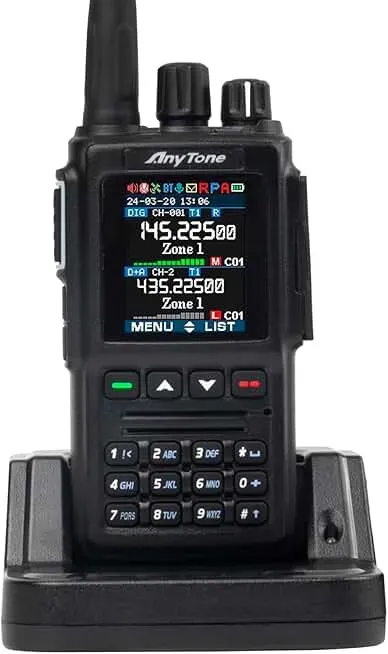
The AnyTone AT-D168UV is the clear winner for most users, despite its $50 premium. The single most important differentiator is DMR capability. The AT-D168UV includes DMR support, which is increasingly essential for digital voice communications in amateur radio, while the TD-H9 lacks it entirely.
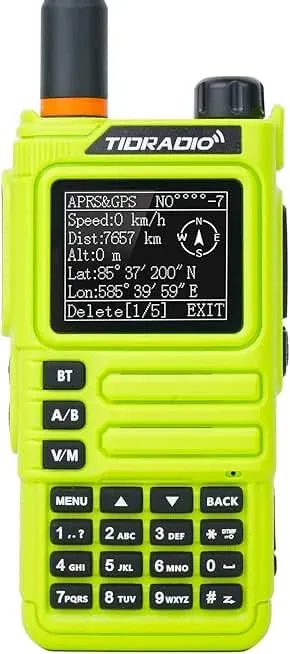
The AT-D168UV's higher overall score of 67 versus 51 reflects its more rounded feature set for serious operators. However, the TD-H9 offers compelling advantages for specific needs: double the transmit power at 10W versus 5W, built-in GPS for location tracking, and a significantly lower price point. Both radios support APRS and neither supports CHIRP programming, which is a minor limitation shared across both models.
Buy the AT-D168UV if you value DMR connectivity and plan to use digital modes or operate in areas with established DMR networks. Buy the TD-H9 if you're budget-conscious, need maximum transmit power, or prioritize GPS functionality over digital voice modes.
For most amateur radio operators, the AT-D168UV represents better long-term value due to its DMR support and higher overall capability rating, though the TD-H9 makes sense for budget builders or those with specific power and GPS requirements.
By use case
Which should you buy?
New operator needing digital modes (DMR/APRS)
It offers DMR and APRS, making it ideal for learning multiple modern digital modes.
AnyTone AT-D168UVBudget-conscious beginner needing basic APRS
The lower price point and essential APRS features make it a great entry-level choice.
TD-H9Operator needing maximum channel capacity
With 4000 channels, it provides significantly more flexibility for complex operations.
AnyTone AT-D168UVPortable user prioritizing raw TX power
Its 10W transmit power gives it a distinct advantage for longer-range simplex communication.
TD-H9Ham needing multi-network support (DMR/APRS)
The AT-D168UV's native support for DMR and APRS covers diverse operational needs.
AnyTone AT-D168UV
Reasons to choose AnyTone AT-D168UV
- 20x more memory channels (4,000 vs 199)
- Has DMR digital mode
Reasons to choose TIDRADIO TD-H9
- 50% cheaper ($69.99 vs $139.99)
- 100% more TX power (10W vs 5W)
- 33% more battery (2400 mAh vs 1800 mAh)
- Has built-in GPS
- Has Bluetooth
- Has CHIRP compatibility
- IP54 water resistance
Spec battle
Spec-by-spec breakdown
Made your choice?
AnyTone AT-D168UV
$139.99 on AmazonTIDRADIO TD-H9PICK
$69.99 on AmazonKeep researching
Related Buying Guides
More head-to-heads