RadioRanked verdict
Updated Oct 2026Baofeng UV-28 vs TIDRADIO TD-H3
Our pick
Baofeng UV-28$58.99
This comparison comes down to value proposition. Both radios tie at 54/100 overall, but the TD-H3 wins on pure economics at $30 versus $47. That 37% price difference matters significantly in the budget handheld segment where performance gaps between these categories are already minimal.
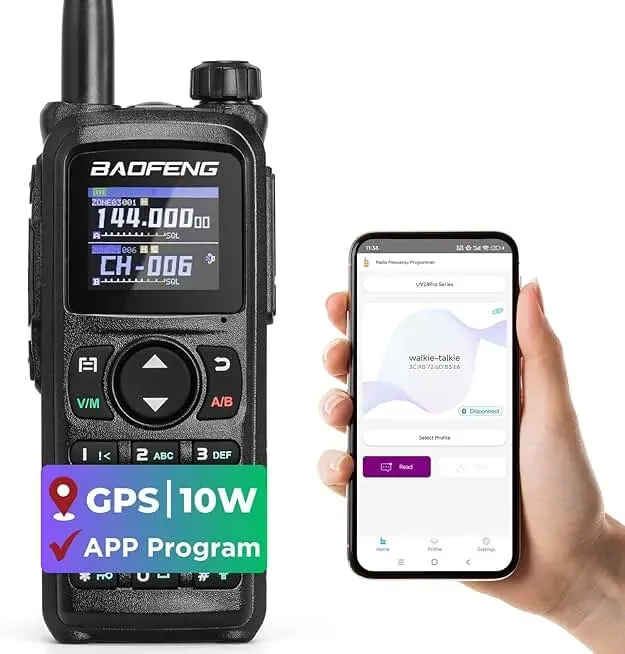
The single most important differentiator is the Baofeng's GPS capability. If you need location tracking for emergency situations or outdoor activities, the UV-28 justifies its higher cost. Without GPS, the TD-H3 is purely a communication device with no situational awareness features.
Buy the TD-H3 if you're a casual user prioritizing simplicity and low entry cost for basic local repeater access. Buy the UV-28 if you regularly venture into remote areas where GPS coordinates matter for safety or if you anticipate needing location data in the future.
Neither radio excels, but the TD-H3 represents better value for cost-conscious operators without GPS needs. If you can stretch to the UV-28's price, the GPS feature adds genuine utility that's difficult to replicate with external devices. For most beginners, the TD-H3's affordability wins unless GPS specifically addresses your use case.
By use case
Which should you buy?
SOTA/POTA field activators needing GPS
The UV-28's built-in GPS and higher feature set are ideal for field coordination.
UV-28Absolute beginner on a tight budget
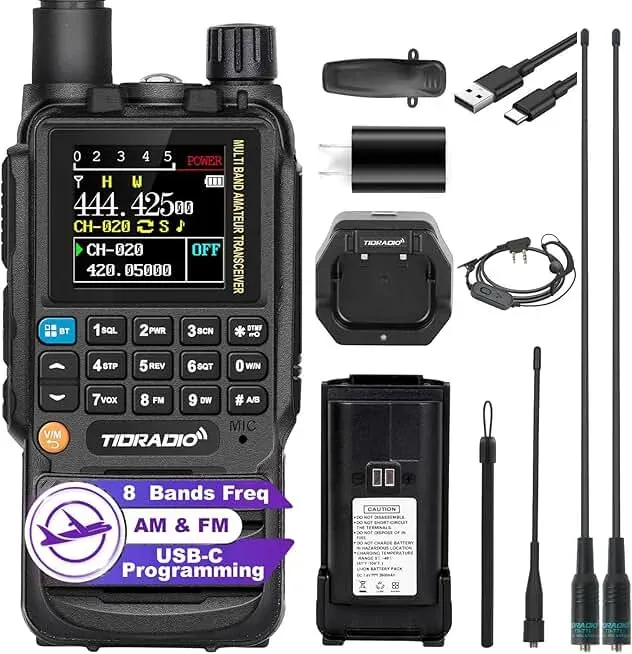
The TD-H3 offers basic VHF/UHF functionality at a lower cost for starting out.
TD-H3Emergency preparedness/ARES/RACES use
The UV-28 is better suited for emergency deployment due to its expanded features and memory.
UV-28Simple GMRS/scanner monitoring backup
The TD-H3's focus on analog VHF/UHF makes it excellent for basic monitoring tasks.
TD-H3Advanced user needing maximum features
The UV-28 provides more channels and advanced features for experienced hobbyists.
UV-28
Reasons to choose Baofeng UV-28
- 5x more memory channels (1,000 vs 199)
- Has built-in GPS
- Has color TFT display
Reasons to choose TIDRADIO TD-H3
- 46% cheaper ($31.99 vs $58.99)
- 14% more battery (2500 mAh vs 2200 mAh)
- 115g lighter (245g vs 360g)
Spec battle
Spec-by-spec breakdown
Made your choice?
Baofeng UV-28PICK
$58.99 on AmazonTIDRADIO TD-H3
$31.99 on AmazonKeep researching
Related Buying Guides
More head-to-heads