RadioRanked verdict
Updated Oct 2026Baofeng BF-5RH PRO vs Baofeng DM-32UV GPS APRS
Our pick
Baofeng BF-5RH PRO$71.69
The BF-5RH PRO edges out as the better choice for most users, despite costing ten dollars more. Both radios deliver identical transmit power and share APRS plus GPS capabilities, making them competitive on core features. However, the BF-5RH PRO's CHIRP compatibility is the decisive advantage. CHIRP programming dramatically simplifies frequency management and configuration, saving countless hours of manual entry especially for users managing multiple frequencies or frequencies across repeater networks.
The DM-32UV GPS APRS does offer DMR digital capability, which the BF-5RH PRO lacks. This matters significantly if you operate in an area with established DMR networks or plan to do so. However, DMR adoption remains limited in many regions, limiting practical utility for casual users.
The BF-5RH PRO suits general-purpose operators who value programming ease and flexibility. The DM-32UV GPS APRS is the pick for digital-mode enthusiasts already invested in DMR infrastructure.
Given the importance of streamlined programming and the BF-5RH PRO's higher overall score, we recommend the BF-5RH PRO for most amateur radio operators. Only choose the DM-32UV GPS APRS if your local repeater network is primarily DMR-based.
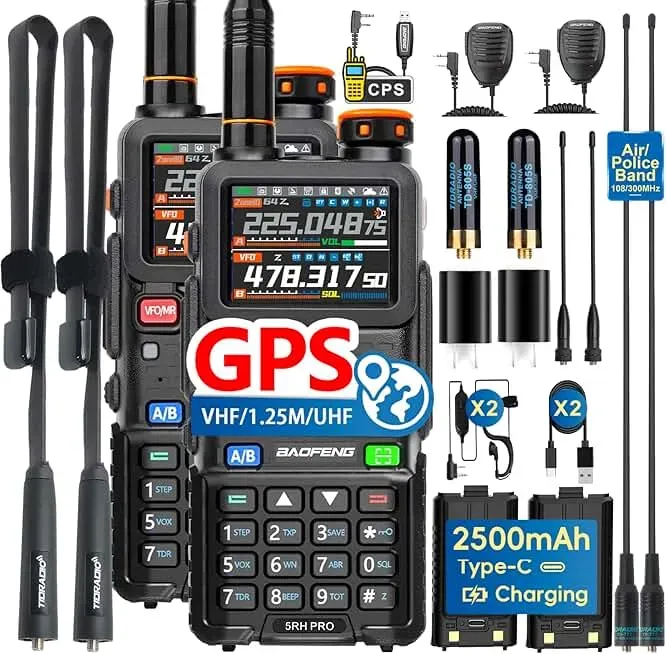
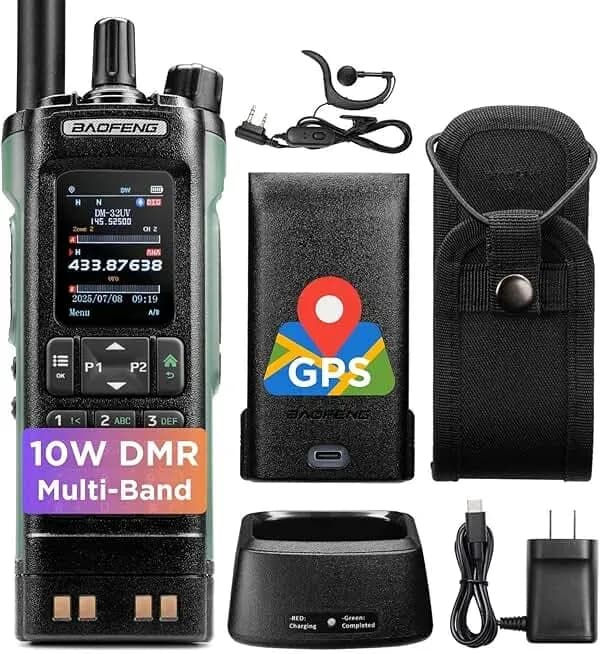
By use case
Which should you buy?
Budget-focused new operator needing basic features
It offers DMR and APRS in a highly affordable package.
Baofeng DM-32UV GPS APRSAdvanced operator needing maximum channel capacity
The 4000-channel memory is superior for large collections.
Baofeng DM-32UV GPS APRSGeneral field operations needing diverse features
Its inclusion of Bluetooth and GPS makes it more versatile for field work.
Baofeng BF-5RH PROBeginner learning advanced features and protocols
The BF-5RH PRO is specifically rated for new operators learning advanced functions.
Baofeng BF-5RH PROOperator prioritizing DMR digital communication
This model natively supports the popular DMR digital radio mode.
Baofeng DM-32UV GPS APRS
Reasons to choose Baofeng BF-5RH PRO
- 60g lighter (290g vs 350g)
- Has Bluetooth
- Has CHIRP compatibility
- IP54 water resistance
Reasons to choose Baofeng DM-32UV GPS APRS
- 16% cheaper ($59.99 vs $71.69)
- 6x more memory channels (4,000 vs 640)
- Has DMR digital mode
Spec battle
Spec-by-spec breakdown
Made your choice?
Baofeng BF-5RH PROPICK
$71.69 on AmazonBaofeng DM-32UV GPS APRS
$59.99 on AmazonKeep researching
Related Buying Guides
More head-to-heads