RadioRanked verdict
Updated Oct 2026Quansheng UV-K1 vs Retevis A3
Our pick
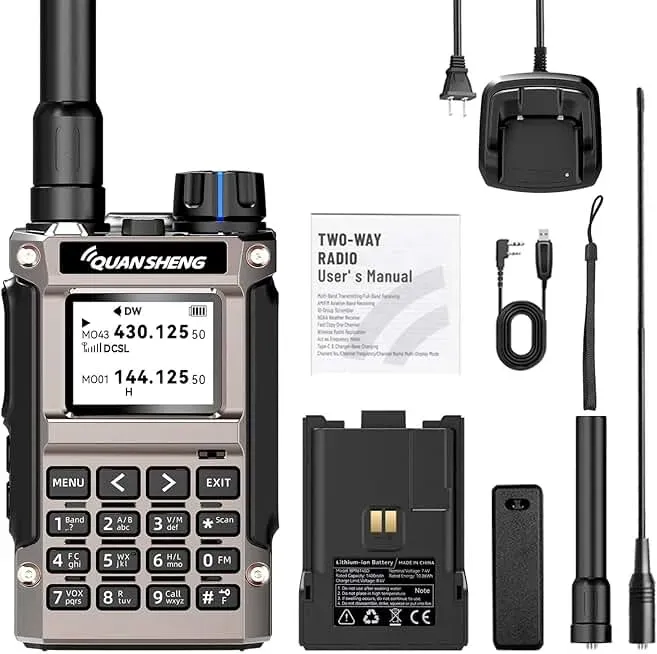
Quansheng UV-K1$35.98
The Quansheng UV-K1 is the clear winner here. Despite both radios lacking modern features like DMR, APRS, and GPS, the UV-K1 demonstrates superior overall capability with a score of 36 versus the A3's 31. More importantly, the UV-K1 costs significantly less at $38 compared to the A3's $80, making this a decisive advantage.
The single most important differentiator is value for money. You're getting a better-performing radio for less than half the price, which is compelling in the budget handheld segment where cost matters tremendously.
The UV-K1 suits operators on a tight budget who want a functional dual-band radio without paying premium prices for features they don't need. The A3 appeals only to those who specifically prefer Retevis's ecosystem or have brand loyalty, though the price premium isn't justified by the performance data here.
We recommend the Quansheng UV-K1. It outscores the competition, costs substantially less, and represents the better value proposition for amateur radio beginners or those building a budget backup radio collection. Only skip it if you have specific compatibility requirements with existing Retevis equipment.
By use case
Which should you buy?
Absolute beginner on a tight budget
Its lower price and simple features make it perfect for first-time learning.
UV-K1Monitoring NOAA and local repeaters
The A3's higher channel count and multi-band capability are better for monitoring.
A3Casual local simplex chat and scanning
The K1's focus on local operation and simplicity is ideal for casual use.
UV-K1Experimenter needing basic multi-band coverage
The A3 offers more channels and better general coverage for varied experiments.
A3Budget-conscious secondary radio for backup
The K1 provides enough functionality at a very low cost for secondary use.
UV-K1
Reasons to choose Quansheng UV-K1
- 67% cheaper ($35.98 vs $109.99)
- 96g lighter (190g vs 286g)
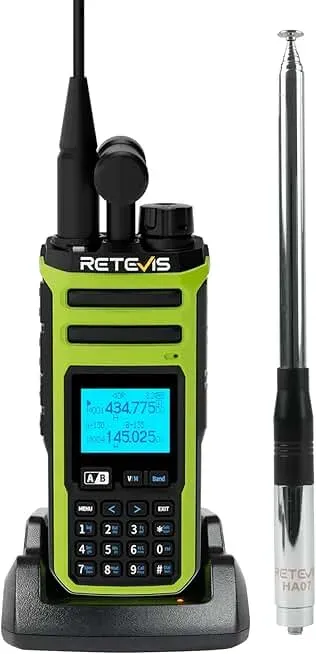
Reasons to choose Retevis A3
- 5x more memory channels (999 vs 200)
- 79% more battery (2500 mAh vs 1400 mAh)
Spec battle
Spec-by-spec breakdown
Made your choice?
Quansheng UV-K1PICK
$35.98 on AmazonRetevis A3
$109.99 on AmazonKeep researching
Related Buying Guides
More head-to-heads