RadioRanked verdict
Updated Nov 2026Baofeng UV-26 vs Yaesu VX-6R
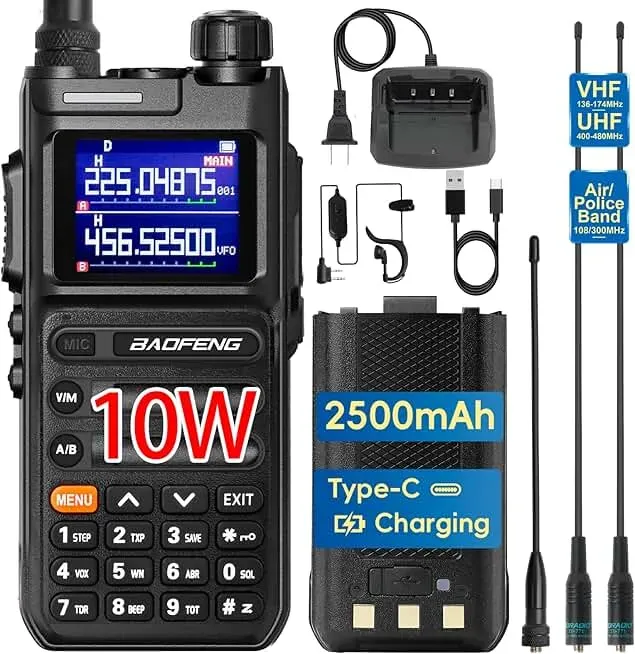
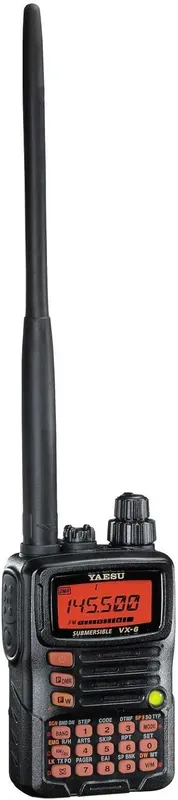
The Baofeng UV-26 and Yaesu VX-6R are effectively matched on core specifications, both lacking digital modes and advanced features. The UV-26 delivers twice the transmit power at 10W versus the VX-6R's 5W, which matters if you need range in weak coverage areas. The VX-6R offers CHIRP support for easier programming and we have its weight spec at 270g, while the UV-26's weight is unlisted. Owners report slightly higher satisfaction with the VX-6R at 4.6 out of 5 across 238 reviews compared to the UV-26's 4.4 out of 5 from 94 reviews, though both show solid owner approval.
The single most important differentiator is transmit power. At 10W, the UV-26 has a real advantage for reaching distant repeaters or peers in fringe coverage, while the VX-6R's 5W output limits range.
Buy the UV-26 if raw power and budget are your priorities. Buy the VX-6R if you value easier programming via CHIRP and want what owners report as stronger satisfaction.
For most users, the VX-6R edges ahead due to CHIRP support and owner feedback, but the UV-26 is the smarter choice if you operate in areas with poor signal propagation.
By use case
Which should you buy?
First-time licensee wanting the easiest initial setup
Yaesu scores higher for beginner ease, making it the simpler first handheld to learn.
VX-6ROperator needing 1.25m band access
The UV-26 covers the 1.25m band and transmits at 10W, double the VX-6R's 5W.
Baofeng UV-26Budget-minded emergency preparedness household
Its higher feature score and 10W output give preparedness buyers more capability for the money.
Baofeng UV-26
Reasons to choose Baofeng UV-26
- 100% more TX power (10W vs 5W)
- 79% more battery (2500 mAh vs 1400 mAh)
- Has color TFT display
Reasons to choose Yaesu VX-6R
- Has CHIRP compatibility
Spec battle
Spec-by-spec breakdown
Made your choice?
Baofeng UV-26
Search on AmazonYaesu VX-6RPICK
Search on AmazonMore head-to-heads