RadioRanked verdict
Updated Oct 2026Quansheng UV-K1 vs Retevis RT85
Our pick
Retevis RT85$39.99
The Retevis RT85 is the clear winner for most users.
The most important differentiator is CHIRP support. The RT85 lets you program frequencies via computer, a significant convenience advantage. The UV-K1 lacks this, meaning manual programming only. Additionally, the RT85 provides confirmed 5W transmit power while we don't have that specification for the UV-K1. Both radios lack DMR, APRS, and GPS, so feature-wise they're effectively matched on the essentials.
The RT85 scores 64/100 versus the UV-K1's 44/100, reflecting better listed specs for the money. Owner feedback supports this: the RT85 draws on 270 Amazon reviews averaging 4.5 stars compared to the UV-K1's 8 reviews at 4.4 stars. While the UV-K1's smaller sample size means less certainty about owner satisfaction, the RT85's much larger review pool provides stronger buyer evidence.
The UV-K1 makes sense only as an ultra-budget option if you're willing to accept manual programming and unknown transmit power. The RT85 should be your choice if you value programming convenience, confirmed power output, and feedback from significantly more users, all for just fourteen dollars more.
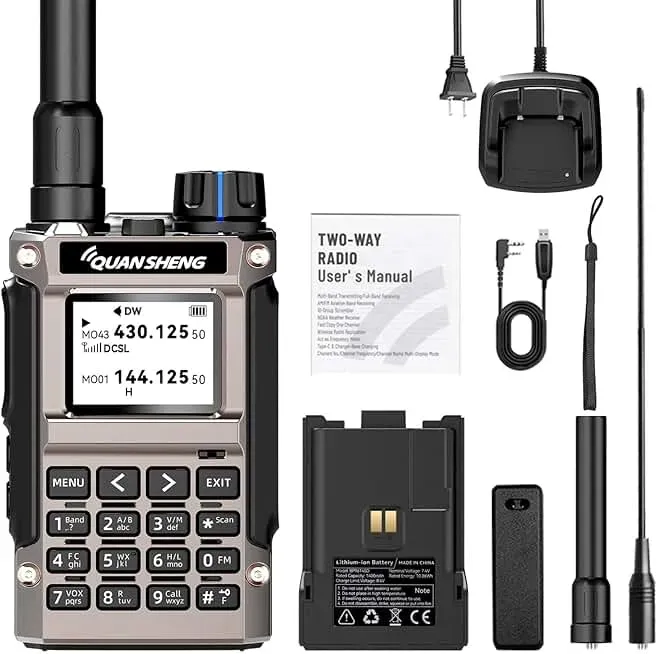
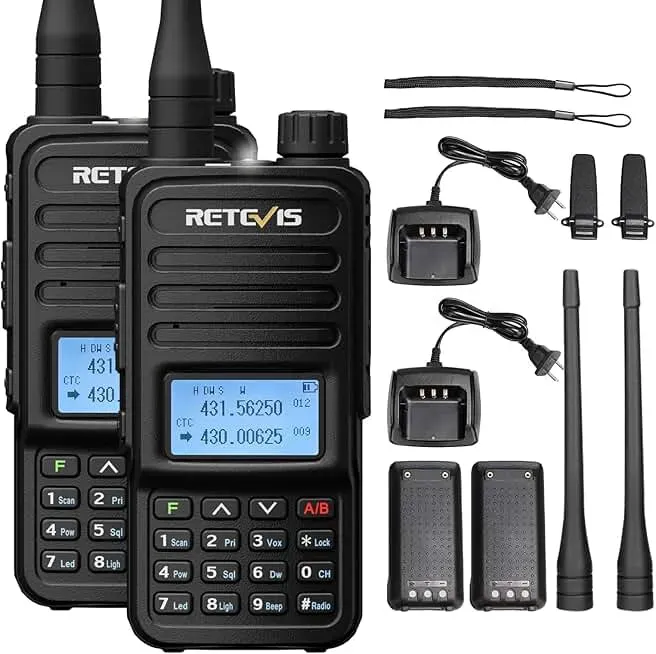
By use case
Which should you buy?
Absolute beginner focusing on local analog simplex
Its focus on analog VHF/UHF makes it simple and ideal for initial learning.
UV-K1Budget-conscious user needing basic repeater access
The CHIRP feature and higher score provide better versatility for local repeater use.
Retevis RT85Operator needing digital mode flexibility (DMR/DSTAR)
The CHIRP support allows for digital mode operation, which the UV-K1 lacks.
Retevis RT85Casual local monitoring and scanning use
The UV-K1 is specifically noted for its suitability in monitoring and scanning tasks.
UV-K1First-time licensee prioritizing value and features
The Retevis offers superior value and crucial CHIRP functionality for new operators.
Retevis RT85
Reasons to choose Quansheng UV-K1
- 10% cheaper ($35.98 vs $39.99)
- 37g lighter (190g vs 227g)
Reasons to choose Retevis RT85
- Has CHIRP compatibility
- FCC equipment authorization on file
Spec battle
Spec-by-spec breakdown
Made your choice?
Quansheng UV-K1
$35.98 on AmazonRetevis RT85PICK
$39.99 on AmazonKeep researching
Related Buying Guides
More head-to-heads