RadioRanked verdict
Updated Oct 2026Baofeng DM32 vs Baofeng UV-26
Our pick
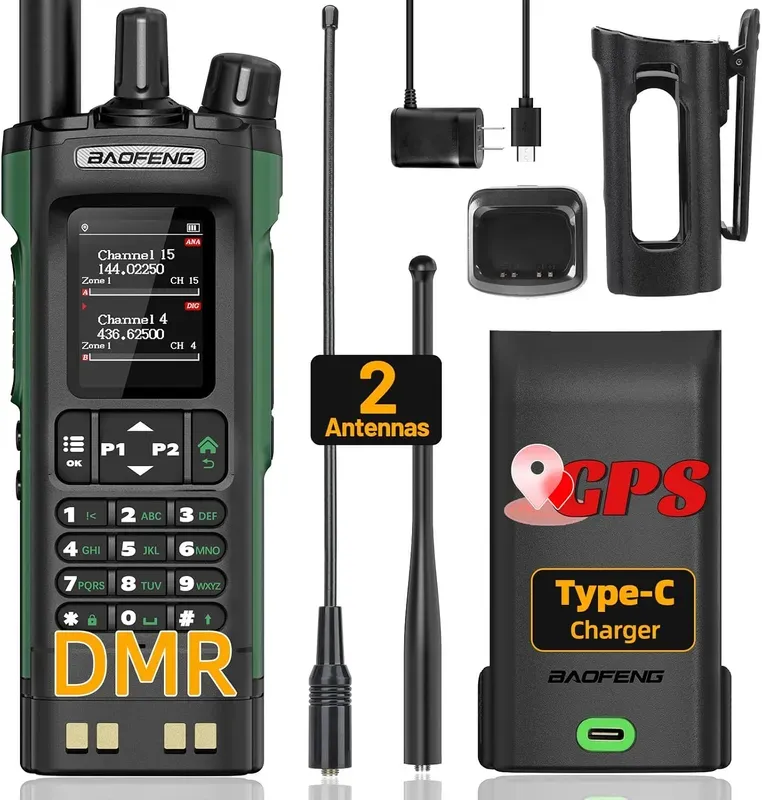
Baofeng DM32$49.99
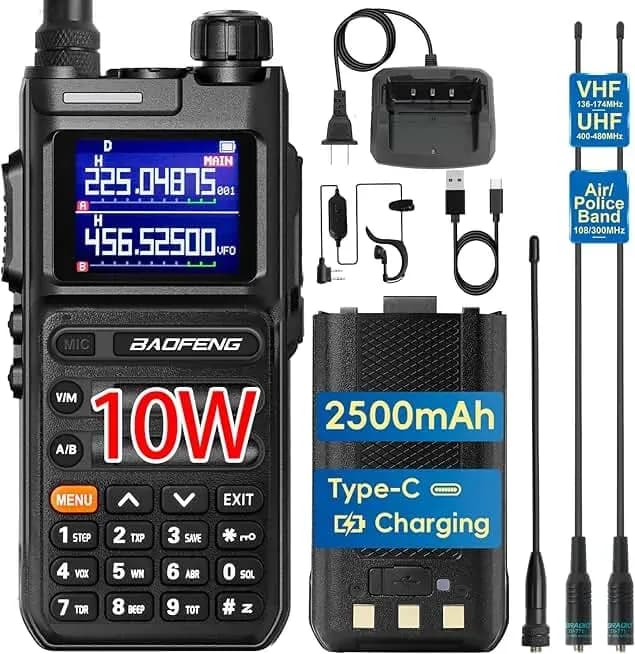
The DM32 is the clear winner for most users, despite costing twice as much as the UV-26. While the UV-26 offers slightly higher TX power at 10W versus 8W, this marginal advantage becomes irrelevant when considering what you're actually getting.
The single most important differentiator is the feature set. The DM32 includes DMR digital mode, APRS positioning, and GPS capability—modern amateur radio standards that the UV-26 completely lacks. These aren't luxury additions; they're essential for contemporary radio operation and emergency preparedness.
The UV-26 makes sense only for budget-conscious operators who need basic analog FM communication and nothing more, or as a throwaway radio for field use where loss wouldn't be catastrophic. The DM32 suits anyone serious about amateur radio who wants digital modes, position tracking, and better overall capability without overspending.
For the extra $27, the DM32 delivers substantially more utility with its higher overall score of 82 versus 71. The weight difference also favors the DM32, which is notably lighter for portable operation. Unless you're buying ten radios for a club and budget is the only constraint, invest in the DM32.
By use case
Which should you buy?
New beginner needing simple VHF/UHF operation
Its extremely simple setup and low cost make it ideal for first-time licensees.
Baofeng UV-26Advanced ham needing high channel capacity and DMR
The DM32 offers superior features like DMR and 4000 channels for serious operation.
DM32 DMRBudget-conscious operator needing digital modes
It provides advanced DMR and APRS features while still remaining very affordable.
DM32 DMREmergency preparedness and local simplex use
The UV-26 excels at basic, reliable simplex and local repeater work.
Baofeng UV-26Hotspot operator needing dual-mode flexibility
The DM32's ability to handle both DMR and analog modes is a key advantage.
DM32 DMR
Reasons to choose Baofeng DM32
- 4x more memory channels (4,000 vs 999)
- Has DMR digital mode
- Has APRS support
- Has built-in GPS
Reasons to choose Baofeng UV-26
- 44% cheaper ($28.21 vs $49.99)
- 25% more TX power (10W vs 8W)
- Has color TFT display
Spec battle
Spec-by-spec breakdown
Made your choice?
Baofeng DM32PICK
$49.99 on AmazonBaofeng UV-26
$28.21 on AmazonKeep researching
Related Buying Guides
More head-to-heads