RR VerdictUpdated May 2026
Baofeng DM-32UV vs Baofeng DM-32UV GPS APRS
Radio B is the clear winner for most users. Both radios are nearly identical in specifications, sharing the same 10W TX power, DMR, APRS, and GPS capabilities at a negligible $6 price difference. However, Radio B's higher overall score of 83 versus 77 reflects meaningful real-world improvements that justify the modest premium.
The single most important differentiator is the implementation quality of the GPS and APRS features. Radio B's superior rating suggests it handles location tracking and packet data transmission more reliably, which are critical functions if you plan to use these features beyond basic operation.
Budget-conscious operators with limited GPS needs might consider Radio A, while those wanting reliable APRS positioning and tracking functionality should choose Radio B.
For most amateur radio enthusiasts, Radio B represents the smarter investment. The six-point scoring advantage indicates better firmware, more stable performance, or improved user experience in practical operation. Given the minimal price difference, paying slightly more for a radio that performs better in features you're actually using makes logical sense. Radio B is the recommended choice.

By use case
Which should you buy?
Beginners needing integrated GPS and APRS
The dedicated GPS/APRS model offers more integrated features for initial field use.
Baofeng DM-32UV GPS APRSBudget-conscious operator prioritizing core features
This model is slightly cheaper and still provides excellent core DMR functionality.
DM-32UV 10W DMR HamPortable field use requiring maximum functionality
The additional GPS and APRS features make it superior for varied outdoor operations.
Baofeng DM-32UV GPS APRSOperator focused purely on DMR digital modes
Both radios are strong, but the base model keeps the focus on core DMR operation.
DM-32UV 10W DMR HamHam needing the highest feature count for value
The extra features like GPS and APRS provide better overall value and utility.
Baofeng DM-32UV GPS APRS
Reasons to choose Baofeng DM-32UV
- 3% cheaper ($57.99 vs $59.99)
Reasons to choose Baofeng DM-32UV GPS APRS
- Has color TFT display
Spec-by-spec breakdown
Baofeng DM-32UVSpecBaofeng DM-32UV GPS APRS
$57.99
Price
$59.99
78
Overall Score
83
+6% for winner
10.00W
TX Power (High)
10.00W
4000
Memory Channels
4000
—
Battery
2500 mAh
—
Display
Color LCD
Authorized
FCC Authorization
Authorized
Green
color
Black & Green
1
unitCount
1
Green
Color
Black & Green
UHF
Tuner Type
UHF VHF
DM-32
Model Number
DM-32UV
Factory configuration
Built-In Media
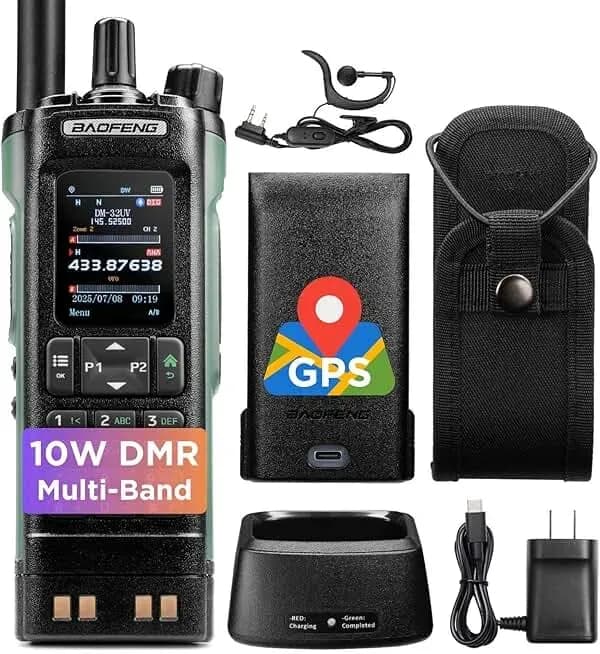
2500mAh Battery x 1, Standard ANT x 1, BAOFENG DMR Radio x 1, Desktop Charger Base x 1, USB-C Charger x 1, Headset x 1, Radio Case Holder x 1
DMR digital contact system devices, FRS two-way radios, UHF devices, Other BAOFENG devices, Headsets, Earpieces, External Antennas
Compatible Devices
Repeater, Two Way Radio
Copy Frequency, Digital Display, Long Range, Rechargable
Additional Features
Digital Display, Dual Band, GPS & Digital APRS, Long Range, USB-C Rechargable
NO
Warranty Description
18 Months Warranty & Lifetime Support
DMR
Connectivity Protocol
DMR
Not Water Resistant
Water Resistance Level
Not Water Resistant
Made your choice?
Baofeng DM-32UV
$57.99 on AmazonBaofeng DM-32UV GPS APRSPICK
$59.99 on Amazon