RR VerdictUpdated May 2026
Baofeng DM-32UV GPS APRS vs BAOFENG DM32 DM-32UV DMR Radio
Radio A emerges as the clear winner in this comparison. Both radios are essentially identical in specifications—they share the same 10W output, DMR and APRS capabilities, GPS functionality, and lack CHIRP support. The critical differentiator is price: Radio A costs $60 versus Radio B's $70, representing a meaningful 14% savings for amateur radio operators on a budget.
The single most important difference is the ten dollar price gap. Since these radios deliver equivalent performance and features, there's no technical reason to pay the premium for Radio B. Radio A's higher overall score of 83 versus 79 further validates choosing the less expensive option.
Radio A suits budget-conscious operators who want DMR, APRS, and GPS without overspending. Radio B would only appeal to someone with a specific preference for that exact model variant or existing loyalty to that particular SKU.
Purchase Radio A. You'll save money while gaining identical functionality and actually receiving a slightly better-reviewed unit. Unless you have a compelling reason tied to local dealer availability or warranty terms, the ten dollars is better spent elsewhere in your radio setup.

By use case
Which should you buy?
Beginner needing maximum features
Its higher overall score and feature set make it better for new digital operators.
Baofeng DM-32UV GPS APRSBudget-conscious secondary rig
This model is slightly cheaper and perfect for a backup or secondary digital unit.
BAOFENG DM32 DM-32UV DMR RadioAdvanced user needing high feature count
The superior feature set and higher score appeal to experienced collectors and users.
Baofeng DM-32UV GPS APRSOperator needing simple daily driver
The 'best for' category suggests it is better suited as a primary, daily-use radio.
Baofeng DM-32UV GPS APRSTechnician exploring digital modes
Its specific best-for use case targets technicians exploring various digital networking options.
BAOFENG DM32 DM-32UV DMR Radio
Reasons to choose Baofeng DM-32UV GPS APRS
- Has color TFT display
Reasons to choose BAOFENG DM32 DM-32UV DMR Radio
- 1% cheaper ($59.49 vs $59.99)
Spec-by-spec breakdown
Baofeng DM-32UV GPS APRSSpecBAOFENG DM32 DM-32UV DMR Radio
$59.99
Price
$59.49
83
Overall Score
79
+5% for winner
10.00W
TX Power (High)
10.00W
4000
Memory Channels
4000
2500 mAh
Battery
—
Color LCD
Display
—
Authorized
FCC Authorization
Authorized
Black & Green
color
Light Green
1
unitCount
1
Black & Green
Color
Light Green
UHF VHF
Tuner Type
1
1 Pounds
Item Weight
1.6 Pounds
DM-32UV
Model Number
DM32UV
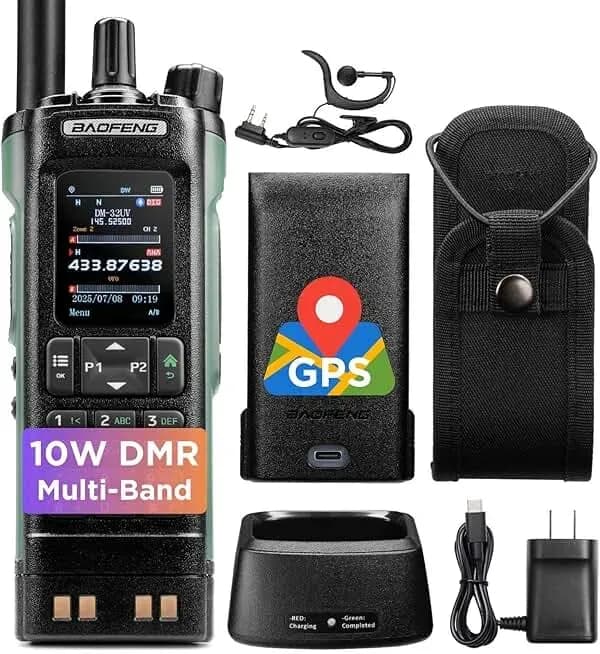
2500mAh Battery x 1, Standard ANT x 1, BAOFENG DMR Radio x 1, Desktop Charger Base x 1, USB-C Charger x 1, Headset x 1, Radio Case Holder x 1
Built-In Media
1 X 33cm Antenna & 1X 21cm Gooseneck Antenna, 1 X Battery & 1 X SRH-805S Antenna, 1 X Earpiece & 1 X Radio Case & 7 X Antenna Silicone Cover, 1 X Radio, 1X Type-c Cable & 1 X Base Charger
UHF VHF
Frequency Range
108-136 MHz (AM), 65-108 MHz (FM), UHF 400.000-470.000 MHz (RX、TX), VHF 136.000-174.000 MHz (RX、TX)
QYWBDDMSEUV23
Mfr Part Number
BAOFENG
Repeater, Two Way Radio
Compatible Devices
Personal Computer
Digital Display, Dual Band, GPS & Digital APRS, Long Range, USB-C Rechargable
Additional Features
multi-functional
18 Months Warranty & Lifetime Support
Warranty Description
1
DMR
Connectivity Protocol
Analog, DMR, Type-c
Not Water Resistant
Water Resistance Level
Not Water Resistant
Made your choice?
Baofeng DM-32UV GPS APRSPICK
$59.99 on AmazonBAOFENG DM32 DM-32UV DMR Radio
$59.49 on AmazonRelated Comparisons
BAOFENG DM32 DM-32UV DMR Radio vs Radtel RT-880GBAOFENG DM32 DM-32UV DMR Radio vs Baofeng K5 PlusBaofeng DM-32UV GPS APRS vs Quansheng UV-K5(8) 5W Ham Radio HandheldAnyTone AT-D878UV vs BAOFENG DM32 DM-32UV DMR RadioBAOFENG DM32 DM-32UV DMR Radio vs Quansheng UV-K1Baofeng DM-32UV GPS APRS vs Baofeng K5 Plus Tri-Band