RadioRanked verdict
Updated Sep 2026AnyTone AT-D890UV vs Radtel RT-910B
Our pick
Radtel RT-910B$30.99
This depends entirely on your needs and budget. The RT-910B wins on overall score and price, making it the better value proposition for casual operators. However, the AT-D890UV's DMR capability is a significant advantage if you need digital mode support, despite its higher cost and lower score.
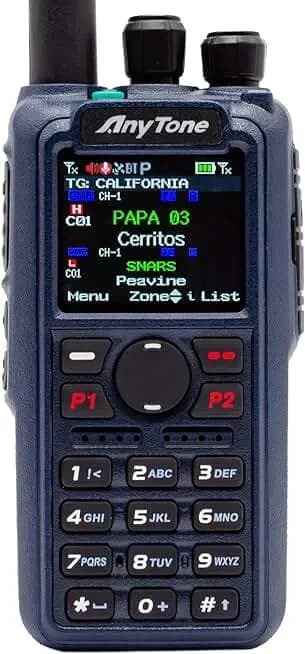
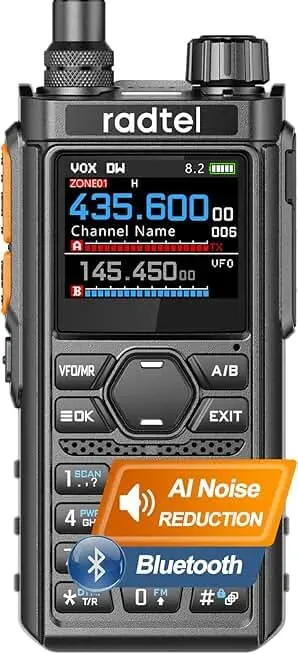
The single most important differentiator is DMR functionality. The AT-D890UV supports DMR digital modes while the RT-910B is analog-only. This fundamentally changes what networks and communities each radio can access. If DMR coverage exists in your area and you want digital flexibility, the AnyTone becomes essential. If you operate in analog-only areas or prefer simplicity, the RT-910B's vast price advantage makes it hard to justify the extra $266.
The Radtel RT-910B suits budget-conscious operators who need basic analog capability and want to minimize investment in handheld equipment. The AnyTone AT-D890UV is for DMR users or those planning to transition to digital modes and willing to pay the premium.
Buy the RT-910B unless DMR is a requirement for your radio network. The score and price strongly favor it for standard analog use. Only choose the AT-D890UV if you specifically need DMR support in your area.
By use case
Which should you buy?
Advanced hobbyist needing DMR and large groups
Its advanced features and high channel count support complex emergency nets.
AT-D890UVNew licensee on a strict budget
This unit provides basic functionality and Bluetooth connectivity for minimal cost.
RT-910BField use requiring simple, reliable communication
The low price and simple interface make it ideal for secondary or spare radios.
RT-910BExperienced operator needing multi-mode capability
The AT-D890UV offers superior flexibility for various digital and analog modes.
AT-D890UVPrepper or emergency net deployment
Its focus on ARES and emergency nets makes it purpose-built for critical comms.
AT-D890UV
Reasons to choose AnyTone AT-D890UV
- 4x more memory channels (4,000 vs 960)
- 107% more battery (3100 mAh vs 1500 mAh)
- Has DMR digital mode
- Has color TFT display
- FCC equipment authorization on file
Reasons to choose Radtel RT-910B
- 90% cheaper ($30.99 vs $299.00)
- 13g lighter (280g vs 293g)
- Has Bluetooth
Spec battle
Spec-by-spec breakdown
Made your choice?
AnyTone AT-D890UV
$299.00 on AmazonRadtel RT-910BPICK
$30.99 on AmazonKeep researching
Related Buying Guides
More head-to-heads