RadioRanked verdict
Updated Oct 2026Baofeng UV-7B vs Radtel RT-860
Our pick
Baofeng UV-7B$25.49
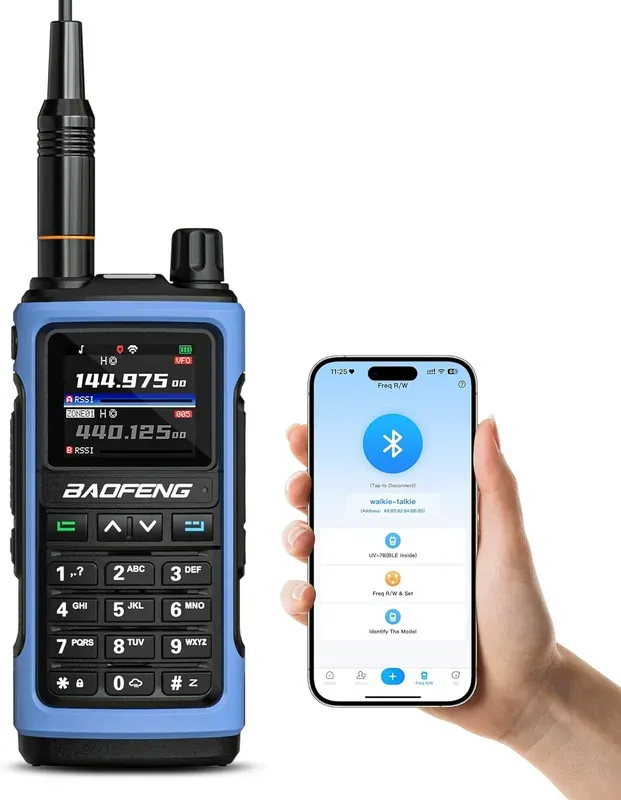
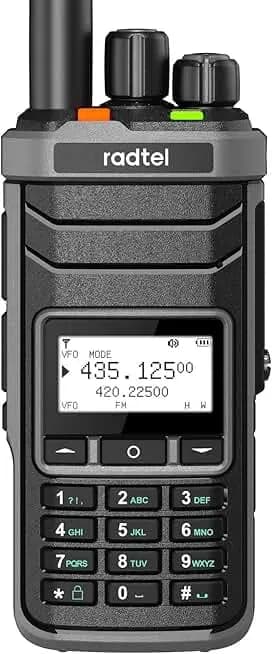
The Baofeng UV-7B is the clear winner for most users. Both radios lack advanced digital modes and GPS, with neither having published TX power specs or IP ratings. The decisive factors are price and owner feedback. The UV-7B costs $14 less at $25 versus $39, and owners report notably higher satisfaction at 4.4/5 stars across 98 reviews compared to the RT-860's 3.9/5 across 139 reviews. The radios are nearly identical in weight, both around 255-260g, so portability is a wash. Neither supports CHIRP programming, so you'll be limited to the manufacturer's software either way. The UV-7B's Bluetooth connectivity offers a minor advantage for wireless audio, though this depends on your specific use case.
The single most important differentiator is the owner rating: buyers consistently report better experiences with the UV-7B.
The Baofeng UV-7B suits budget-conscious operators who want proven user satisfaction and don't need digital modes. The RT-860 might appeal only if you specifically need its particular frequency range or features, but the owner data doesn't support choosing it over the UV-7B.
Buy the Baofeng UV-7B unless you have a specific technical requirement the RT-860 uniquely meets.
By use case
Which should you buy?
First-time licensee learning the hobby
Its higher beginner score and Bluetooth support make it the easier starting point.
UV-7BBudget-conscious buyer wanting lowest upfront cost
It costs less than the alternative while still covering VHF and UHF with 1000 channels.
UV-7BLocal repeater user needing maximum channel storage
It offers 1024 memory channels, slightly more than the alternative, for busy repeater lists.
RT-860Weight-conscious hiker carrying a backup radio
At 255 grams it is a few grams lighter, though the difference is small for pack weight.
RT-860Operator wanting Bluetooth for accessories or apps
Only this radio includes Bluetooth, which suits operators who pair accessories or apps.
UV-7B
Reasons to choose Baofeng UV-7B
- 35% cheaper ($25.49 vs $39.00)
- Has Bluetooth
- Has color TFT display
Reasons to choose Radtel RT-860
- 2% more memory channels (1,024 vs 1,000)
- 11% more battery (2000 mAh vs 1800 mAh)
- 5g lighter (255g vs 260g)
Spec battle
Spec-by-spec breakdown
Made your choice?
Baofeng UV-7BPICK
$25.49 on AmazonRadtel RT-860
$39.00 on AmazonMore head-to-heads